The Importance of Label Verification in Automotive Manufacturing
March 23, 2020

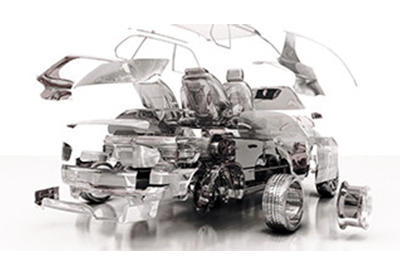
As many as 20,000 individual parts go into the production of a single vehicle, and each of these parts must be subjected to rigorous tracking. There are many ways to mark a part – including laser marking, dot peening, inkjet marking and labeling – and automakers generally use several of these, depending on the situation.

Labeling is one of the easiest methods for quickly adding identifying information to a particular part. Although it’s not permanent in the way that laser marking and other direct part marking methods are, labeling works quite well for a broad range of marking needs.

Because traceability is so essential to the automotive industry, it goes without saying that labels must be thoroughly verified before being added to a part, as well as during various stages of production. Here are some reasons that a rock-solid label verification system is essential for automakers.

Labels need to be readable throughout the production process

High heat, harsh chemicals, grease and pressurized water jets are characteristic of any automotive manufacturing facility. All of these elements can damage labels, even if they’re designed to be sturdy enough to hold up under such conditions. If the barcode on a label is significantly affected, it could trigger a no-read on the production line.

Depending on how the system handles them, no-reads can cause production delays that extend beyond the original item with the damaged label. Since automotive manufacturing is such a resource-intensive process, no-reads can cost the facility significant amounts of money if the part in question is allowed to proceed to far along the line.

Omron’s label verification systems use advanced algorithms to analyze barcodes and grade them according to a variety of ISO standards that designate the parameters for code integrity and readability. The LVS-9510 desktop barcode verifier, for example, uses a “stitching” feature that allows it to verify barcodes that are larger than the field of view.

Barcode verifiers from Omron provide detailed reporting on every aspect of symbol quality in an easy-to-read format. The LVS-9580 handheld barcode verifier, for example, shows a complete color-coded analysis to pinpoint exactly where readability problems are located within a symbol and help determine ways to solve the problem.

Labels need to accurately represent the item carrying them

Throughout the production process, labels – as well as other forms of part marking – are responsible for ensuring the correct movement of a vehicle’s component parts throughout the supply chain and providing necessary information on component-specific maintenance and safety.

It’s a serious problem if a label doesn’t represent what it’s supposed to represent, especially as automotive manufacturing becomes more automated and the information contained in labels plays more of a role in directing manufacturing processes. With incorrect information, the part could potentially be incorporated into the wrong vehicle.

In many cases, the issue is a mismatch between the human-readable information and machine-readable information on a part. Omron’s barcode verification systems perform simple validation of human-readable information and can check the results against the data gleaned from code to ensure that everything matches.

The LVS-7510 and other in-line label verification systems from Omron are integrated into standard thermal transfer printers, unlike the handheld off-line verifiers like the LVS-9580. Omron’s verification solutions also provide logging functionality allowing quality results to be exported to a database. In the event of a label error in an in-line system, the printer is stopped so that the defective label can be removed before it enters the supply chain.

What are some important labeling standards that apply to the automotive industry?

The Automotive Industry Action Group (AIAG) has put forth several key standards related to labeling and identification that all automakers should pay careful attention to. Another source of labeling-related guidelines is the Code of Federal Regulations (CFR).

Some of the most prominent labeling standards are the following:

  • AIAG B-4, which provides requirements for parts identification and tracking
  • AIAG B-10, which supplies criteria for printing unit load and package transport labels to ensure that they can be scanned easily
  • AIAG B-16, which gives specifications on global transport labels for automotive manufacturers
  • 49 CFR Part 541.5, which offers requirements for identifying numbers on passenger motor vehicles
Source

Related Articles


Changing Scene

  • Texcan Announces Mark Palmer as Their New Regional Sales Director

    Texcan Announces Mark Palmer as Their New Regional Sales Director

    Texcan is pleased to announce that Mark Palmer has joined the team as their new Regional Sales Director. Mark brings more than 20 years of sales and leadership experience across the industrial, electrical, and distribution markets. Many in the industry will recognize Mark from his previous leadership roles, and Texcan is excited to have him… Read More…

  • EB Horsman & Son Announces David Thorne as New Grande Prairie Branch Manager

    EB Horsman & Son Announces David Thorne as New Grande Prairie Branch Manager

    EB Horsman & Son is pleased to welcome David Thorne as Branch Manager of their Grande Prairie, branch. David brings more than 15 years of electrical distribution experience and a proven track record of building strong customer relationships, developing high-performing teams, and driving business growth. Prior to joining EB Horsman & Son, he spent over 15… Read More…


Sponsored Content
The Easy Way to the Industrial IoT

The way to the Industrial IoT does not have to be complicated. Whether access to valuable data is required or new, data-driven services are to be generated, Weidmuller enables its customers to go from data to value the easy way. Weidmuller’s comprehensive and cutting-edge IIoT portfolio applies to greenfield and brownfield applications. Weidmuller offers components and solutions from data acquisition, data pre-processing, data communication and data analysis.

Visit Weidmuller’s Industrial IoT Portfolio.


ADVANCED Motion Controls Takes Servo Drives to New Heights (and Depths) with FlexPro Extended Environment Product Line

Advanced Motion Controls is proud to announce the addition of six new CANopen servo drives with Extended Environment capabilities to their FlexPro line. These new drives join AMC’s existing EtherCAT Extended Environment FlexPro drives, making the FlexPro line the go-to solution for motion control applications in harsh environments.

Many motion control applications take place in conditions that are less than ideal, such as extreme temperatures, high and low pressures, shocks and vibrations, and contamination. Electronics, including servo drives, can malfunction or sustain permanent damage in these conditions.

Read More


Service Wire Co. Announces New Titles for Key Executives

Bruce Kesler and Mark Gatewood have been given new titles and responsibilities for Service Wire Co.

Bruce Kesler has assumed the role of Senior Director – Business Development. Bruce will be responsible for Service Wire’s largest strategic accounts and our growing Strategic Accounts Team.

Mark Gatewood has been promoted to the role of Vice President – Sales & Marketing. In this role, Gatewood will lead the efforts of Service Wire Company’s entire sales and marketing organization in all market verticals.

Read More


Tri-Mach Announces the Purchase of an Additional 45,000 sq ft. Facility

Tri-Mach Elmira Facility

Recently, Tri-Mach Inc. was thrilled to announce the addition of a new 45,000 sq ft. facility. Located at 285 Union St., Elmira, ON, this facility expands Tri-Mach’s capabilities, allowing them to better serve the growing needs of their customers.

Positioning for growth, this additional facility will allow Tri-Mach to continue taking on large-scale projects, enhance product performance testing, and provide equipment storage for their customers. The building will also be the new home to their Skilled Trades Centre of Excellence.

Read More


JMP Parent Company, CONVERGIX Acquires AGR Automation, Expanding Global Reach

Convergix Automation Solutions has completed the acquisition of AGR Automation (“AGR”), a UK-based provider of custom, high-performance automation design and systems integration primarily to the life sciences industry.

Following Convergix’s acquisitions of JMP Solutions in August 2021 and Classic Design in February 2022, AGR marks the third investment in Crestview’s strategy to build Convergix into a diversified automation solutions provider targeting the global $500+ billion market, with a particular focus on the $70 billion global systems integration and connectivity segments. Financial terms of the transaction were not disclosed.

Read More


Latest Articles

  • SmartD: Why SCCR Cannot Be Reduced to a Breaker Rating

    SmartD: Why SCCR Cannot Be Reduced to a Breaker Rating

    Short Circuit Current Rating (SCCR) is often treated like a label to check and move on. That is a mistake. One of the biggest sources of confusion in the field is failing to separate two very different ideas: the ability to interrupt and the ability to withstand. A breaker or fuse may have the interrupting capacity needed… Read More…

  • Murrelektronik: Right Down to the Last Sensor – Seamless Automation in the Packaging Line

    Murrelektronik: Right Down to the Last Sensor – Seamless Automation in the Packaging Line

    In the packaging industry, efficiency is not an option—it is a requirement. Production lines must be fast, flexible, and above all, reliable. In this context, Murrelektronik presents a clear vision: holistic automation that connects all levels of the manufacturing system, to the very last field device. This article will walk through the different phases of… Read More…