Induction Welding with Chillers

May 12, 2020

By: Pfannenberg

Electrical enclosures need cooling units in order to enhance performance and prevent failure. The acceptable operating temperature for most electrical devices exceeds 40 °C (104 °F).

Devices often placed in cooling enclosures include variable frequency drives (VFDs), servo drives, programmable logic controllers (PLCs), starter kits, power supplies, inverters, relays, terminal blocks, indicator lights, and transformers. These systems can be protected by a cooling unit that uses either a water or water/glycol mixture.

In addition to temperature, operators are often concerned about condensation. Moisture around electrical equipment will cause corrosion, compromise resistivity, and increase the risk of short circuiting, which causes equipment failure. These in turn may cause more dangerous sparking and fire.

Industry Issues Solved by Induction Welding with Chillers
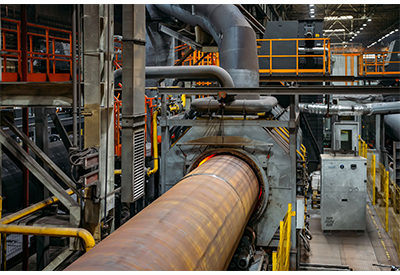
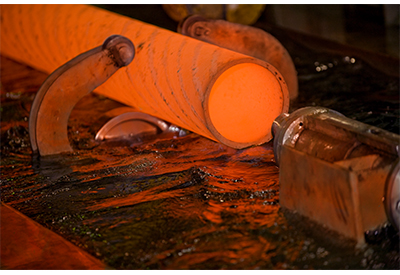
Chillers are used across a wide variety of industries to solve a host of issues. Traditional metal practices are time consuming and inefficient. Using traditional metal practices increases material and time costs significantly. Heating equipment takes a lot of time and therefore uses a lot of energy. However, the removal of heat is necessary in order to maintain structural rigidness as well as to solidify material in the welding process. Additionally, equipment requires physical contact for frequent maintenance. Equipment designs need to ensure it is serviceable. Safety is also a huge concern with traditional welding or heating processes. Manufacturers also seek equipment with a small footprint relative to capacity and need a short lead time.
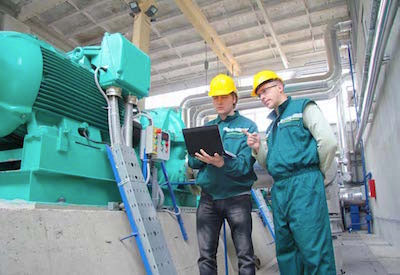
PB-33-Pfannenberg-WeldingChillers2-400.jpg

Induction solves many of these problems because it generates heat from within the object instead of an external heat source, saving energy and making it safer to use. Automated induction longitudinal welding is a reliable, high-throughput process.

Benefits of Liquid Solutions for Electrical Enclosure

When unfavorable, high temperature ambient conditions exist, convection alone cannot adequately maintain an acceptable operational temperature. An air-cooled liquid chiller is ideal for removal of concentrated heat from process equipment.

Solutions for Cooling Equipment Effectively

Factors to be considered when choosing a system for cooling an induction process, including cost, space availability, existing utilities, energy and water usage, equipment location, potential freezing, reliability, and maintenance.

A smart controller in the cooling system will set the minimum and maximum water temperature with an alarm. Plus, a flow switch will trigger an alarm if the flow is too low, protecting equipment from being cooled. In addition, it will have a non-ferrous tank and piping to reduce corrosion and a thick powder coating on the stand-alone chiller, and reliable, easy to read fluid indication level readout.

By using the proper temperature setting points, operators improve performance and increase the lifetime of devices. Highly efficient cooling technologies generate cost savings and preserve electrical equipment. Pfannenberg Inc. specializes in just this type of technology. Their air-cooled liquid chiller is ideal for removal of concentrated heat from your process equipment. Operators want to select chillers that have a small footprint for equivalent capacity which is offered in their product lines as well.

For more information, visit www.pfannenberg.com.
Related Articles


Changing Scene

  • Walker Panels & Inclined Elevation: Partnership Highlight

    Walker Panels & Inclined Elevation: Partnership Highlight

    Walker Panels would love to shine some light on one of their most frequent partners, Inclined Elevation! Their lifts help users get the most out of their gorgeous property, and elevate the possibilities of rural living (pun intended). This year, they have worked hard to redesign the lift panels, to minimize the possibility of signal… Read More…

  • Weidmüller Canada Announces Mohamed Moledina as Their New Technical Applications Specialist, Edmonton

    Weidmüller Canada Announces Mohamed Moledina as Their New Technical Applications Specialist, Edmonton

    Please join Weidmüller Canada in welcoming Mohamed Moledina as their new Technical Applications Specialist based in Edmonton, Alberta. Mohamed brings more than a decade of automation and control systems experience, most recently with E.B. Horsman’s Process, Automation, and Controls (PAC) group. His expertise also spans various automation and instrumentation systems across the industry. Mohamed will play… Read More…


Sponsored Content
The Easy Way to the Industrial IoT

The way to the Industrial IoT does not have to be complicated. Whether access to valuable data is required or new, data-driven services are to be generated, Weidmuller enables its customers to go from data to value the easy way. Weidmuller’s comprehensive and cutting-edge IIoT portfolio applies to greenfield and brownfield applications. Weidmuller offers components and solutions from data acquisition, data pre-processing, data communication and data analysis.

Visit Weidmuller’s Industrial IoT Portfolio.


ADVANCED Motion Controls Takes Servo Drives to New Heights (and Depths) with FlexPro Extended Environment Product Line

Advanced Motion Controls is proud to announce the addition of six new CANopen servo drives with Extended Environment capabilities to their FlexPro line. These new drives join AMC’s existing EtherCAT Extended Environment FlexPro drives, making the FlexPro line the go-to solution for motion control applications in harsh environments.

Many motion control applications take place in conditions that are less than ideal, such as extreme temperatures, high and low pressures, shocks and vibrations, and contamination. Electronics, including servo drives, can malfunction or sustain permanent damage in these conditions.

Read More


Service Wire Co. Announces New Titles for Key Executives

Bruce Kesler and Mark Gatewood have been given new titles and responsibilities for Service Wire Co.

Bruce Kesler has assumed the role of Senior Director – Business Development. Bruce will be responsible for Service Wire’s largest strategic accounts and our growing Strategic Accounts Team.

Mark Gatewood has been promoted to the role of Vice President – Sales & Marketing. In this role, Gatewood will lead the efforts of Service Wire Company’s entire sales and marketing organization in all market verticals.

Read More


Tri-Mach Announces the Purchase of an Additional 45,000 sq ft. Facility

Tri-Mach Elmira Facility

Recently, Tri-Mach Inc. was thrilled to announce the addition of a new 45,000 sq ft. facility. Located at 285 Union St., Elmira, ON, this facility expands Tri-Mach’s capabilities, allowing them to better serve the growing needs of their customers.

Positioning for growth, this additional facility will allow Tri-Mach to continue taking on large-scale projects, enhance product performance testing, and provide equipment storage for their customers. The building will also be the new home to their Skilled Trades Centre of Excellence.

Read More


JMP Parent Company, CONVERGIX Acquires AGR Automation, Expanding Global Reach

Convergix Automation Solutions has completed the acquisition of AGR Automation (“AGR”), a UK-based provider of custom, high-performance automation design and systems integration primarily to the life sciences industry.

Following Convergix’s acquisitions of JMP Solutions in August 2021 and Classic Design in February 2022, AGR marks the third investment in Crestview’s strategy to build Convergix into a diversified automation solutions provider targeting the global $500+ billion market, with a particular focus on the $70 billion global systems integration and connectivity segments. Financial terms of the transaction were not disclosed.

Read More


Latest Articles

  • Electromate: Spring Applied & Power-Off Permanent Magnet Brakes – Engineering Failsafe Motion Control

    Electromate: Spring Applied & Power-Off Permanent Magnet Brakes – Engineering Failsafe Motion Control

    Most electromagnetic brakes work on a simple logic: apply current, apply braking. Remove current, release braking. For many industrial applications, conveyors, packaging lines, printing machines, this is exactly the right behavior. The brake engages on demand and releases when not needed. But for a significant class of machines, this logic is exactly backwards. Robots, vertical… Read More…

  • ITC 101 Series: Why Certifications (UL, CSA) Matter in Industrial Components

    ITC 101 Series: Why Certifications (UL, CSA) Matter in Industrial Components

    When selecting industrial electrical components, certification is more than a logo on a datasheet. A certification mark indicates that a product or component has been independently evaluated against specified requirements for its intended market. In North America, selecting products with the appropriate certification can affect regulatory acceptance, equipment certification, inspections and project completion. The key… Read More…