ITC 101: Understanding IP Ratings for Electrical Enclosures
December 2, 2025
Understanding IP Ratings for Electrical Enclosures
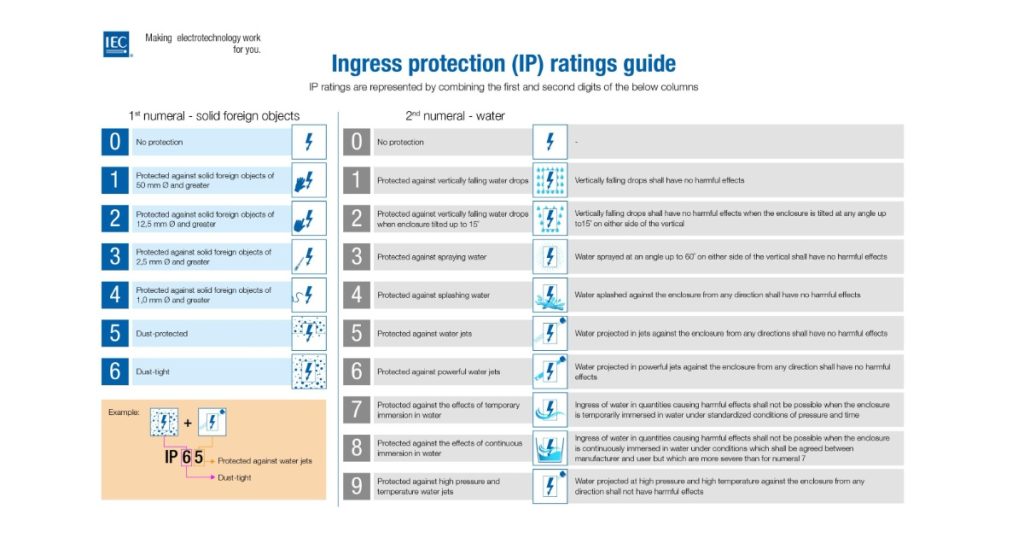
Electric and electronic equipment are often exposed to challenging environments where dust, water, or accidental contact can cause failures. To address this, the International Electrotechnical Commission (IEC) established the Ingress Protection (IP) rating system under the IEC 60529 standard. This system provides a clear, standardized method of indicating how well an enclosure protects against solids, liquids, and access to hazardous parts.
How the IP Code Works
The IP code consists of two digits.
- First digit (0–6): Defines protection against solid objects, from no protection (0) to complete dust-tight sealing (6).
- Second digit (0–9): Defines protection against liquids, ranging from no protection (0) to resistance against high-pressure, high-temperature water jets (9).
For example, an enclosure rated IP67 means it is completely dust-tight (6) and can withstand immersion in water up to a defined depth and time (7).
Why IP Ratings Matter
In industrial environments, IP ratings ensure equipment performs reliably under harsh conditions, reducing downtime and maintenance costs. For consumers, these ratings clarify the actual resistance of products like smartphones or outdoor lighting, going beyond vague terms such as waterproof or water-resistant.
The IEC Standard
IEC 60529 was first published in 1976 to unify requirements across electrical equipment. It remains the authoritative reference for manufacturers, engineers, and end-users worldwide. For detailed testing procedures and definitions, always consult the official IEC 60529 standard.
Related Topics in the ITC 101 Series
Understanding IP ratings is the first step in selecting the right protection for your equipment. In upcoming articles, ITC Electrical Components will also explore:
- What is NEMA Rating? — an overview of NEMA enclosure standards.
- IP Rating vs. NEMA Rating — a comparison to help you choose the right standard for your application.
Stay tuned for more from the ITC 101 Series!
For more information on ITC Electrical Component solutions HERE