From Hospitals to Hyperscalers: Why Every Sector Needs Smarter Backup Power
October 24, 2025
3-Phase UPS: Schneider Insights on the Importance of Reliable Uninterruptible Power Supplies with Intelligent Features to Prevent Disruptions & Downtime
Whether running a data center, factory, hospital, or a commercial building complex, organizations need efficient and reliable uninterruptible power supplies (UPS) with intelligent features to prevent disruptions. Too much is at stake to have critical workloads stop during outages or anomalies in the power supply. Now more than ever, with extreme weather and increasing demands on the power grid, organizations need a plan to mitigate downtime.
The AI Factor
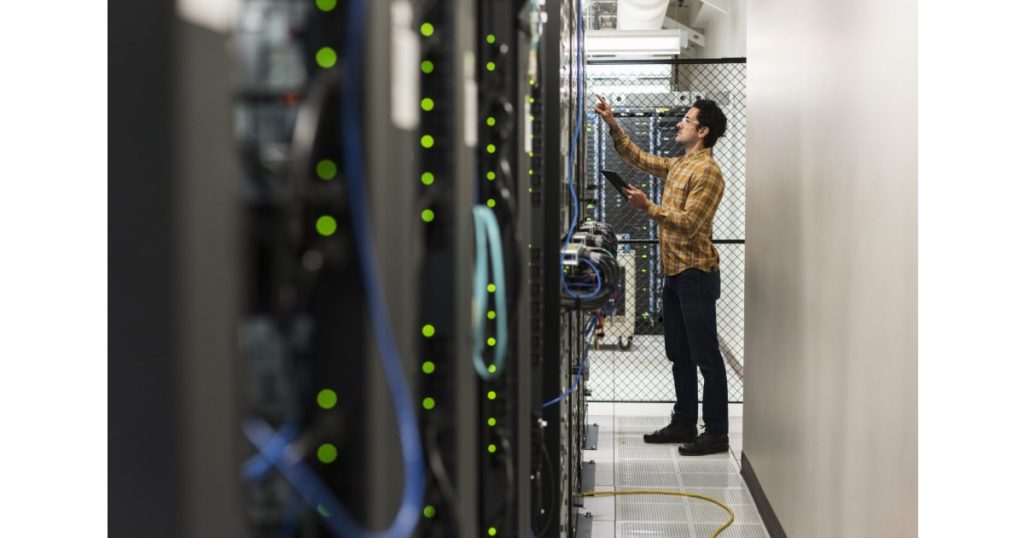
The introduction of artificial intelligence (AI) in recent years has only emphasized the need for reliability and resilience in the power infrastructure – AI needs power, and a lot of it. The need extends to cooling, which increasingly involves liquid cooling or hybrid liquid/air systems. These systems handle excessive heat from racks that only recently housed 10 kW or less but now contain 50 kW or more. And in the near future, they will exceed 100 kW.
Cooling systems that support high-density IT racks are just as critical as the compute itself—and just as sensitive to power disruptions. As power outages become more frequent and prolonged due to increasingly severe weather events associated with climate change, ensuring continuous power for these systems is crucial.
3-Phase UPS for Evolving Demands
As power demands increase and outages become more frequent due to climate-related disruptions, ensuring continuous backup for both IT and cooling systems has become essential. UPSs play a central role in supporting critical infrastructure, especially in space-constrained environments where reliability and efficiency are paramount.
3-phase UPS systems, such as those in the Schneider Electric Galaxy series, offer power ratings suitable for a range of applications—from edge computing sites to large data centers. These UPS systems scale from 10kW to 2MW in single input/output configurations and even higher when used in parallel configurations. Its modular designs with Live Swap also enable the adaptation of power capacity with no scheduled downtime as operational needs evolve.
Galaxy V-series UPSs offer resilience, intelligence, and efficiency for a wide range of environments, including smart buildings, production lines, and AI training clusters. Whether in edge settings, industrial environments, or large data centers, Galaxy V-series UPSs minimize downtime at a time when always-on computing is a top priority. Galaxy VX, VL, and VXL solutions are AI-tolerant, which means they can handle the dynamic power demands of AI workloads by supporting peak loads and maintaining reliability without degrading battery life.
Additionally, Galaxy V-series UPSs are available in a range of sizes and configurations to support evolving backup power needs. Modular, scalable designs make it easier to expand capacity over time. These UPSs also feature Live Swap capability, allowing technicians to replace or add power modules without requiring a scheduled device shutdown. VRLA and Lithium-ion battery options are available.
Designed for high efficiency, Galaxy V-series UPSs can operate at up to 99% efficiency in eConversion mode, helping reduce energy consumption while maintaining consistent power quality. The systems integrate with facility management platforms and support remote monitoring and diagnostics.
Mitigate Risk & Maintain Uptime with Scalable Backup Power
As digital infrastructure becomes more critical—and more vulnerable to power-related disruptions—commercial and industrial organizations need power backup systems that are both robust and adaptable. 3-phase UPS solutions, such as the Galaxy V-series UPSs, offer a flexible approach to power continuity, combining high efficiency with a modular design and advanced monitoring capabilities. By supporting both IT and cooling systems, learn how the Galaxy V-series UPSs help maintain operational stability across a range of environments, from edge sites to hyperscale data centers.


3-Phase UPS 3-Phase UPS 3-Phase UPS