Rob Milner – FLIR Canada National Science, Automation, Optical Gas Imaging & sUAS Manager – Provides Insight on Some Interesting FLIR Product Applications
PBSI Milner 400

September 30, 2019

By Blake Marchand

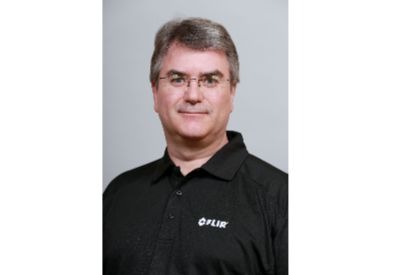
Rob Milner is the Canadian National Science, Automation, Optical Gas Imaging & sUAS Manager for FLIR. Rob took some time out of his busy schedule to discuss his career and provide some insight on the industry with Panel Builder & Systems Integrator.

Mr. Milner began his 18-year tenure with FLIR in 2001 as Sales Manager for the Ontario and Manitoba region. After ten-years in that role he was promoted to National Science & Automation Sales Manager, and in 2016 he took on his current role as National Science, Automation, Optical Gas Imaging & sUAS Manager.

Managing the business development of four vertical markets, Milner’s role is highly technical as well as customer facing. When it comes to automation FLIR makes a number of different products, he explained providing an example of a portion of his role, “I refer to them as different flavours – some speak directly to PLCs, others have to go through complex machine vision type software to arrive at an analysis of the issue,” with respect to a particular client’s application, Milner will provide oversight to ensure measurements and camera placements are correct, for example, as well as making sure the proper technologies are being utilized for a given application. Ultimately, ensuring that all factors have been taken into consideration.

Throughout his 18-year career with FLIR, Milner said there isn’t much he hasn’t seen when it comes to applications of their products, which are utilized across a wide range of industries. However, he singled out a couple intriguing applications he has seen.Weld seam issue
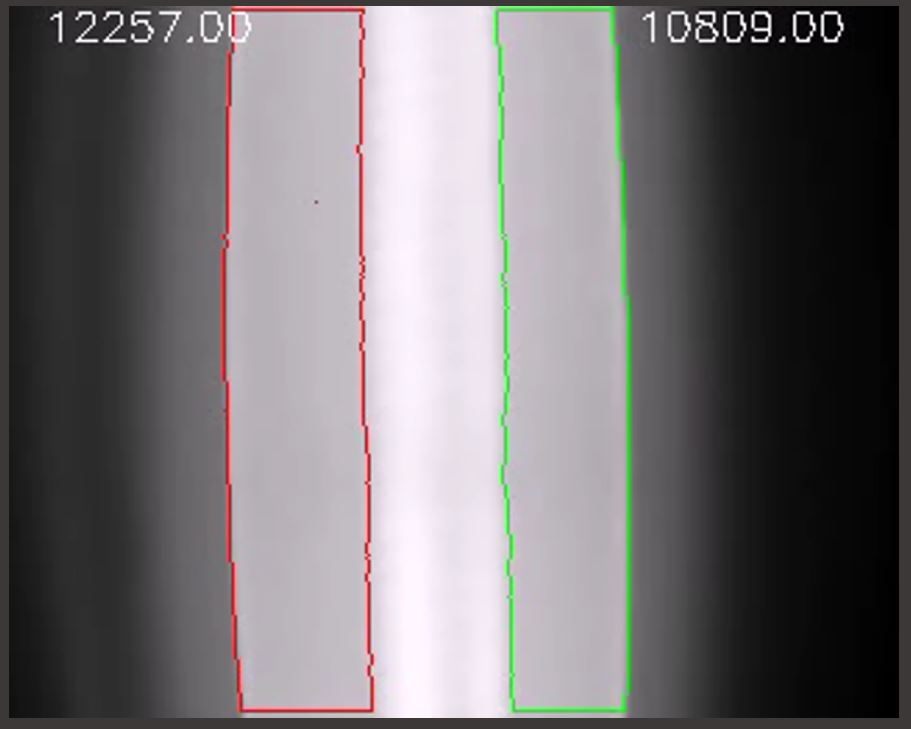
The first is the growing use of artificial intelligence that has developed to perform very complex inspections utilizing thermal cameras designed for automated monitoring. This has enabled inspection of automotive parts, for example, where you can’t see the defect directly, but you can infer it is there due to the change in the imagery; or the ability to detect liquid leaks in processes in complex outdoor environments. FLIR’s Canadian automation partners have developed these applications and are growing their installed base rapidly. 

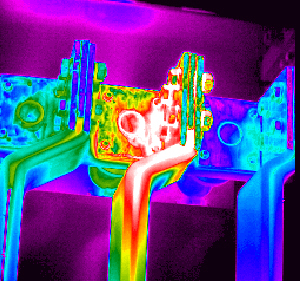
Rob also singled out infrared switchgear condition monitoring for low, medium, and high voltage cabinets to continuously monitor for potential issues without having to open the cabinet door. Essentially, anywhere that employs a significant electrical load. The example Milner provided was for large residential buildings, at the time there happened to be a couple fires reported in the news. Generally, these types of buildings are inspected once a year and most likely the inspection will take place during the day when usage isn’t at its peak. Using an infrared camera for continuous monitoring allows for a more accurate picture of the building’s electrical health, detecting electrical connectionpotential fires before there’s an issue.
When it comes to the automation and electrical side of the company, FLIR’s products facilitate an intelligent industry. Which includes oil and gas maintenance issues, from invisible gas leaks to failing electrical or mechanical systems; maintaining uptime for electrical utility power generation and troubleshooting issues at the residential and commercial level; mechanical and electrical condition monitoring; machine vision; and high-tech monitoring to detect potential issues before failures. Their vision systems are crucial to facilitating the proliferation of autonomous systems of all kind, as well as to maximize uptime by detecting issues before they impact production. With respect to the latter, Milner makes an important distinction between ‘preventive maintenance’ and ‘condition monitoring’.

“Preventative maintenance historically involves tightening connections and tightening connections can actually be harmful if you don’t need to do it. So, we like to use condition monitoring. Making sure your target – whether it’s a motor, a piece of electrical equipment, or a pump, is staying the same temperature over time. Or, if there’s multiple phases, for example, all phases are tracking up and down in temperature based on load, together.”

“You’re not likely to have all three phases fail at the same time – if you have an electrical problem, one phase is going to fail and that’s going to be easily visible as a divergence from the other two temperatures.”

Industry 4.0 – automated production, quality control, aerial drone inspection, artificial intelligence etc. – is tailored to FLIR’s expertise, “Automated condition monitoring is key to that (industry 4.0), so our systems are being used more and more,” noted Milner, “even our hand-held systems are being used as sensors. That data that comes through periodically is still going up into the cloud to monitor the health of the factory of the future.”

When it comes to emerging technologies that will be more prevelent moving forward in the industry, Milner mentioned that unmanned aerial vehicles (UAV) will be a tool for the industry to utilize in this vein in the near future. UAVs will have a number of maintenance and inspection applications. Field operations monitoring in remote areas, windmills, solar panels, commercial and industrial roof inspection is the big one, Milner noted. The inspection of infrastructure like roads and bridges in particular, as well as in agriculture, and electrical transmission are all areas where aerial vehicles can be utilized It’s something that simply wasn’t possible five years ago, Milner noted, and for the most part drones are currently human-piloted. However, eventually they will be able to take off, land, and inspect autonomously.

Ultimately, with respect to FLIR product applications, Milner said, if there is an application where you can gain information visually, FLIR’s systems can be utilized.

In closing, Mr. Milner said, “One of the things I would like to get across to people is automating the use of thermal imaging is getting easier and lower in cost than it has been in the past. A lot of people’s experience with our camera is from a decade ago – when I started, we didn’t sell anything that was under $50,000, now we have thermal camera for less than $500.” Many people in the industry may have the impression their products are too expensive and difficult to deal with, “but that’s not true anymore, thermal cameras can be very cost competitive to other technologies and provide better monitoring of critical equipment and production methods.”

They’re still on that downward pricing trend he noted, “we’re literally putting cameras all over the place, where you’d never expect to find them.”

Image One Caption (Weld seam issue):

Thermal image of a weld seam defect captured in real time using artificial intelligence software to learn and apply complex analytics in a simple fashion.

Image Two Caption (Electrical connection):

Caption : Electrical equipment carrying high currents in electrical cabinets can now be autonomously monitored 24/7, at a cost much lower than periodic inspection providing improved equipment reliability at a lower cost.

Related Articles

  • |

    Q&A With HELU: Grounding vs. Bonding

    One of the first lessons new electricians learn is that electricity will always look for the path of least resistance to get to the ground. The terms grounding and bonding are used every day by electricians, maintenance engineers and technicians. While they seem interchangeable, they are actually two distinct electrical installation protocols when it comes to the National Electrical Code (NEC) and installing electrical equipment. Regional Sales Manager Warren Lyles discusses this topic from questions he has heard in the field.

  • How Automation and Robotics Will Change Food Manufacturing

    Food & Beverage is one of the fastest changing industries in business today. Consumers are demanding products that can be more difficult to process, and companies need to respond with safe, quality goods that are not going to put off the buyer in terms of price. To stay ahead of their competition and contribute to the bottom line, companies must remain flexible and diligent in making sure their facility is clean in order to ensure food safety.


  • | |

    OMRON: How Predictive Maintenance Technology is Improving Machine Monitoring

    Predictive maintenance is changing the way industries manage their equipment. Unlike traditional maintenance methods, which rely on fixed schedules, predictive maintenance uses real-time monitoring to detect potential issues early. This proactive approach reduces the likelihood of unexpected downtime and ensures that maintenance activities are performed only when necessary, optimizing resource allocation and reducing costs. One of the key advantages of predictive maintenance is the consistency and reliability of its data-driven approach. Real-time data is available for everyone to read and act upon, minimizing the variability that can arise from individual expertise. This ensures that maintenance decisions are based on accurate and up-to-date information, leading to more consistent and reliable operations. This not only frees up skilled labor for more critical tasks but also reduces overall maintenance costs. By automating the monitoring process, factories can achieve more efficient operations, ultimately improving their bottom line.

  • | | |

    How Advanced Automation Accelerates Industrial Adoption of SMR Technology

    As the world advances toward decarbonization, industrial energy consumers are looking for solutions that go beyond renewable electricity alone. They are seeking reliable, high-temperature outputs created from sustainable (ie. non-fossil) energy sources. They are demanding flexible, always-on power. And, increasingly, they are turning to a promising innovation: Small Modular Reactors (SMRs). Unlike traditional nuclear power plants that are massive, centralized, and built primarily for the grid, SMRs are compact, factory-built, and scalable. These characteristics make SMRs ideal for industrial facilities seeking on-site energy solutions that offer both carbon-free electricity, process heat, and more. From chemical plants to data centers to water treatment facilities, industrial companies are exploring SMRs as a multipurpose energy source. The thermal output of an SMR can drive high-temperature industrial processes, fuel hydrogen production, power desalination plants, and even support district heating systems. But tapping into this potential requires more than just advanced nuclear technology—it demands a sophisticated approach to automation and control.


Changing Scene

  • Weidmüller Canada Is Growing Their Team & Investing in the Future of Engineering

    Weidmüller Canada Is Growing Their Team & Investing in the Future of Engineering

    Weidmüller Canada is growing their team and investing in the future of engineering. They are proud to welcome Ada Santavy, Laura Cochrane, and William Watson, the newest hires of Weidmüller’s Engineering Launchpad Program, an innovative initiative that combines technical and soft skills training, mentorship from industry veterans, and hands-on project experience to develop well-rounded engineering… Read More…

  • Leviton Canada Announces Jim Hartery as New Territory Manager, Alberta

    Leviton Canada Announces Jim Hartery as New Territory Manager, Alberta

    Please join Leviton Canada in welcoming Jim Hartery to their team! Jim brings extensive experience in sales and account management within the electrical industry, along with a proven track record of building strong customer relationships, developing new business opportunities, and driving growth across both new and existing accounts. Leviton is thrilled to have Jim on… Read More…


Sponsored Content
The Easy Way to the Industrial IoT

The way to the Industrial IoT does not have to be complicated. Whether access to valuable data is required or new, data-driven services are to be generated, Weidmuller enables its customers to go from data to value the easy way. Weidmuller’s comprehensive and cutting-edge IIoT portfolio applies to greenfield and brownfield applications. Weidmuller offers components and solutions from data acquisition, data pre-processing, data communication and data analysis.

Visit Weidmuller’s Industrial IoT Portfolio.


ADVANCED Motion Controls Takes Servo Drives to New Heights (and Depths) with FlexPro Extended Environment Product Line

Advanced Motion Controls is proud to announce the addition of six new CANopen servo drives with Extended Environment capabilities to their FlexPro line. These new drives join AMC’s existing EtherCAT Extended Environment FlexPro drives, making the FlexPro line the go-to solution for motion control applications in harsh environments.

Many motion control applications take place in conditions that are less than ideal, such as extreme temperatures, high and low pressures, shocks and vibrations, and contamination. Electronics, including servo drives, can malfunction or sustain permanent damage in these conditions.

Read More


Service Wire Co. Announces New Titles for Key Executives

Bruce Kesler and Mark Gatewood have been given new titles and responsibilities for Service Wire Co.

Bruce Kesler has assumed the role of Senior Director – Business Development. Bruce will be responsible for Service Wire’s largest strategic accounts and our growing Strategic Accounts Team.

Mark Gatewood has been promoted to the role of Vice President – Sales & Marketing. In this role, Gatewood will lead the efforts of Service Wire Company’s entire sales and marketing organization in all market verticals.

Read More


Tri-Mach Announces the Purchase of an Additional 45,000 sq ft. Facility

Tri-Mach Elmira Facility

Recently, Tri-Mach Inc. was thrilled to announce the addition of a new 45,000 sq ft. facility. Located at 285 Union St., Elmira, ON, this facility expands Tri-Mach’s capabilities, allowing them to better serve the growing needs of their customers.

Positioning for growth, this additional facility will allow Tri-Mach to continue taking on large-scale projects, enhance product performance testing, and provide equipment storage for their customers. The building will also be the new home to their Skilled Trades Centre of Excellence.

Read More


JMP Parent Company, CONVERGIX Acquires AGR Automation, Expanding Global Reach

Convergix Automation Solutions has completed the acquisition of AGR Automation (“AGR”), a UK-based provider of custom, high-performance automation design and systems integration primarily to the life sciences industry.

Following Convergix’s acquisitions of JMP Solutions in August 2021 and Classic Design in February 2022, AGR marks the third investment in Crestview’s strategy to build Convergix into a diversified automation solutions provider targeting the global $500+ billion market, with a particular focus on the $70 billion global systems integration and connectivity segments. Financial terms of the transaction were not disclosed.

Read More


Latest Articles

  • Texcan: Teck, Vertical Riser & AIRGUARD – Cable Solutions for Demanding Environments

    Texcan: Teck, Vertical Riser & AIRGUARD – Cable Solutions for Demanding Environments

    Teck, Vertical Riser Teck, and AIRGUARD address distinct installation needs for industrial and vertical‑riser installations. Each product targets specific installation needs: Teck for general industrial feeders, Vertical Riser Teck for continuous vertical runs, and AIRGUARD to deliver high crush resistance and corrosion protection on long runs. Understanding the differences in application can help ensure the right cable is selected for the… Read More…

  • Mouser: Industrial Ethernet vs Fieldbus – Architecture, TSN & Migration

    Mouser: Industrial Ethernet vs Fieldbus – Architecture, TSN & Migration

    Fieldbuses once replaced bundles of wiring with shared, deterministic networks. For years, they carried control signals reliably and predictably. However, as equipment, sensors, and data systems proliferated, fieldbus limitations emerged. The central issue today is real-time operational visibility. Engineers need networks that move control data, diagnostics, and process information across the plant as reliably as… Read More…