ITC 101: Understanding NEMA Ratings for Electrical Enclosures
January 21, 2026
NEMA Ratings: ITC Provides a Helpful Guide for Electrical Enclosures
NEMA Ratings are an essential classification system used across North America to define the environmental and mechanical protection provided by electrical enclosures. Developed by the National Electrical Manufacturers Association (NEMA), these ratings help engineers, installers, and specifiers identify the appropriate enclosure type for industrial, commercial, and outdoor applications.
What is NEMA Rating?
A NEMA Standard establishes requirements for enclosure construction, dimensions, performance, testing, operating characteristics, and safety. Each Standard is designated by an alphanumeric identifier and publication date and is developed through a formal process involving industry committees, technical experts, and approval by NEMA’s Codes and Standards Committee.
What NEMA Ratings Represent
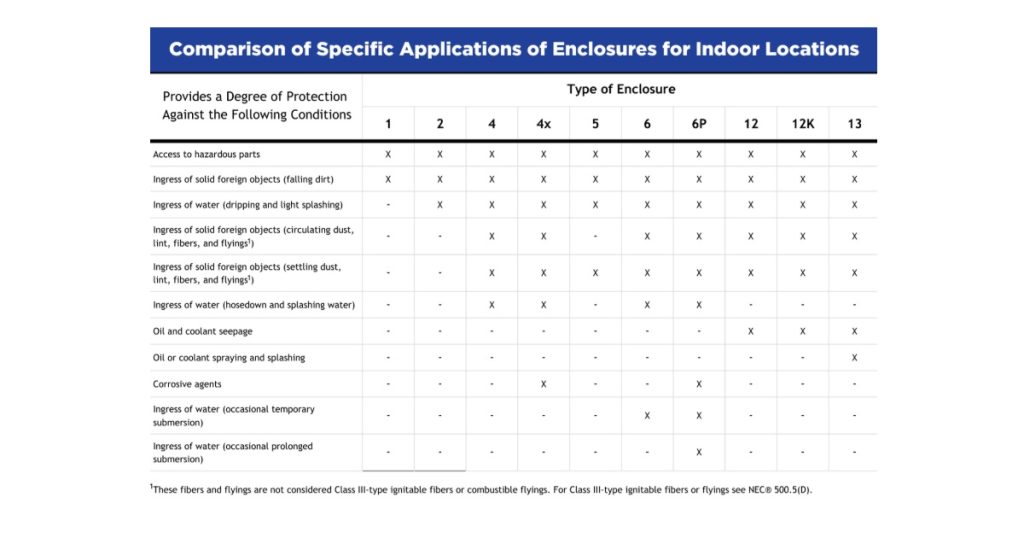
NEMA enclosure ratings describe an enclosure’s ability to protect internal electrical components from dust, oil, corrosive agents, accidental contact, water, ice formation, and other environmental conditions. Some commonly referenced ratings include:
- NEMA 1 – General-purpose indoor protection
- NEMA 3 / 3R / 3S – Outdoor weather-resistant enclosures
- NEMA 4 / 4X – Watertight and corrosion-resistant protection
- NEMA 12 – Indoor industrial protection against dust, fibers, and dripping liquids
The specific performance criteria for each rating are detailed within the corresponding NEMA Standard.
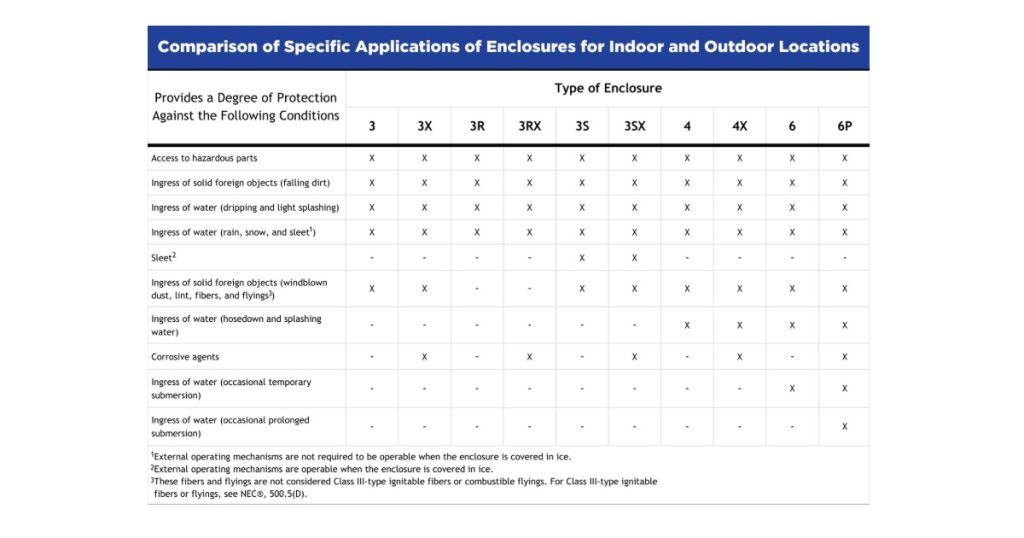
Selecting the Right NEMA Standard
Users should review the scope, definitions, and referenced standards to verify that a document addresses their needs. NEMA publishes Standards, application guides, engineering information, and white papers to support specifiers, installers, inspectors, and maintenance personnel.
Understanding NEMA Ratings helps ensure electrical enclosures meet the environmental, mechanical, and operational demands of modern systems.
Related Topics in the ITC 101 Series
Check out other articles of ITC 101 Series:
Stay tuned for more from the ITC 101 Series.
For more information on ITC Electrical Components solutions HERE