What is the Value of IIoT? Why Should Miners Embrace It?
The next industrial revolution is here. New technology and automation solutions are catalysts for evolving your mining operations – helping make you more connected, efficient and productive.

The next industrial revolution is here. New technology and automation solutions are catalysts for evolving your mining operations – helping make you more connected, efficient and productive.

In this issue of Industry Insights with Owen I had the privilege of asking Linda Caron of Parker Hannifin a few questions about the industry and how Parker Hannifin is addressing industry shifts and concerns.
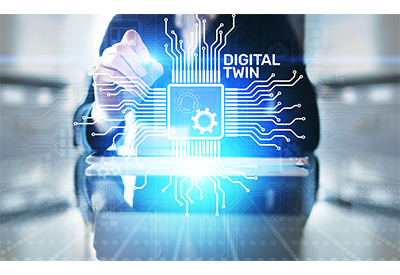
I recently met with a client from a large CPG company who said his challenges are rooted in the fact that every industrial automation system comprises two descriptions of the truth, a physical one and a logical one. And because of the development process, these two truths are rarely aligned.

With their advanced, microprocessor-based technologies, today’s industrial automation and control systems (IACS) deliver much-improved performance and features compared to their analog counterparts.

As an oil and gas producer, you may be feeling the effects of relying on an outdated power-distribution system. You’re facing reduced productivity, increased safety risks or additional stress due to the constant need for troubleshooting.
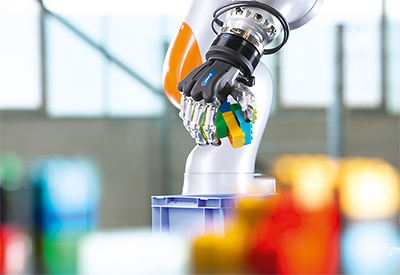
Today still, the human hand is regarded as the benchmark when it comes to flexibility of gripping tools. Particularly when it comes to service and assistance robotics, humanoid manipulators that enable the widest variety of gripping variants will be more and more in demand in future.

In this issue of Industry Insights with Owen I had the opportunity to sit down with Warren Osak, founder and CEO of Electromate.

As food processing continues to grow in complexity, companies remain vigilant for how to make facilities work better without expanding their footprint.
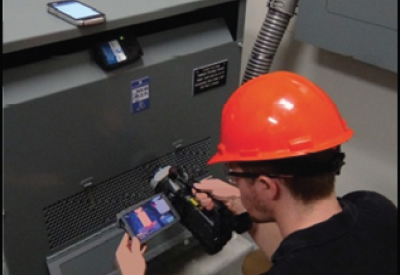
Today, transformers are everywhere, feeding various voltages into our homes and businesses. When a transformer fails in a commercial or industrial environment, that failure can disrupt a significant portion of facility operations.

The threats that make enclosure thermal management necessary to begin with reach the height of their destructive energies all at once, once a year, in the summertime. While some logistics of manufacturing become vastly less complicated in the summer sun, several interrelated changes in the weather threaten the critical electronics that allow production lines to operate.

Protecting the consumer and the manufacturer’s brand are the key aspects of hygienic and efficient automation in food production. The aims are high productivity and perfect tasting food.

Safety used to be treated somewhat as an afterthought, in that it was added as a separate system once all the other production equipment was in place. Nowadays, many manufacturers are seeing the benefits of integrated safety systems, in which safety features are designed into equipment from the very beginning.
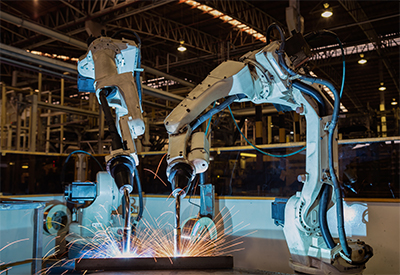
In the past, companies leaned towards moving their operations to developing markets where they could cut costs by finding inexpensive labour.

Over the last two and a half centuries, industry has embraced change and transformation. Analysts now say that we are in the beginning stages of a fourth industrial revolution – Industry 4.0. This latest advancement enhances existing technologies and computer frameworks to make them smarter, more efficient and better connected.
The market for automobiles today is placing greater demand on the experience inside the vehicle, rather than simply the ability to get from Point A to Point B. Manufacturers are responding by incorporating expensive technologies to connect cars to the internet, and this is creating a need to cut costs in other ways.
RBT Electrical & Automation, located in Brantford, Ontario, provides a full service of electrical contracting along with providing automation and control services in the commercial and industrial sectors.
This project is funded [in part] by the Government of Canada.
Ce projet est financé [en partie] par le gouvernement du Canada.