Top five myths about robotics

July 16, 2019

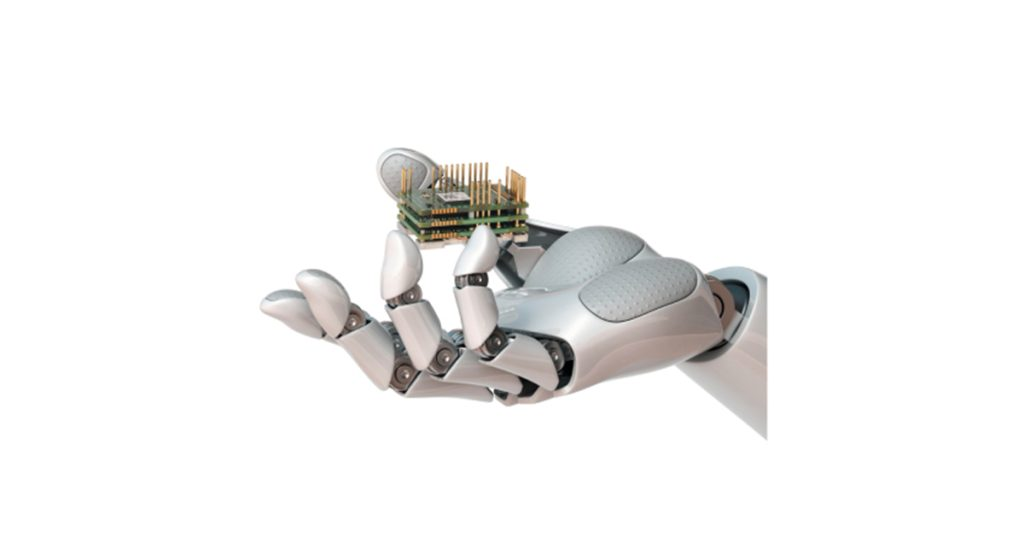
Widely represented throughout science fiction, robots (both real and fictional) have been capturing people’s imagination for decades. As robotic solutions gain popularity among manufacturers as a means of increasing productivity, several myths have arisen regarding their place in factories and in society as a whole.

As a provider of state-of-the-art robotic solutions, we’d like to shed some light on five of the most common robot-related misconceptions that we encounter.

1. They’re difficult to use.

Although it can be a challenge to program a robot from scratch, many OEMs – including Omron – have focused on simplifying robot programming with user-friendly software. Omron’s Automated Control Environment (ACE) is a PC-based software featuring an intuitive wizard-based interface, superior data visualization and fast emulation for quick proof of concept of applications ranging from simple pick-and-place to multi-robot belt-tracking lines.

For flexible manufacturing systems, a fairly new technology known as the collaborative robot is gaining traction. Commonly shortened to “cobot,” this type of robot – of which Omron’s TM Series is an example – incorporates intuitive hand-guided mechanisms for teaching new tasks and eliminates the need to explicitly program the movements of the robotic arm.

2. They’re prohibitively expensive.

Robots are actually becoming more affordable by the year. In fact, the average cost of a robot has gone down by a half (in real terms) in the past 30 years. In addition, software solutions that make robot programming more accessible are helping manufacturers reduce engineering time and avoid paying high fees for the services of a specialized robot programmer.

It’s also important to note that, if implemented intelligently, a robotic solution pays for itself by dramatically increasing production efficiency and keeping quality consistent. Robots can perform repetitive tasks at extremely high speeds without needing to take breaks, and this poses major benefits for a company’s throughput and responsiveness to market demand.

3. They’re dangerous.

Some robots, particularly high-speed articulated, SCARA and Delta robots, are not intended to work in proximity to humans. Nonetheless, they are actually designed to boost the safety of an application by taking over tasks that would be hazardous for human workers to perform manually. If humans were to perform these tasks, the risks of an accident would be much higher.

Collaborative robots, on the other hand, are designed to work with a human operator. These robots have a lightweight design with rounded edges and minimal pinch points, and their safety devices can detect when a person has entered into their vicinity (allowing them to operate at higher speeds when humans are absent). When sharing tasks with human operators, cobots uses sensors to detect possible collisions and immediately slow down or alter their path.

4. They’re only used for building cars.

Robots can significantly improve the efficiency of nearly any pick-and-place application in any industry, not just automotive. Packaging lines are a major beneficiary of high-speed robotic solutions that can handle up to 2,000 items per minute. When fully automated, a pick-and-place application reduces manual labor costs, boosts productivity and improves quality.

People tend to imagine robots primarily as fixtures of automotive production because it includes many tasks that are difficult or even downright dangerous for humans. However, many other industries have their own hazards – like chemical washdowns in food and beverage processing – that make robots a welcome solution.

5. They’re responsible for job losses.

Technological advancements have taken over large categories of jobs throughout much of recent history, but the ultimate result has always been the creation of new job categories in a new economy rejuvenated by newfound productivity. Today’s advancements in robotics are likely to have the same stimulating effect.

For one thing, the tasks that robots are currently well-suited for are the repetitive and often hazardous activities that workers find dull and frustrating. When robots can free up human workers from tasks like industrial welding, cleaning up nuclear waste and inspecting oil pipelines, job seekers no longer need to consider opportunities that would put them in harm’s way.

Omron’s philosophy is to contribute to a better society by giving machines the tedious jobs while allowing humans to focus on creative work that puts our intellectual capabilities to good use. Our technologies are designed to work in harmony with humans – solving problems, teaching new skills, making workplaces safer and supporting business growth. We believe in the power of technology to enhance and extend human capability and to unleash human potential.

Find out more HERE.
Related Articles


Changing Scene

  • Weidmüller Canada Is Growing Their Team & Investing in the Future of Engineering

    Weidmüller Canada Is Growing Their Team & Investing in the Future of Engineering

    Weidmüller Canada is growing their team and investing in the future of engineering. They are proud to welcome Ada Santavy, Laura Cochrane, and William Watson, the newest hires of Weidmüller’s Engineering Launchpad Program, an innovative initiative that combines technical and soft skills training, mentorship from industry veterans, and hands-on project experience to develop well-rounded engineering… Read More…

  • Leviton Canada Announces Jim Hartery as New Territory Manager, Alberta

    Leviton Canada Announces Jim Hartery as New Territory Manager, Alberta

    Please join Leviton Canada in welcoming Jim Hartery to their team! Jim brings extensive experience in sales and account management within the electrical industry, along with a proven track record of building strong customer relationships, developing new business opportunities, and driving growth across both new and existing accounts. Leviton is thrilled to have Jim on… Read More…


Sponsored Content
The Easy Way to the Industrial IoT

The way to the Industrial IoT does not have to be complicated. Whether access to valuable data is required or new, data-driven services are to be generated, Weidmuller enables its customers to go from data to value the easy way. Weidmuller’s comprehensive and cutting-edge IIoT portfolio applies to greenfield and brownfield applications. Weidmuller offers components and solutions from data acquisition, data pre-processing, data communication and data analysis.

Visit Weidmuller’s Industrial IoT Portfolio.


ADVANCED Motion Controls Takes Servo Drives to New Heights (and Depths) with FlexPro Extended Environment Product Line

Advanced Motion Controls is proud to announce the addition of six new CANopen servo drives with Extended Environment capabilities to their FlexPro line. These new drives join AMC’s existing EtherCAT Extended Environment FlexPro drives, making the FlexPro line the go-to solution for motion control applications in harsh environments.

Many motion control applications take place in conditions that are less than ideal, such as extreme temperatures, high and low pressures, shocks and vibrations, and contamination. Electronics, including servo drives, can malfunction or sustain permanent damage in these conditions.

Read More


Service Wire Co. Announces New Titles for Key Executives

Bruce Kesler and Mark Gatewood have been given new titles and responsibilities for Service Wire Co.

Bruce Kesler has assumed the role of Senior Director – Business Development. Bruce will be responsible for Service Wire’s largest strategic accounts and our growing Strategic Accounts Team.

Mark Gatewood has been promoted to the role of Vice President – Sales & Marketing. In this role, Gatewood will lead the efforts of Service Wire Company’s entire sales and marketing organization in all market verticals.

Read More


Tri-Mach Announces the Purchase of an Additional 45,000 sq ft. Facility

Tri-Mach Elmira Facility

Recently, Tri-Mach Inc. was thrilled to announce the addition of a new 45,000 sq ft. facility. Located at 285 Union St., Elmira, ON, this facility expands Tri-Mach’s capabilities, allowing them to better serve the growing needs of their customers.

Positioning for growth, this additional facility will allow Tri-Mach to continue taking on large-scale projects, enhance product performance testing, and provide equipment storage for their customers. The building will also be the new home to their Skilled Trades Centre of Excellence.

Read More


JMP Parent Company, CONVERGIX Acquires AGR Automation, Expanding Global Reach

Convergix Automation Solutions has completed the acquisition of AGR Automation (“AGR”), a UK-based provider of custom, high-performance automation design and systems integration primarily to the life sciences industry.

Following Convergix’s acquisitions of JMP Solutions in August 2021 and Classic Design in February 2022, AGR marks the third investment in Crestview’s strategy to build Convergix into a diversified automation solutions provider targeting the global $500+ billion market, with a particular focus on the $70 billion global systems integration and connectivity segments. Financial terms of the transaction were not disclosed.

Read More


Latest Articles

  • Texcan: Teck, Vertical Riser & AIRGUARD – Cable Solutions for Demanding Environments

    Texcan: Teck, Vertical Riser & AIRGUARD – Cable Solutions for Demanding Environments

    Teck, Vertical Riser Teck, and AIRGUARD address distinct installation needs for industrial and vertical‑riser installations. Each product targets specific installation needs: Teck for general industrial feeders, Vertical Riser Teck for continuous vertical runs, and AIRGUARD to deliver high crush resistance and corrosion protection on long runs. Understanding the differences in application can help ensure the right cable is selected for the… Read More…

  • Mouser: Industrial Ethernet vs Fieldbus – Architecture, TSN & Migration

    Mouser: Industrial Ethernet vs Fieldbus – Architecture, TSN & Migration

    Fieldbuses once replaced bundles of wiring with shared, deterministic networks. For years, they carried control signals reliably and predictably. However, as equipment, sensors, and data systems proliferated, fieldbus limitations emerged. The central issue today is real-time operational visibility. Engineers need networks that move control data, diagnostics, and process information across the plant as reliably as… Read More…