Mouser: Industrial Ethernet vs Fieldbus – Architecture, TSN & Migration

July 29, 2026
Industrial Ethernet vs Fieldbus: Architecture Design, Determinism, Coexistence Strategies, Cybersecurity Considerations & Emerging Technologies Like TSN & SPE
By: Hector Barresi
Fieldbuses once replaced bundles of wiring with shared, deterministic networks. For years, they carried control signals reliably and predictably. However, as equipment, sensors, and data systems proliferated, fieldbus limitations emerged. The central issue today is real-time operational visibility. Engineers need networks that move control data, diagnostics, and process information across the plant as reliably as they move control signals.
Industrial Ethernet connects every layer of the production process, improving uptime and insight. Transitioning to Ethernet represents a disciplined engineering approach. This article examines the technical drivers behind the shift from fieldbuses to Ethernet, including architecture design, determinism, coexistence strategies, cybersecurity considerations, and emerging technologies such as Time-Sensitive Networking (TSN) and Single Pair Ethernet (SPE).
Rewiring Factories for Ethernet
Though fieldbuses remain reliable, their isolated architectures limit system-wide visibility and efficiency. Protocols such as PROFIBUS, DeviceNet, and Modbus often operate in isolated architectures. Integrating them with plantwide or enterprise systems may require gateways or translation layers, which can add latency, limit diagnostics, and increase maintenance overhead.
Ethernet-based protocols such as PROFINET, EtherNet/IP, and EtherCAT bridge the gap between operational technology (OT) and information technology (IT). They transmit process variables, diagnostics, and analytics traffic over shared infrastructure, creating a cohesive network connecting controllers, sensors, and enterprise systems.
Most facilities adopt Ethernet incrementally. Modernization typically occurs one cell or one production line at a time, often aligned with equipment replacement cycles. This phased approach maintains operational continuity while steadily enhancing existing systems.
With Ethernet, operators can view live dashboards displaying real-time temperature, throughput, and energy data. Continuous visibility enables maintenance teams to identify deviations before they lead to material waste or downtime. The primary advantage lies in situational awareness and informed decision-making.
Ethernet integration also forces a new kind of discipline. Because the network reaches beyond the plant floor, cybersecurity and effective segmentation become integral to the control design. Every open port adds risk, making containment strategies essential.
Successful Ethernet adoption strengthens uptime, improves performance, and reinforces confidence in the network as a critical foundation for modern industrial operations.
Designing Scalable Ethernet Architectures
Ethernet reshapes how engineers think about control systems. Fieldbus networks are static; Ethernet is adaptable. Topologies can grow and reroute without major rewiring, a significant advantage for plants that seek to evolve while operating continuously.
Engineers must design with their operating environment in mind. In a plant full of vibration and noise, the goal is predictable performance and resilient infrastructure. Managed switches segment traffic and prioritize critical control data. Redundant paths sustain communication when individual links fail. Resilience technologies such as Media Redundancy Protocol (MRP), Device Level Ring (DLR), and High-availability Seamless Redundancy/Parallel Redundancy Protocol (HSR/PRP) ensure sub-second recovery times, preventing a single cable failure from becoming a process failure.
Deterministic performance in Ethernet environments arises from deliberate engineering. Scheduling, traffic prioritization, and precise time synchronization—enabled through technologies such as TSN, EtherCAT, and PROFINET IRT—establish predictable communication behavior. Ultimately, network resilience requires validation, documentation, and periodic reassessment as new devices, segments, and protocols are added.
Bridging Old & New Networks
Many facilities operate as brownfield sites with legacy equipment. Integrating Ethernet into legacy systems requires careful alignment with systems originally designed for distinct communication methods, ensuring compatibility while preserving existing performance.
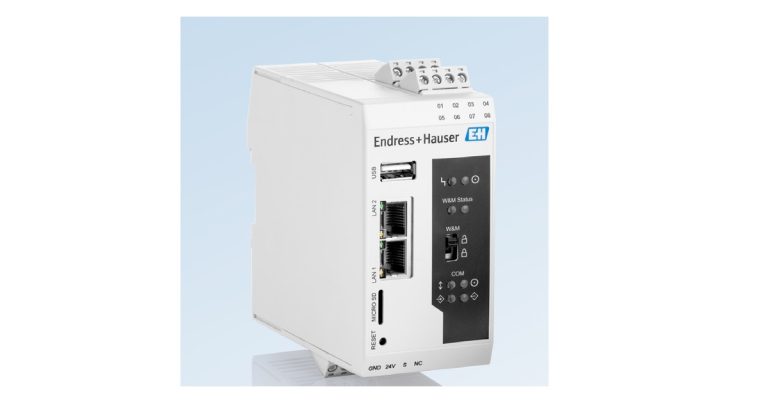
Ethernet and fieldbus technologies often operate side by side within the same plant. While one production line may continue running the stable PROFIBUS network, the next production line might run PROFINET. Gateways enable communication between these systems by translating legacy signals into new structures, allowing data to flow without interrupting production. Over time, the plant evolves into a layered ecosystem of protocols, network topologies, and vendor platforms that function together as an integrated whole.
Successful coexistence relies on planning and operational trust. Operators and electricians must see the new system working before they trust it. Clear documentation, thorough testing, and well-defined procedures provide operators and electricians with the assurance needed to support and maintain the evolving network.
In hazardous areas, intrinsic safety (IS) requirements guide technology selection. Protocols such as PROFIBUS PA and HART remain common, while Ethernet gradually extends into these zones via SPE and future IS-certified Ethernet hardware.
Legacy fieldbus and distributed control system (DCS) devices were never designed for Internet Protocol (IP) networking; therefore, connecting them to enterprise systems raises new security and timing concerns. Firewalls, virtual local area network (VLAN) segmentation, and least-privilege access maintain controlled communication boundaries. Expanded visibility enhances operational insight while reinforcing the importance of defined network segmentation. Additionally, TSN uses mechanisms such as time synchronization and scheduled traffic to support bounded latency and predictable delivery. This approach ensures that each signal is delivered within a precise and dependable timeframe.
Securing the Connected Plant
Ethernet provides greater access to operational data, but every new switch, sensor, and connection also creates an additional access point that must be secured. Engineers will not stop every intrusion, but they can control its spread. As networks grow more complex, it becomes increasingly important to understand what is connected, how systems communicate, and who has access to them.
Industrial network security requires clear boundaries, fault isolation, and preparation for failure. This approach operates as a continuous discipline that includes regular patching, active monitoring, and periodic reassessment as both the facility and external threats evolve.
The safest architecture is one where a compromised device cannot influence the control strategy. Ethernet-based systems require deliberate containment strategies that limit the scope of disruptions. Thoughtful segmentation and protective design measures act as built-in safeguards, ensuring disturbances remain localized and the broader system continues to operate reliably.
Turning Connectivity into Insight
Ethernet’s biggest advantage is visibility. By merging control and information networks, engineers can monitor process variables, energy use, and equipment behavior in real time.
Predictive maintenance depends on that transparency. Vibration, current, and temperature readings feed dashboards that instantly flag deviations. Maintenance teams gain precise insight into developing failures, including the specific component involved and the conditions driving the issue. Reliable timing ensures that this information reflects actual system behavior, supporting confident decision-making.
Ethernet transforms raw process data into actionable operational intelligence. When engineers can trace the sequence of events leading to faults, engineering efforts extend beyond reactive maintenance toward sustained continuous improvement. The network becomes an instrument for operational control, supporting efficiency, reliability, and informed optimization.
Engineering the Next Generation of Ethernet
Industrial networking is advancing toward convergence, bringing all devices, from controllers to sensors, onto a single deterministic infrastructure. TSN and SPE are driving that shift.
TSN enhances timing precision and traffic scheduling, enabling motion control, safety communication, and monitoring data to share the same cable without interference. SPE streamlines wiring by carrying both power and data over a single twisted pair. These advances will push Ethernet deeper into the field level, connecting devices that once lived on proprietary buses. Though the technology is ready for implementation, multi-vendor interoperability is still developing.
Ethernet’s evolution reflects continuous refinement, with each advancement strengthening reliability and further integrating control, monitoring, and analytics into a cohesive network architecture.
The Engineer’s Takeaway
Industrial networking has progressed from point-to-point wiring to shared fieldbuses and now to Ethernet-based architectures that function as distributed control systems. Each stage has expanded visibility, strengthened integration, and increased the need for disciplined design and validation. Successful Ethernet implementation depends on careful planning, testing, documentation, and verification to ensure reliable operation and long-term system integrity.
Network reliability is built on a well-defined structure. Every signal benefits from a clear purpose, a known source, and a predictable transmission path. This level of organization allows faults to surface clearly through data, enabling faster diagnosis and resolution. Ethernet provides comprehensive visibility into system performance, enabling teams to monitor uptime, quality, and safety in real time and respond early to emerging issues.
For more information on Mouser solutions HERE

Fieldbus Fieldbus Fieldbus Fieldbus Fieldbus