| | |

Yaskawa: How to Choose or Troubleshoot a Variable Frequency Drive (VFD)

February 3, 2025

Yaskawa: How to Choose or Troubleshoot a Variable Frequency Drive (VFD)

By: Anthony Gabriele, HVAC Application Engineer at Yaskawa.

Proper VFD installation requires selecting the right enclosure, ensuring voltage compatibility, addressing harmonics and mitigating common faults for optimal performance and longevity.

Learning Objectives

  • Discover how to choose or troubleshoot a variable frequency drive (VFD).
  • Learn about the VFD installation environment, input power and VFD ratings versus motor requirements.
  • Understand protection devices and other options.

VFD Insights

• Location considerations are important when it comes to choosing the proper variable frequency drive (VFD).
• Confirming the proper voltage for a VFD is critical before powering it up.
• Motor horsepower and full load amps should be taken into consideration before selecting a VFD.

While location is essential to any real estate transaction, you could also apply this requirement to a variable frequency drive (VFD) installation. Selecting the appropriate enclosure for the VFD location will provide the best opportunity for long life.

There are four primary enclosure types for both indoor and outdoor applications. Types 1 and 12 fall into the indoor category. Type 3R and Type 4X are the outdoor category.

When specifying VFDs indoors, consider the surrounding environment.
• Is it clean and conditioned air?
• Is it a dusty manufacturing environment?
• What is the ambient temperature?
• Are there chilled water pipes overhead that are sweating and dripping water?

A clean and conditioned environment would be appropriate for a Type 1 enclosure. A Type 12 enclosure would be appropriate for an indoor area with dripping water or dust — think mechanical room or manufacturing environment with mist spray, dust or other airborne contaminants. The Type 12 enclosure will have filtered ventilation. Types 3R and 4X would be appropriate for an outdoor application where exposure to rain, snow, ice and other precipitation will occur.
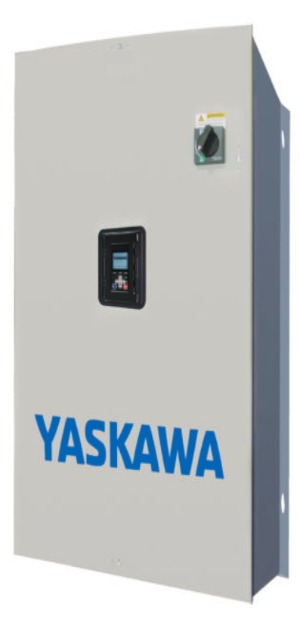
Figure 1: Type 1 & 12 Enclosures Are Typically Used for Indoor Installations.

Outdoor enclosures will have filtered ventilation and sometimes include a space heater to prevent the formation of condensation. Consider the addition of a space heater in an outdoor application; this small investment upfront that may save the facility manager a big headache down the road. Type 3R is suitable for most outdoor applications.

Type 4X can be designed as a totally enclosed with an air conditioner to remove enclosure heat. Type 4X or stainless steel would be ideal if the enclosure was exposed to corrosive elements. Always consider the cost of Type 4X as it could be multiples higher than a comparable Type 3R.

Most VFDs are rated for sustained maximum output current at 104°F. If the location could exceed this ambient temperature, confirm the manufacturer’s de-rated amperage for higher ambient temperatures. Engineers may have to oversize the VFD for higher ambient temperatures.

Check VFD Supply Voltage, Power Quality & Motor Requirements

Before a building owner installs or powers up a VFD, be sure to check the nameplate data and confirm the voltage to be applied is appropriate. Many VFDs have been damaged on power up because the wrong voltage was applied. Verify all three phases are present or, if single phasing (yes, you can apply single phase power to a standard 6-pulse VFD and generate 3-phase output) that the proper de-rate is applied.
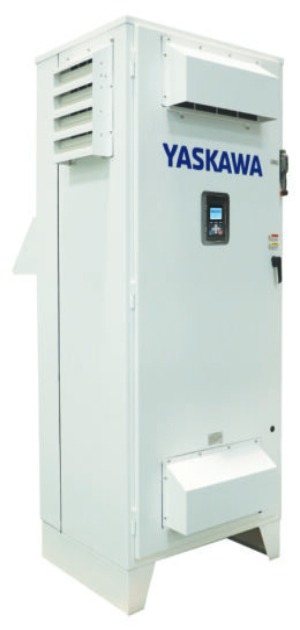
Figure 2: Type 3R and 4X Are Typically Used for Outdoor Installations.

Most populated areas will have clean and true 3-phase power. Outside of major metropolitan areas, power quality may not be as high as expected. Open delta systems are more common in rural areas and may present problems that are beyond the scope of this article. VFD de-rating may be required.

Be sure to confirm motor horsepower (hp) and full-load amps (FLA) and select the appropriate VFD size. The VFD rated output current must meet or exceed the motor FLA. Most motors will have a NFPA 70: National Electrical Code (NEC) amperage to horsepower ratio that will allow for sizing based on horsepower and most fan or pump applications will use a 2- or 4-pole motor, which is more likely to have common NEC horsepower/amperage ratings. Industrial applications that require more torque may use a 6-pole motor and may have higher FLA requirements versus NEC ratings. If this is the case, consider upsizing the VFD to achieve maximum motor speed under full load.

Protection Devices & Understanding SCCR/kAIC

Some VFD manufacturers may indicate a specific short-circuit current rating (SCCR) or kilo ampere interrupting capacity (kAIC), typically between 65 and 100 kAIC. But to attain this specific level, you must specify upstream branch circuit protection. Circuit breakers and/or fuses are installed upstream of the VFD and will interrupt the power in the event of a phase-to-phase or phase-to-ground short circuit. These components and specific SCCR/kAIC requirements exist to lower the risk of an arc flash. Always refer to the manufacturer’s literature to confirm a suitable branch circuit protection for a specific application.

Harmonic Mitigation in VFD Design

The most common type of VFD design is often referred to as a 6-pulse VFD. The 6-pulse VFD has three main parts:
• The input diode bridge, the rectifier where alternating current (AC)-to-direct current (DC) conversion occurs
• The DC bus capacitor bank
• The output transistors or inverter

The power conversion process on a 6-pulse drive may create harmonics (voltage or current distortion) that could adversely affect operation of other equipment on the power system or standby generators.

Devices such as reactors or chokes, which add impedance and smooth out the current draw from the VFD rectifier, will help to reduce harmonics and are sometimes built into the VFD in the DC bus circuit. If harmonics are of concern, such as might be the case in a hospital or airport, proper selection in the preliminary stages of a project is very important. VFDs with direct AC-to-AC conversion and other lower harmonic options are available for these situations.

How a VFD Works & How to Troubleshoot Common Faults

One common fault is an over-voltage. An over-voltage refers to the DC bus voltage exceeding a defined level. The drive disengages motor control and faults out when the DC bus voltage rises too high.
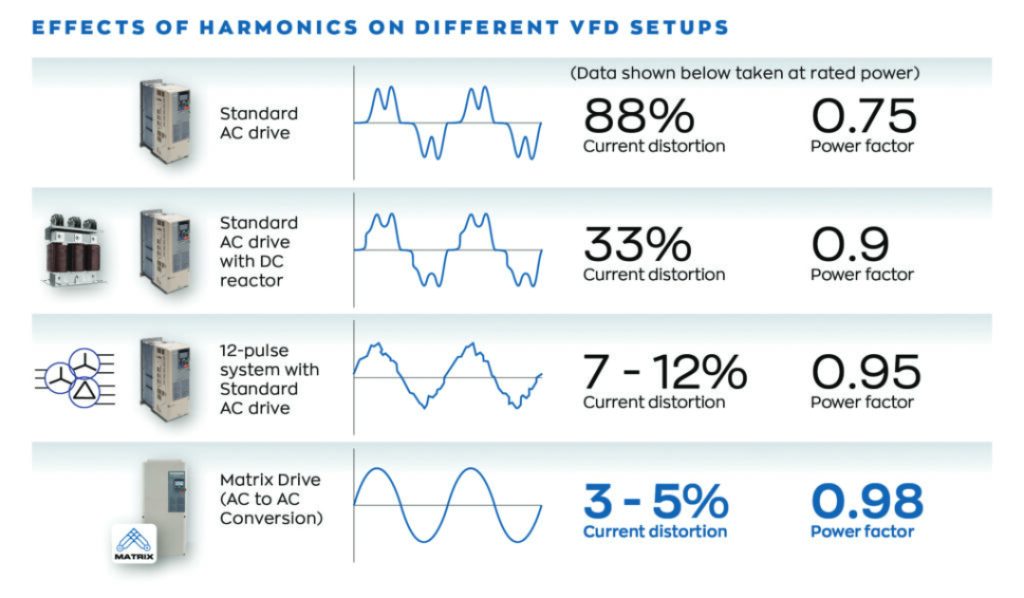
Figure 4: Harmonic Performance Can Affect How You Choose to Set Up Your Variable Frequency Drive (VFD).

Let’s tie some of the information presented earlier together to help you understand how a 6-pulse VFD works. The input diodes pass the current to keep the DC bus level charged and stable. As the output transistor switches on and off rapidly, creating a simulated ac sinewave, the motor shaft will begin to turn.

A common condition is a regenerative load. Environmental conditions like wind or equipment like additional fans in a plenum may turn the motor shaft faster than the VFD output frequency. If the motor shaft exceeds the rotational magnetic field created by the motor stator the motor has now become a generator. Excess power is now being funneled back to the DC bus through the flyback diodes that are part of the VFD output transistor circuit.

Think of the output side of the VFD as a two-way street. Power goes out but can also come back in. The DC bus has a limited capacity and voltage rise will inevitably trip an over-voltage fault. Once the rotational magnetic field is lost, such as when output frequency ceases upon fault, the motor will freely spin.

Single-phase input is a viable option. Precise motor control is derived from high-speed switching of the transistors on the output side of the VFD that uses DC bus power. This conversion process isolates the AC line side from the output side.

One caveat with single-phase input is that the VFD must be oversized due to the capacity of the DC bus to maintain a stable charge when under load. When one of three phases is eliminated feeding the VFD, the bus voltage will drop too quickly between the next phase. This creates a condition referred to as DC bus ripple, which could damage the capacitors if left unchecked. Most VFDs have a detection circuit to monitor DC bus ripple.

The suggestions only scratch the surface of troubleshooting VFDs. It’s critical to consult the technical information from the VFD manufacturer for specific product questions.
Source

Related Articles

  • Gripping systems are designed for collaborative, intelligent and intuitive operation

    “We are experiencing a fundamental change in industrial production towards smart, intelligent processes – from initial planning and configuration, including commissioning and as ongoing operation and maintenance,” Henrik A. Schunk, Managing Partner and CEO of gripping system and clamping technology specialist SCHUNK stressed at the end of the SPS 2019.


  • | | | |

    Building Towards Autonomous Operations

    What is consistently heard from industry leaders is the need for real-time visibility across their global operations, which is key to ensuring their operations stay agile and scalable. However, achieving this isn’t possible without removing laggy manual data collection through the deployment of connected assets and contextualized data. By eliminating data silos and unlocking industrial data and artificial intelligence (AI) capabilities, companies can enable autonomous decision-making that optimizes costs, efficiency, and production resilience. This moves their organization closer to achieving autonomous operations. Manufacturing operations, in particular, have seen progress through Model Predictive Control (MPC), which continuously analyzes real-time and forecasted data to optimize process control within defined constraints. While MPC is a strong example within manufacturing, broader autonomy demands extending similar intelligent systems across the enterprise. This journey is captured in the industrial AI maturity pyramid, which outlines a progression from basic data integration and visualization to predictive analytics, prescriptive decision-making, and ultimately, autonomous operations. As organizations climb this pyramid, they adopt machine learning, real-time automation, and self-learning systems. Each stage requires not just technological upgrades but also cultural and structural transformation.

  • | | |

    Rittal: TopTherm Chillers 3412.1 – 13,648 BTU/h

    TopTherm chillers in roof-mounted or stand-alone versions are flexible and compact. They offer centralized and efficient cooling of the cooling water and supply air/water heat exchangers and other devices. With nano-coated condenser as standard. Compact, modular layout of the refrigeration components pump to convey the medium. Complete unit ready for connection. Multilingual documentation including functional diagram and wiring plans. Chillers are used for particularly high heat loads. A single pipeline system takes care of all cooling tasks on the system or machine.

  • Festo’s Solutions Prevent Contamination in Lithium-Ion EV Batteries

    Festo is a trusted, single source supplier for all tasks involving automation of battery manufacturing. They offer a complete line of copper-free, zinc-free, and dry-room-compatible components for battery manufacturing. Today, approximately 95% of electric vehicles (EVs) and energy storage systems use conventional lithium-ion batteries, which require liquid electrolyte filling. Lawrence Lin, Business Development Manager at Festo, focuses on supporting the automation of battery production for EVs and energy storage systems. Lin specializes in automation advancements and technologies that drive improvements in productivity, quality, and safety through innovative designs.

  • |

    Rockwell Automation: Keep Chemical Processes in Control with an Integrated Architecture

    Today’s innovative smart technologies – such as Industrial Internet of Things (IIoT), artificial intelligence (AI), cloud, edge computing and digital twins – are driving manufacturers to digitally transform their operations. Chemical manufacturers face a similar technological change as they address various challenges, including aging legacy systems, economic uncertainty, tightening regulatory requirements, varying feedstock and energy costs, safety and environmental incidents, unplanned downtime, cybersecurity vulnerabilities, workforce skills shortage and supply chain disruptions. With the growing emphasis on sustainability and decarbonization, chemical companies are now seeking to invest in renewable energy sources and initiatives that support a circular economy. These challenges highlight the chemical industry’s…

  • | |

    ABB Invests in Made in Canada with Installation Products that Electrify Our World 

    ABB recently announced their plan to build a new R&D and manufacturing facility in Canada. It will combine their existing facilities in Iberville and Saint-Jean-sur-Richelieu to increase production capacity and support future growth in key sectors across Canada like utilities, energy, and infrastructure. Michael Shenouda, Canada Region Leader – General Manager, Installation Products, answers my questions about the new facility. Shenouda started at ABB for a summer job, now, 30 years later, he plays a leading role in the company. “Made in Canada” is something that ABB strives for. It is something they promote. And they have been doing this for decades. “It is something we are proud of,” Shenouda says. “I think the pandemic has proved that having robust supply chains close to where customers’ needs are is very important. We source all our steel locally; within 500 kilometers of the factories we operate. Our aluminum is mostly Canadian as well. We are very proud to have 600 employees in both our Iberville and Saint-Jean facilities.”  


Changing Scene

  • Sonepar Canada Announces Zhen Lee as New Vice President, Vendor Relations

    Sonepar Canada Announces Zhen Lee as New Vice President, Vendor Relations

    Sonepar Canada is pleased to announce the appointment of Zhen Lee as Vice-President, Vendor Relations, effective June 8, 2026. Zhen has more than 20 years of experience across procurement, vendor relations, operational management, and strategic sourcing. His depth of expertise and innovative approach will support Sonepar Canada’s continued focus on strengthening vendor partnerships and delivering… Read More…

  • Festo Canada Announces Rupico Has Joined the Festo Certified System Integrator Program

    Festo Canada Announces Rupico Has Joined the Festo Certified System Integrator Program

    Festo Canada is delighted to announce Rupico has joined the Festo Certified System Integrator program! As a certified partner, they bring recognized automation expertise and will integrate Festo’s solutions to help businesses achieve maximum efficiency and innovation. Together, they are excited to push the boundaries of automation technology and deliver trusted solutions to customers across… Read More…


Sponsored Content
The Easy Way to the Industrial IoT

The way to the Industrial IoT does not have to be complicated. Whether access to valuable data is required or new, data-driven services are to be generated, Weidmuller enables its customers to go from data to value the easy way. Weidmuller’s comprehensive and cutting-edge IIoT portfolio applies to greenfield and brownfield applications. Weidmuller offers components and solutions from data acquisition, data pre-processing, data communication and data analysis.

Visit Weidmuller’s Industrial IoT Portfolio.


ADVANCED Motion Controls Takes Servo Drives to New Heights (and Depths) with FlexPro Extended Environment Product Line

Advanced Motion Controls is proud to announce the addition of six new CANopen servo drives with Extended Environment capabilities to their FlexPro line. These new drives join AMC’s existing EtherCAT Extended Environment FlexPro drives, making the FlexPro line the go-to solution for motion control applications in harsh environments.

Many motion control applications take place in conditions that are less than ideal, such as extreme temperatures, high and low pressures, shocks and vibrations, and contamination. Electronics, including servo drives, can malfunction or sustain permanent damage in these conditions.

Read More


Service Wire Co. Announces New Titles for Key Executives

Bruce Kesler and Mark Gatewood have been given new titles and responsibilities for Service Wire Co.

Bruce Kesler has assumed the role of Senior Director – Business Development. Bruce will be responsible for Service Wire’s largest strategic accounts and our growing Strategic Accounts Team.

Mark Gatewood has been promoted to the role of Vice President – Sales & Marketing. In this role, Gatewood will lead the efforts of Service Wire Company’s entire sales and marketing organization in all market verticals.

Read More


Tri-Mach Announces the Purchase of an Additional 45,000 sq ft. Facility

Tri-Mach Elmira Facility

Recently, Tri-Mach Inc. was thrilled to announce the addition of a new 45,000 sq ft. facility. Located at 285 Union St., Elmira, ON, this facility expands Tri-Mach’s capabilities, allowing them to better serve the growing needs of their customers.

Positioning for growth, this additional facility will allow Tri-Mach to continue taking on large-scale projects, enhance product performance testing, and provide equipment storage for their customers. The building will also be the new home to their Skilled Trades Centre of Excellence.

Read More


JMP Parent Company, CONVERGIX Acquires AGR Automation, Expanding Global Reach

Convergix Automation Solutions has completed the acquisition of AGR Automation (“AGR”), a UK-based provider of custom, high-performance automation design and systems integration primarily to the life sciences industry.

Following Convergix’s acquisitions of JMP Solutions in August 2021 and Classic Design in February 2022, AGR marks the third investment in Crestview’s strategy to build Convergix into a diversified automation solutions provider targeting the global $500+ billion market, with a particular focus on the $70 billion global systems integration and connectivity segments. Financial terms of the transaction were not disclosed.

Read More


Latest Articles