The Advantages of Using Cobots in the Food and Beverage Industry: Streamlining Operations and Boosting Profitability
The Advantages of Using Cobots in the Food and Beverage Industry: Streamlining Operations and Boosting Profitability

August 9, 2023

The food and beverage industry has long been a major contributor to the global economy, with the sector consistently showing strong growth. In recent years, the sector has undergone rapid technological advancements, leading to the development of new innovations that have dramatically improved the efficiency of food production and distribution.

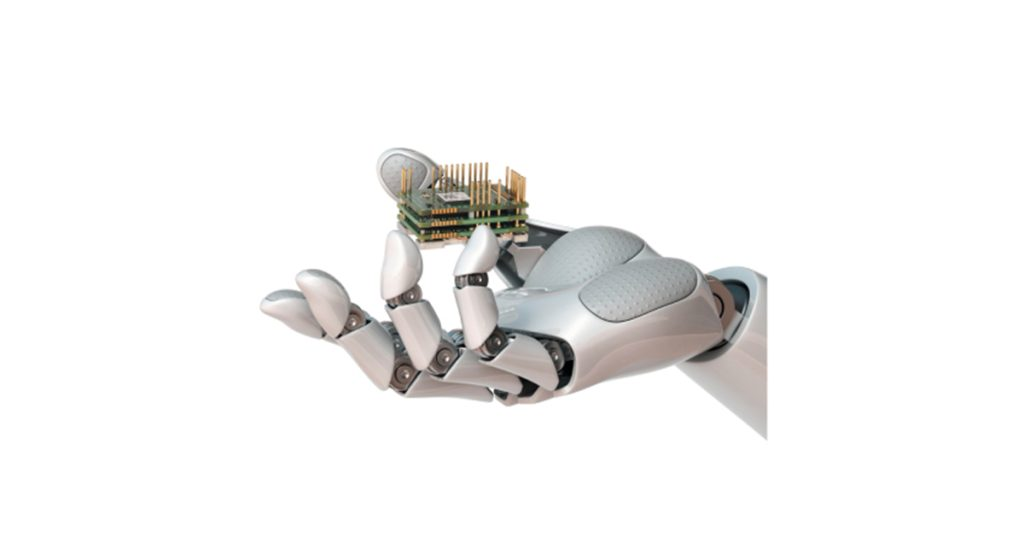
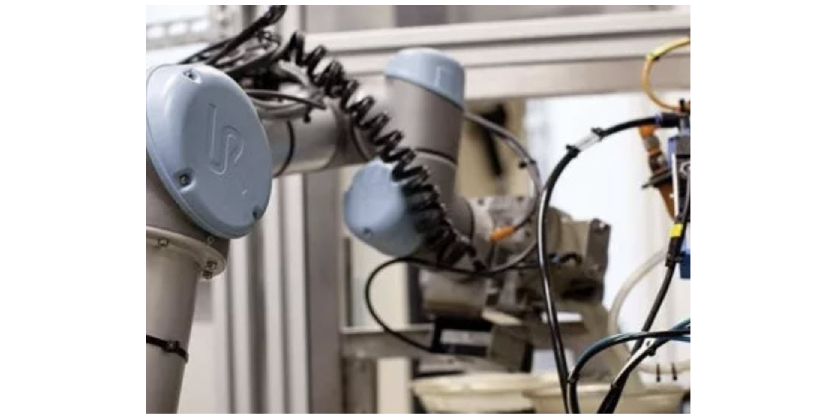
One of the most notable advancements in this area has been using cobots, or collaborative robots, which are designed to work alongside human workers in a factory or production line.

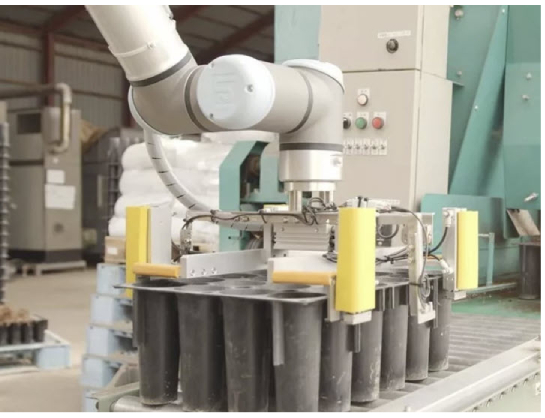
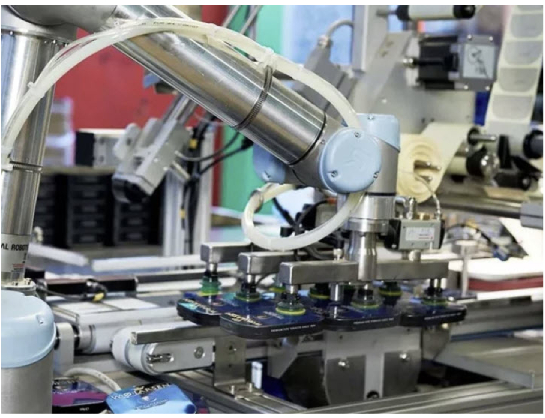
Cobots are highly versatile and can be programmed to perform a wide range of tasks, from simple repetitive tasks to more complex tasks that require a high degree of dexterity and precision. They can be easily integrated into existing production lines and are often used in tasks such as packaging and inspection. In the food and beverage industry, cobots are particularly useful for tasks such as food packaging, palletizing, and labeling.
The Advantages of Using Cobots in the Food and Beverage Industry: Streamlining Operations and Boosting Profitability

One of the primary benefits of using cobots in the food and beverage industry is the time savings that they offer. Cobots are capable of working 24/7, which means that they can perform tasks much faster and more efficiently than human workers. This results in increased productivity and reduced production times, which can help to boost profitability and increase competitiveness in the market.

Another key advantage of cobots is the cost savings that they offer. Cobots are often much cheaper to purchase and maintain than traditional industrial robots, and they also require less training and support, as they are designed to work alongside human workers. In addition, cobots do not require specialized technicians to maintain them, which means that companies can save money on ongoing support costs.

While the time and cost benefits of using cobots are well-known, there are also many other benefits that are often overlooked. For example, cobots can help to improve the overall safety of the production process, as they are designed to work in proximity to human workers without causing harm. This means that companies can reduce the risk of workplace accidents, which can help to improve employee morale and reduce the costs associated with workplace injuries.
The Advantages of Using Cobots in the Food and Beverage Industry: Streamlining Operations and Boosting Profitability

Another lesser-known benefit of cobots is that they can help to improve the quality of the final product. Cobots are highly accurate and repeatable, which means that they can produce high-quality products with consistent accuracy and reliability. This can help to improve the reputation of the company and increase customer satisfaction, which can help to drive future sales and revenue.

In summary, the use of cobots in the food and beverage industry offers a wide range of benefits, including time and cost savings, improved safety, and improved product quality. Companies that are looking to streamline their operations and boost profitability should consider incorporating cobots into their production processes. With their versatility, accuracy, and reliability, cobots are the perfect solution for companies looking to remain competitive in today’s rapidly changing marketplace.
Source

Related Articles

  • |

    Strategies for Achieving Modern Oilfields

    In order to create modern oilfields, the oil and gas industry stands at a crossroads: aging infrastructure, declining production, and rising costs threaten profitability, while climate pressures demand sustainable innovation. How can oilfield operators achieve this? The oil and gas industry is undergoing a rapid transformation driven by technological advancements. Automation, power, and digital systems are at the forefront of this modernization, offering the potential to enhance efficiency, safety, and environmental sustainability. However, the implementation of these mission-critical systems in onshore oilfields presents a unique set of challenges and recommendations.

  • |

    Advanced Barcode Technology for Seamless Traceability

    Effective traceability is crucial for maintaining operational efficiency and compliance. However, barcode readability challenges, such as poor print and environmental damage, can significantly disrupt workflows. Omron’s latest blog post delves into advanced barcode technologies that overcome these obstacles. Discover how sophisticated barcode reading solutions, including enhanced imaging capabilities and adaptive lighting, can ensure accurate data capture even in the most demanding conditions. Learn how these innovations can transform your traceability system into a powerful asset for your business.

  • The Space-Performance Paradox Is Cracked

    With the APC Smart-UPS Ultra series, Schneider Electric has now introduced an advanced 1-phase double-conversion UPS system with lithium-ion technology that is designed to deliver professional performance in the smallest possible space while maintaining flexibility. According to IDC (International Data Corporation), the global edge computing market is facing a massive growth spurt. As a result, more and more compute, network and storage resources are required locally and in close proximity to realize business-critical processes and IT applications that rely on network connectivity to the cloud.

  • | | | |

    ATS: The Laser Welding Process – From Concept to Production

    In the ever-evolving manufacturing landscape, laser welding has emerged as a transformative technology, revolutionizing how industries approach precision and efficiency. By seamlessly fusing materials with pinpoint accuracy, it creates strong and visually flawless bonds that enhance production capabilities. Understanding how laser welding processes are developed and implemented helps determine if this innovative approach is right for your next manufacturing project. Laser welding has evolved significantly, expanding from simple applications to complex, high-precision tasks across industries. Advances like high-power fiber lasers enable deeper, faster, and more precise welds. Real-time monitoring and adaptive control systems enhance reliability, even in challenging conditions. Emerging technologies will shape the future of laser welding. Hybrid techniques combining laser welding with other methods can improve quality and efficiency. Artificial intelligence and machine learning will optimize parameters and predict defects, enhancing reliability. Newer laser technologies, like ring/core lasers, will broaden the range of weldable materials, unlocking new opportunities in various manufacturing spaces. As these advancements continue, laser welding will become increasingly integral to modern manufacturing, offering enhanced capabilities and greater flexibility.


Changing Scene


Sponsored Content
The Easy Way to the Industrial IoT

The way to the Industrial IoT does not have to be complicated. Whether access to valuable data is required or new, data-driven services are to be generated, Weidmuller enables its customers to go from data to value the easy way. Weidmuller’s comprehensive and cutting-edge IIoT portfolio applies to greenfield and brownfield applications. Weidmuller offers components and solutions from data acquisition, data pre-processing, data communication and data analysis.

Visit Weidmuller’s Industrial IoT Portfolio.


ADVANCED Motion Controls Takes Servo Drives to New Heights (and Depths) with FlexPro Extended Environment Product Line

Advanced Motion Controls is proud to announce the addition of six new CANopen servo drives with Extended Environment capabilities to their FlexPro line. These new drives join AMC’s existing EtherCAT Extended Environment FlexPro drives, making the FlexPro line the go-to solution for motion control applications in harsh environments.

Many motion control applications take place in conditions that are less than ideal, such as extreme temperatures, high and low pressures, shocks and vibrations, and contamination. Electronics, including servo drives, can malfunction or sustain permanent damage in these conditions.

Read More


Service Wire Co. Announces New Titles for Key Executives

Bruce Kesler and Mark Gatewood have been given new titles and responsibilities for Service Wire Co.

Bruce Kesler has assumed the role of Senior Director – Business Development. Bruce will be responsible for Service Wire’s largest strategic accounts and our growing Strategic Accounts Team.

Mark Gatewood has been promoted to the role of Vice President – Sales & Marketing. In this role, Gatewood will lead the efforts of Service Wire Company’s entire sales and marketing organization in all market verticals.

Read More


Tri-Mach Announces the Purchase of an Additional 45,000 sq ft. Facility

Tri-Mach Elmira Facility

Recently, Tri-Mach Inc. was thrilled to announce the addition of a new 45,000 sq ft. facility. Located at 285 Union St., Elmira, ON, this facility expands Tri-Mach’s capabilities, allowing them to better serve the growing needs of their customers.

Positioning for growth, this additional facility will allow Tri-Mach to continue taking on large-scale projects, enhance product performance testing, and provide equipment storage for their customers. The building will also be the new home to their Skilled Trades Centre of Excellence.

Read More


JMP Parent Company, CONVERGIX Acquires AGR Automation, Expanding Global Reach

Convergix Automation Solutions has completed the acquisition of AGR Automation (“AGR”), a UK-based provider of custom, high-performance automation design and systems integration primarily to the life sciences industry.

Following Convergix’s acquisitions of JMP Solutions in August 2021 and Classic Design in February 2022, AGR marks the third investment in Crestview’s strategy to build Convergix into a diversified automation solutions provider targeting the global $500+ billion market, with a particular focus on the $70 billion global systems integration and connectivity segments. Financial terms of the transaction were not disclosed.

Read More


Latest Articles

  • Eaton: Data Centers 2026 – Scaling Smarter, Greener & Faster

    Eaton: Data Centers 2026 – Scaling Smarter, Greener & Faster

    Data centers are no longer just the backbone of digital infrastructure – they are becoming dynamic players in the energy ecosystem. Fueled by AI, sustainability mandates, and grid challenges, the next generation of data centers must be faster to deploy, smarter to operate, and more reliable by design. Data centers have evolved from ENIAC’s climate-controlled… Read More…

  • nVent: What Does it Take to Make the Switch to Liquid Cooling?

    nVent: What Does it Take to Make the Switch to Liquid Cooling?

    Constant advancements in technology and connectivity are driving new applications and an increased need to safeguard the world’s data and networks. Content streaming, online banking, cloud computing, edge computing, artificial intelligence. These are just a few examples of applications driving data demand around the world. As demand for internet and cloud services rises, data centers… Read More…