Industrial Technology

  • | | |

    ABB DPA UPScale ST UPS Systems Achieves PEP Ecopassport Certification

    ABB’s DPA UPScale ST UPS systems have received PEP (Product Environmental Profile) Ecopassport certification, which is an environmental declaration aligned with the ISO14025 standard, specifically designed for electrical, electronic, and HVAC-R products. The certification is supported by a detailed Life Cycle Assessment (LCA), which quantifies environmental impacts from raw material extraction through manufacturing, transportation, usage, and end-of-life disposal. The PEP Ecopassport is an international standardized environmental declaration, recognized in Canada, that includes verified data on:

  • | |

    Moxa Industrial Linux: The Secure & Sustainable OS for the Industrial Edge

    Moxa actively participates in The Linux Civil Infrastructure Platform (CIP) and OpenChain Project and is a proud Linux Debian sponsor of the Long-Term Support (LTS) initiative. Moxa demonstrates its commitment to providing long-term stability for Debian-based systems. A keystone in this commitment is Moxa Industrial Linux (MIL), a secure, industrial-grade Debian-based operating system built for foundation’s unparalleled reliability. MIL provides decades of trusted performance with enhanced security patching and world-class 10-year OS support. Through Moxa’s partnership with the world’s first IEC 62443-4-2 Security Level 2 certified computer, MIL enables resilience, and industry applications to have future-ready stability. MIL is built on Debian and the standard Linux kernel to help accelerate application development with integrated Moxa utilities for system, network, and I/O management.

  • | | |

    From Factory Floor to Cloud: How Smart Sensors are Powering the Industrial IoT Revolution

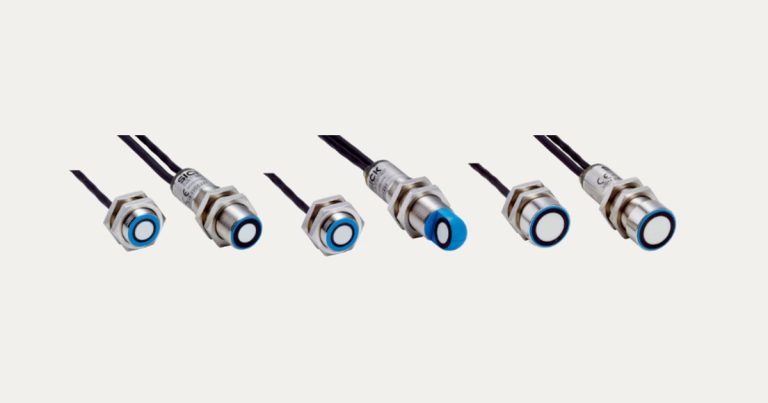
    Sensors are the first line of awareness in any automated system. They detect the presence or absence of objects, monitor environmental conditions, and trigger precise actions that keep production lines moving. Whether it’s a photoelectric sensor spotting a product or a proximity sensor confirming alignment, these devices ensure that operations run smoothly and safely. They also play a critical role in quality control, helping manufacturers reduce errors and maintain consistency across batches. Sensors have evolved from simple detection tools into intelligent data sources that drive smarter decisions. They are no longer just watching; They are communicating, diagnosing and optimizing.

  • | | | | |

    SICK: Innovation on the Move

    Wherever material is transported or moved, there is a serious danger of collisions between machines, vehicles or obstacles. Incidents like this can not only increase costs, but also significantly disrupt the operational process. With Visionary AI-Assist, SICK has developed an AI-supported solution that precisely and selectively records objects and people. The system issues warnings in good time, minimizing the risk of collisions. Every day, machine operators face the challenging task of maneuvering huge vehicles weighing several tons, such as front-end loaders or dump trucks, through complex working areas. Narrow roads, obstacles, blind spots and the dynamic movement of people and other machines demand a high degree of concentration. Visionary AI-Assist from SICK combines the robust 3D camera Visionary-B Two and the intelligent Software AI-Assist. Thanks to 3D snapshot stereoscopy, the camera provides high-resolution depth and color data in real time. The camera records both people and objects with millimeter precision, even if they are only partly visible. Depending on requirements, the field of view can be adjusted to cover a wide area or focus on the immediate vicinity.

  • | | | |

    ABB to Develop Next-Generation AI Data Centers with NVIDIA

    ABB has announced that it is accelerating the development of gigawatt scale next-generation data centers in collaboration with NVIDIA. Innovation will focus on the development and deployment of cutting-edge power solutions needed to create high-efficiency, scalable power delivery for future AI workloads. The research and development projects will support NVIDIA’s planned introduction of 800 VDC power architecture for 1 megawatt server racks. Delivering this level of power efficiently requires major advancements in power distribution technologies and architecture. Future data center power architectures will combine a medium voltage (MV) uninterruptible power supply (UPS) with direct current (DC) power distribution to the server room using solid-state power electronics devices.

  • | | | | |

    A New Era: Towards Industry 5.0 & 6G

    The transition to Industry 5.0 represents a profound and necessary evolution—one that steers global industry toward a paradigm that is sustainable, resilient, and human-centric. This shift is not a rejection of the technologies introduced in Industry 4.0, but rather a redefinition of their purpose: to augment human potential and advance societal well-being alongside economic growth. At the heart of this transformation lies 6G, the technological fabric capable of weaving this vision into reality. Its architecture is being purposefully designed to deliver dependable, high-bandwidth, and ultra-low-latency communication—enabling immersive, multi-sensory interactions between humans and intelligent systems. 6G will form the backbone of trustworthy AI, distributed intelligence, and advanced human–machine collaboration that underpin the Industry 5.0 ecosystem