Teledyne FLIR OEM: Choosing the Right Thermal Imager for Your Integrated Project
March 24, 2026
How Thermal Imaging Sensors Can Enhance Safety, Security & Performance on Your Next Integrated Project
Adding thermal imaging sensors to your next project can give your customers the ability to see the unseen and expand their senses into the unknown. If you’re considering adding thermal sensors to your next design, there are a few things you should consider to ensure you’re getting the capability you need.
How Do Thermal Cameras Work?
Thermal cameras capture infrared energy (heat) and use that energy to create images through digital or analog video outputs. The camera is made up of a lens, a thermal sensor, processing electronics, and a mechanical housing. The lens focuses infrared energy onto the sensor (also called a detector). The “detector” is actually an array of detector elements, and can come in a variety of pixel configurations, the most common of which are 320×256 and 640×512 pixels. This is the resolution of the detector.
These resolutions might seem low in comparison to visible light imagers, but there’s a reason for that. The individual detector elements themselves are much larger in thermal cameras than they are in visible cameras – visible cameras have pixels that are only 1-2μm, while thermal camera detector elements are 12-17μm each! This is because thermal detectors need to sense energy that has much larger wavelengths than visible light, requiring each sensor element to be significantly larger. As a result, a thermal camera usually has much lower resolution (fewer pixels) compared to visible sensors of the same mechanical size.
After the thermal energy hits the detector, the readout electronics convert it into a signal that can either be passed out of the camera or—with a camera like the FLIR Boson—go directly into system-on-a-chip circuitry. This gives the camera built-in capabilities like image processing and analytics that once required back-end electronics developed by the integrator.
What Resolution Do I Need?
First ask yourself what you need to image, how far away you need to see it, and the level of detail you need in the image. If you just need to detect an object, a single pixel may be enough to do the job. If you need to recognize what an object is (such as a person, animal, or vehicle), you’ll need a higher resolution. Even more pixels may be required to identify details about the object (such as if it’s an armed person, a dog rather than a deer, or a truck instead of a car).
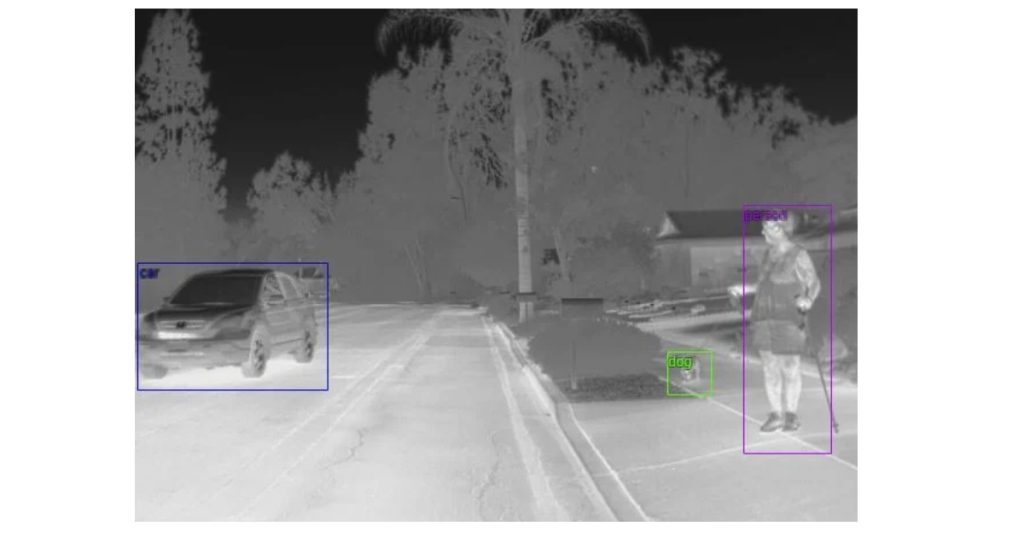
Thermal cameras range from lower-cost imagers (like those that go into smartphones) to high-performance cameras used for life-saving missions. FLIR cameras like Boson are available in qVGA (320×256) resolution and VGA (640×512) resolution and have horizontal fields of view (FOV) ranging from 4° to 92°. Lower-cost solutions like Lepton are available in lower resolutions like 80×60 and 160×120.
What Sensitivity Do I Need?
A camera’s sensitivity is specified as the Noise Equivalent Differential Temperature (NEDT). The NEDT is a signal-to-noise metric that tells you the temperature difference required to produce a signal equal to the camera’s temporal noise, and—by extension—the minimum temperature difference the camera can resolve.
Having a low NEDT is important for applications that require detecting subtle temperature differences and fine details. NEDT is usually expressed in milliKelvins (mK), with lower numbers indicating superior performance than higher numbers. The FLIR Boson has industry recognized sensitivity of less than 50mK. (Cameras from low-cost manufacturers may be hiding poor sensitivity by taking NETD at 50°C instead of the industry-standard 30°C.)
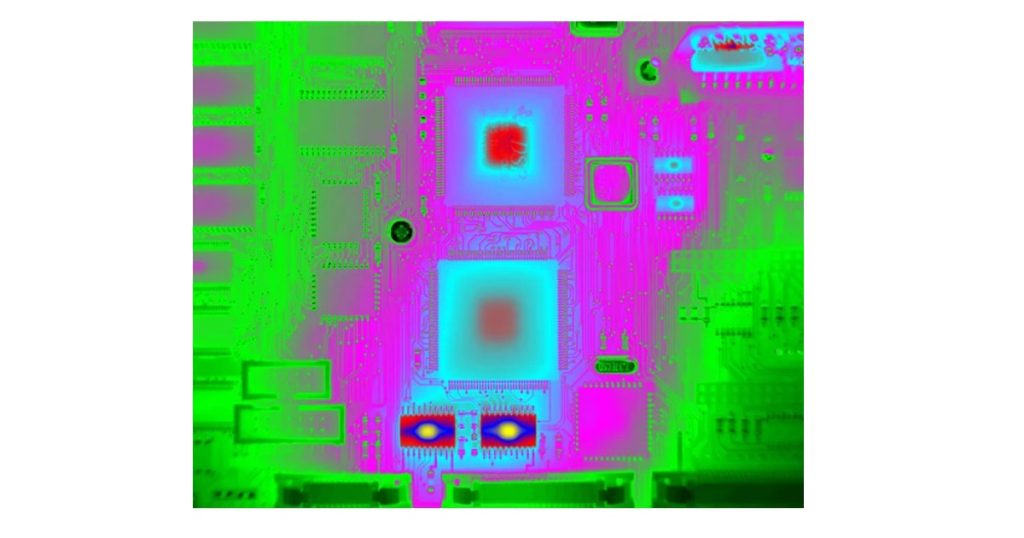
Do I Need a MWIR or a LWIR Camera?
A thermal camera is typically only sensitive to one of two wavebands: Midwave infrared (MWIR) from 3-5μm or Longwave infrared (LWIR) from 8-14μm.
Although there are exceptions, for the most part MWIR cameras require the infrared detector to be chilled to roughly 77 Kelvin with an on-board cryogenic cooler in order to create an image. Cooled cameras are more sensitive than uncooled cameras, but the coolers add size, weight, complexity, and cost, and require periodic maintenance. Uncooled LWIR imagers – like Lepton and Boson – can create images at ambient temperatures, so they’re smaller, lighter, less complex, and less costly than their cooled counterparts.
Do I Need Radiometry or Just Imaging Capability?
All thermal cameras can provide an image of the relative intensities of thermal energy within their fields of view, but some cameras take that a step further and provide calibrated, non-contact temperature measurements of those objects. This is a process called radiometry.
In order to do this, the camera needs to compensate for other sources of radiation (reflections, lens materials), atmospheric effects (humidity, weather conditions, and distance to target), and the material properties of the objects being viewed (emissivity in particular). Once these elements are known, the amount of radiation received by the camera can be converted to a temperature value with accuracy approaching +/-2°C.
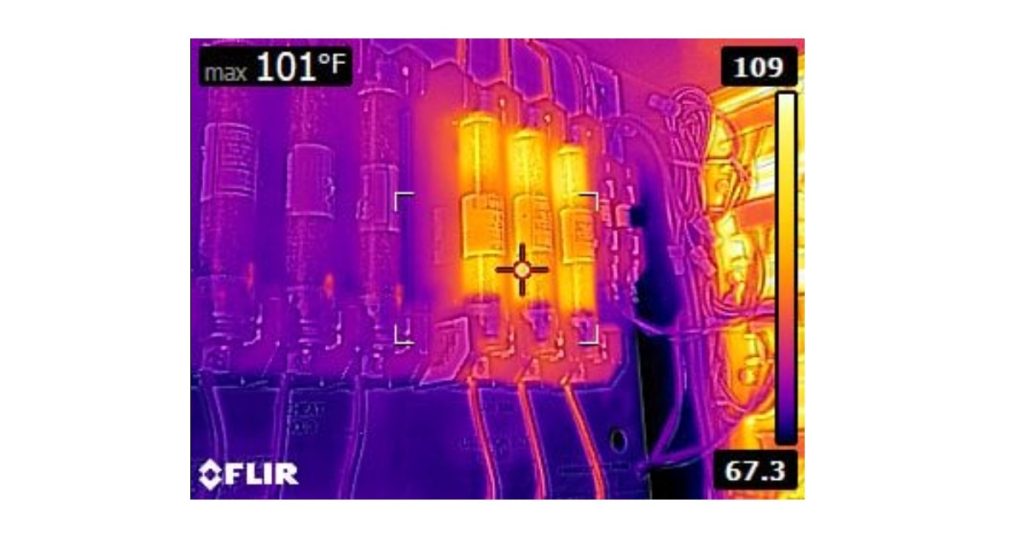
FLIR cameras are available with varying degrees of radiometric capability and accuracy – from imaging only, to a simple center spot meter function, to advanced radiometry and improved accuracy.
Learn more about FLIR OEM camera cores HERE
For more information on Teledyne FLIR OEM solutions HERE

Thermal Imaging Thermal Imaging Thermal Imaging Thermal Imaging Thermal Imaging Thermal Imaging Thermal Imaging Thermal Imaging