Rittal Presents Enclosure Heaters Especially for the Canadian Winter
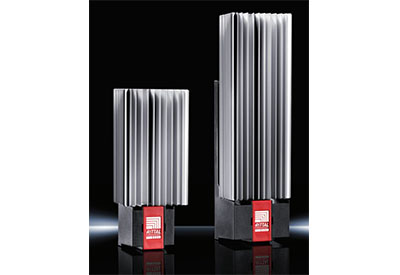
PB-54-Rittal-WinterHeaters-400.jpg

February 10, 2022

Industrial enclosures are often in outdoor environments where weather conditions and other hazards are very real challenges. These are intensified when you add extreme cold and the necessity to provide adequate heating for these enclosures to protect the electronics inside. As with enclosure cooling solutions, targeted enclosure heating with the appropriate thermal output,  efficient energy consumption, and flexibility for use in a variety of applications are mission-critical for the durability and longevity of industrial enclosures to weather the winter months.

How enclosure heaters work

Before you can decide whether an industrial enclosure heating solution is right for your application, let’s first take a look at how enclosure heaters work to combat the buildup of frost, ice, and condensation, as well as maintaining an optimal operating temperature for enclosed electronics.

With an enclosure heater, a PTC resistor converts electricity into a heat source. This resistor increases its resistance while the electric current decreases, which in turn decreases the enclosure temperature. Essentially, the PTC resistor functions as an acceleration pedal with a governing device on it to provide the appropriate thermal output while at the same time helping to ensure the electronics inside do not overheat and are not subjected to elevated temperatures that would hamper performance.

Optimal heating outputs

Calculating the optimal temperature to help prevent the enclosure from overheating while maintaining peak efficiency can be something of a delicate dance, especially depending on the severity and duration of the cold to which the enclosure is exposed. A relatively simple equation can help you identify the right heating output to optimize performance and enhance service life:

  •    –   Calculated enclosure area A = 4.38 m²
  •    –   Desired temperature in the enclosure Ti = +10 °C
  •    –   Minimum ambient temperature Tu = -5 °C
  •    –   Heat transfer coefficient k = 5.5 W/m²K

With these variables and a formula framework of “Pverw = k x A x (Ti-Tu),” it can be determined that optimal heating output for an industrial enclosure of this nature should be 361 watts. Of course, there are other contextual elements that could slightly alter this output projection, but a basic understanding of how enclosure heaters work and this equation for determining thermal output gives you a leg-up on identifying the right solution for your application.

Considerations for installing an enclosure heater

Some of the more common applications for industrial enclosure heating solutions include traffic guidance or light systems, toll booths, sewage treatment plants, large-scale mobile hotspots or smartphone technology, and charging stations for electric vehicles. While each of these applications is quite different, there are a handful of important considerations for installing any enclosure heating solution that can determine efficiency and effectiveness.

Proper heater installation procedure includes:

  •    –   When installing enclosures outdoors, the capacity must be doubled
  •    –   Positioning the heater as low as possible inside the enclosure
  •    –   Installing the heater beneath the electronics that require targeted heating
  •    –   Ensuring the distance between the heating solution and the bottom of the enclosure must be at least 100 mm
  •    –   Allowing adequate free space around the heating solution
  •    –   Depending on the application, a thermostat and/or hygrostat should be used

The modular design and engineering of Rittal’s enclosure heating solutions not only account for these installation guidelines, but Rittal’s enclosures heater provide a variety of fan integration options, continuous thermal output with a variety of BTU/hr capabilities, dynamic thermostat interfaces, and aluminum construction for ease of installation.

In addition, Rittal’s enclosure heaters combine innovative state-of-the-art targeted heating with the ability to scale your heating solution no matter the application to regulate relative humidity, prevent temperatures from dropping below optimal dewpoints, and help eliminate corrosion and other electrical failures from condensation buildup.

Download the Enclosure Heater Flyer HERE.
Related Articles


Changing Scene

  • Laurentide Controls Chooses Bécancour for Its 6th Centre

    Laurentide Controls Chooses Bécancour for Its 6th Centre

    With more than 50 years of industrial optimization experience in Eastern Canada, Laurentide Controls is officially opening its 6th centre, located in Bécancour. The objective is clear: bring expertise closer to industrial plants, speed up interventions, and generate measurable gains in reliability, productivity and energy performance – all directly benefiting businesses in the region and,… Read More…


Sponsored Content
The Easy Way to the Industrial IoT

The way to the Industrial IoT does not have to be complicated. Whether access to valuable data is required or new, data-driven services are to be generated, Weidmuller enables its customers to go from data to value the easy way. Weidmuller’s comprehensive and cutting-edge IIoT portfolio applies to greenfield and brownfield applications. Weidmuller offers components and solutions from data acquisition, data pre-processing, data communication and data analysis.

Visit Weidmuller’s Industrial IoT Portfolio.


ADVANCED Motion Controls Takes Servo Drives to New Heights (and Depths) with FlexPro Extended Environment Product Line

Advanced Motion Controls is proud to announce the addition of six new CANopen servo drives with Extended Environment capabilities to their FlexPro line. These new drives join AMC’s existing EtherCAT Extended Environment FlexPro drives, making the FlexPro line the go-to solution for motion control applications in harsh environments.

Many motion control applications take place in conditions that are less than ideal, such as extreme temperatures, high and low pressures, shocks and vibrations, and contamination. Electronics, including servo drives, can malfunction or sustain permanent damage in these conditions.

Read More


Service Wire Co. Announces New Titles for Key Executives

Bruce Kesler and Mark Gatewood have been given new titles and responsibilities for Service Wire Co.

Bruce Kesler has assumed the role of Senior Director – Business Development. Bruce will be responsible for Service Wire’s largest strategic accounts and our growing Strategic Accounts Team.

Mark Gatewood has been promoted to the role of Vice President – Sales & Marketing. In this role, Gatewood will lead the efforts of Service Wire Company’s entire sales and marketing organization in all market verticals.

Read More


Tri-Mach Announces the Purchase of an Additional 45,000 sq ft. Facility

Tri-Mach Elmira Facility

Recently, Tri-Mach Inc. was thrilled to announce the addition of a new 45,000 sq ft. facility. Located at 285 Union St., Elmira, ON, this facility expands Tri-Mach’s capabilities, allowing them to better serve the growing needs of their customers.

Positioning for growth, this additional facility will allow Tri-Mach to continue taking on large-scale projects, enhance product performance testing, and provide equipment storage for their customers. The building will also be the new home to their Skilled Trades Centre of Excellence.

Read More


JMP Parent Company, CONVERGIX Acquires AGR Automation, Expanding Global Reach

Convergix Automation Solutions has completed the acquisition of AGR Automation (“AGR”), a UK-based provider of custom, high-performance automation design and systems integration primarily to the life sciences industry.

Following Convergix’s acquisitions of JMP Solutions in August 2021 and Classic Design in February 2022, AGR marks the third investment in Crestview’s strategy to build Convergix into a diversified automation solutions provider targeting the global $500+ billion market, with a particular focus on the $70 billion global systems integration and connectivity segments. Financial terms of the transaction were not disclosed.

Read More


Latest Articles

  • Convergix: 4 Ways Factory Automation Improves Supply Chain Management

    Convergix: 4 Ways Factory Automation Improves Supply Chain Management

    Although the disruptions caused by the Covid-19 pandemic revealed the fragility of global supply chains, factory automation has stepped up to mitigate many of those shortcomings. Since the onset of the Covid-19 pandemic, manufacturers worldwide have become acutely aware of the interconnectivity of supply chains. More recent issues such as international trade disputes and labor… Read More…

  • Panduit: A Brief Evolution of Field-Terminated Fiber Connectors

    Panduit: A Brief Evolution of Field-Terminated Fiber Connectors

    Field termination of fiber optic cable connectors is nothing new, and while there have been various products to address field termination needs over the decades, the products discussed here are: field polish, mechanical splice, and fusion splice. Each of these has had time in the spotlight, and there are commonalities that hold true across all three. Chief… Read More…