What Is the Role of Technology in Canadian Manufacturing? A Reality Check with Schneider Electric

June 12, 2025
Can Advanced Technology Save Canadian Manufacturing?
By: Krystie Johnston
Canadian manufacturing is in a tricky situation: it faces a labour and skills shortage that threatens its competitiveness and profitability. These shortages mean Canada missed out on almost $13 billion last year, according to a recent survey. An economic loss that by any means should not be discounted, especially since manufacturing is Canada’s second largest industry. So how do we fix this? Can advanced technology save Canadian manufacturing? Hugo Lafontaine, VP of Automation, Energy, Digitalization, and IoT at Schneider Electric Canada gives us a reality check on the situation.
Manufacturing Is at a Crossroads
Lafontaine works with Canadian manufactures to help them implement technologies that improve productivity, efficiency, and scalability. He sees businesses that are at the intersection of where they are today and where they need to go in the short to mid-term.
“Manufacturing is really at a crossroads. It remains vital. As a big piece of the economy in Canada, it is particularly important,” says Lafontaine. “Yet, the fact is, we are generally lagging behind when it comes to digital adoption and productivity – especially when we compare ourselves to other industrial nations.”
And there is another problem. A labour and skills shortage in Canada means that thousands of roles are left unfilled. According to a recent CME (Canadian Manufacturers and Exporters) report on jobs, there are more than 85,000 vacant positions in Canada’s manufacturing sector.
“Manufacturing is having a tough time attracting people to fill those roles. And this creates a critical productivity gap in businesses,” says Lafontaine. “To remain competitive, we need to accelerate investment in smart technologies and digital scaling. We need to do this now. And this needs to be a focus for the next five years if we are to catch up.”
What the Productivity Gap Means
A $13 billion productivity gap is a considerable number. So, what does this mean?
“Thirteen billion is all-encompassing. If you think about it, it is really a gap that is estimated based on complete annual loss of revenue due to unfulfilled jobs, delays in manufacturing, missed sales revenue, operational inefficiencies, penalties, quality issues, the fact that there is a gap in technology, and other many other aspects. All these add up to a substantial number,” explains Lafontaine.
A straightforward way of explaining labour productivity is to measure the value a business adds in goods and/or services resulting from a unit time required to create that value
“For example, right now, a Canadian worker needs to put in about 30-40% more effort to generate the same amount of economic benefit to the country, as they did just a few years ago,” he says. “This could be hours per GDP unit. But that is what the reality is. And if you look at it, this has not been going in the right direction for a while. I would say decades.”
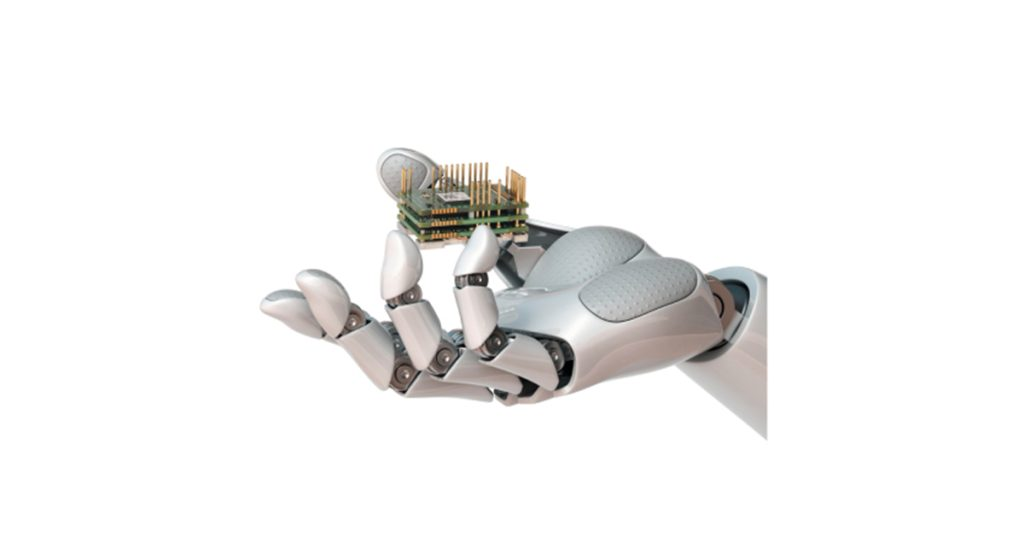
Experts agree that technology can help smooth the productivity gap in manufacturing. Does that mean we need a workforce of robots? What Lafontaine is recommending is the adoption of automation, which includes an array of technologies to improve efficiency, productivity, and scalability, not just robots.
“At Schneider, we are seeing manufacturers in Canada adopting several technologies. These could be cobots (collaborative robots), or robots. They could also be artificial intelligence (AI), sensors, and software, to name just a few. We are seeing the adoption of technologies in a lot of different dimensions.”
It is going to take a concerted effort of technology adoption to bridge this manufacturing gap.
Leveraging Technology Fills the Gaps, It Does Not Eliminate the People
And this is happening in virtually every industry across the country. Lafontaine says he sees food and beverage facilities using robotic technology to package goods in a repetitive motion. In the automotive industry, the adoption of technologies could be as simple as using sensors to detect and eliminate defects, leading to a better quality of goods. Or the integration of technologies can be more complicated. A warehouse might implement an elaborate RFID system that optimizes the placement of goods, reducing forklift movements by thousands of miles. He encounters countless examples.
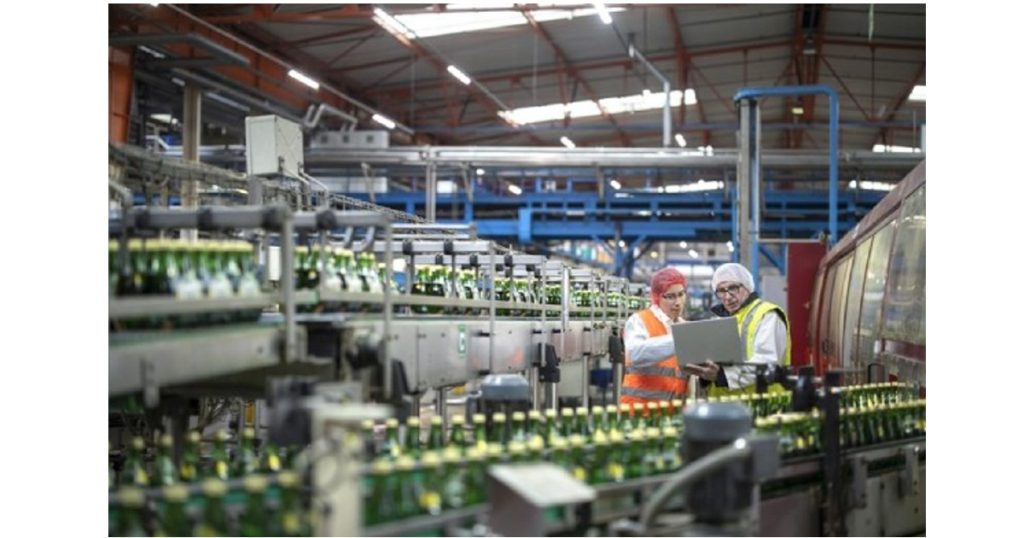
There are mixed opinions around adopting automation, but for Canada’s manufacturing sector, a real risk may be in not embracing it quickly enough.
“Automation is not replacing workers,” says Lafontaine. “There is this belief sometimes that we are replacing workers with automation, but that is not the intent at all. Automation makes the environment safer for humans. It removes humans from harm’s way, and assumes some repetitive, and ergonomically injurious tasks. It augments our productivity and allows us to be more effective and productive. Technology provides us with tools that help us stay safe while engaging in our day-to-day assignments.”
Cobots or collaborative robots, for example, have been specifically designed to work alongside people.
At Schneider, They Specialize in Automation & Productivity
For almost 189 years, Schneider has developed a portfolio of products and solutions based on technological innovation. A recent example is their EcoStruxure Automation Expert. It aggregates an array of technologies from a myriad of vendors – hardware, software, and AI tools – into one open flexible platform that enables manufacturers to optimize their processes and operations.
“I think the secret sauce is, how do we bring together companies like Schneider with other partners to create the best solution for the industry. That is our specialty at Schneider.”
Schneider’s Lexium Cobot is another example. Their vision for the Lexium cobot was to offer manufacturers a smaller robot with payloads ranging from a few kilograms up to approximately 20-25 kilograms, that is ready to go for the end user.
“We developed it to be easy to implement, easy to train with respect to motion, and to work close to people. It is like buying something off the shelf and using it right away, so you can see value immediately. It is simple, small, effective, and safe. That is the vision.”
It Takes a Village
Fast-tracking Canada’s manufacturing industry is going to take more than innovative products and solutions. It is going to take the effort of industry, government, and educational institutions.
“Accelerating the adoption of technology in this industry is going to need all hands-on deck. It needs a multi-stakeholder approach,” says Lafontaine. “It needs industry to be onboard. The Canadian colleges and universities need to be engaged. Government needs to do its part. And partners in the industry – the implementors, system integrators, distributors, you name it – need to be involved.”
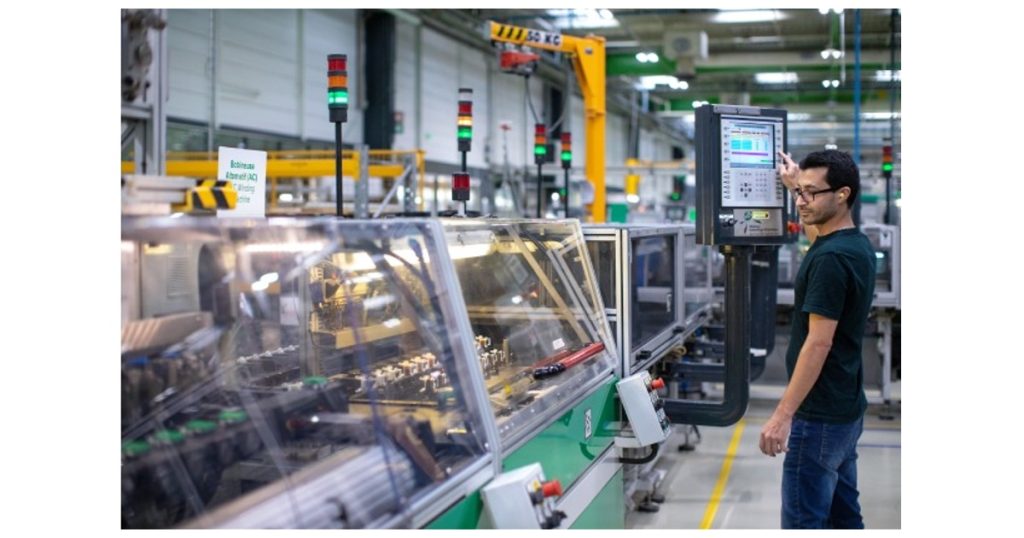
Lafontaine says that there are three main pillars in Canada that must collaborate for technology adoption to be swift and successful.
- The government needs to step up in terms of funding, incentives and push for policies that nudge the industry in the right direction.
- Education needs to develop new curriculum and create clear pathways for students to gain hands-on experience.
- Industry leaders like Schnieder must leverage their presence in manufacturing plants and facilities in a way that automates as much as possible and attracts new talent.
This is going to take a concerted effort. Yes, adopting technologies will help with productivity, however, people need to want to go into manufacturing to keep it going. All three stakeholders need to work together to remove the stigma surrounding working in the trades. Lafontaine says that the reality today is that students coming out of school tend to shy away from manufacturing jobs. That mentality needs to change to attract new talent.
“I think that if we have the right roles, with the right technologies, we can begin to attract some of this talent coming out of school, with that exciting approach that your job is going to require using robots and AI.”
So, Can Robots Save Canadian Manufacturing?
Lafontaine says that advanced manufacturing – not just robots – will play a role in making Canadian manufacturing more productive.
“I think robots are cool. And sometimes I think we have this vision of robots and androids walking around, working. But at the end of the day, we need automation and people. And automation can be an arm, or a carrier, or something that is automated. It could be software. It could be a sensor,” he says. “A broader automation, i.e. advanced manufacturing, approach can help save Canadian manufacturing – but only if we start adopting it rapidly and pairing it with the right workforce and upskilling people so they can get out there and implement the technology.”
Closing Thoughts
Robotics and smart systems can help Canadian manufacturers stay competitive, as is already happening elsewhere. This will offset labour shortages, reduce production delays, improve quality control, and ensure product specifications are met.
“This calls for an entire national strategy. You can imagine, with the political situation right now in the country, it is time for us to really adopt automation, and the technologies required to get our productivity to where it needs to be. We need to take control of that as a country. That is how we become self-reliant and compete successfully!”
Interested in learning more about how Schneider can support your manufacturing operation in Canada? Visit their website to learn more or reach out to them today.
About Hugo Lafontaine, P, Peng., MBA, Vice President of Automation, Energy, Digitalization, & IoT at Schneider Electric Canada

Hugo Lafontaine is a highly accomplished professional with over 20 years of experience in the automation industry. At Schneider Electric Canada, he is responsible for industrial products and software, overseeing a wide range of operations across the country.
Hugo began his career as a controls consultant and building automation integrator specialist, working his way up to increasingly senior roles within sales and marketing before transitioning to management. Before joining Schneider Electric as the National Manager for building systems, Hugo spent 11 years with Regulvar, one of the largest building system integrators in Canada. He went on to hold progressive roles in sales and management, including at Daikin Applied as the General Manager for Canada and Northeast U.S., and then subsequently, transitioning his career to Schneider Electric as the Vice President, Digital Energy and Power Products.
Throughout his career, Hugo has demonstrated an exceptional ability to drive growth and optimize operations, leading to significant business outcomes. He has a keen interest in leveraging technology to improve building and operational efficiencies, with expertise in commercial, manufacturing, and industrial segments.
Hugo’s educational background is equally progressive. He obtained his B.Sc. in Electrical Engineering in 2002 and became a member of the Professional Engineers of Ontario in 2006. In 2016, he completed his Executive Master’s in Business and Management at Telfer School of Management. He is currently completing a Senior Leadership program at INSEAD Business School in Paris, to be completed Fall 2023.
Hugo is deeply committed to advancing the energy field and giving back to his industry. He is a member of the CSA Smart Building Executive Committee and has been on the Board of Director for the Building Energy Innovators Council (BEIC) since 2020. He previously held a position on the Board of Directors for the Continental Automated Buildings Association (CABA).

More Information
Advanced Technology Advanced Technology Advanced Technology Advanced Technology Advanced Technology Advanced Technology Advanced Technology advanced Advanced Technology Advanced Technology Advanced Technology Advanced Technology Advanced Technology Advanced Technology Advanced Technology Advanced Technology Advanced Technology Advanced Technology Advanced Technology Advanced Technology