| |

Wesco: Why AI Data Centers Need a Structured Cabling Strategy
July 24, 2025 - Wesco Why AI Data Centers Need a Structured Cabling Strategy

July 24, 2025

Structured Cabling Strategy: Implementing Effective Data Center Cabling Solutions

By: Andrew Jimenez, Senior Director, Technical Sales, Wesco Data Center Solutions

Artificial Intelligence (AI) applications are introducing unique challenges that are driving dramatic changes in data center infrastructure. Traditional design strategies may not be sufficient to support the power and cooling demands of high-density AI data centers. Developers are looking for new sources of clean energy and more efficient ways to cool AI servers and supercomputers that support intensive AI workloads.

AI is also forcing developers to rethink network cabling infrastructure. An AI data center may have tens or even hundreds of thousands of graphics processing units (GPUs) processing massive amounts of data and performing complex calculations simultaneously. These processors require high-speed, low-latency connectivity in order to communicate and synchronize tasks effectively. As a result, fiber optic cabling has become essential at an unprecedented scale.

AI workloads may require up to ten times more fiber than traditional facilities due to their massive computational demands and data-intensive nature. To manage the sheer volume of data and ensure reliable connectivity across devices, data centers must implement a well-planned and standardized cabling infrastructure.


Structured Cabling Can Solve AI Data Center Challenges

In the NVIDIA DGX reference architecture, direct-connect fiber cabling delivers exceptional performance benefits by enabling ultra-low latency and high-bandwidth communication between GPUs, storage systems, and networking components. This is critical for AI and high-performance computing (HPC) workloads, where massive volumes of data must be transferred and processed in real time.  However, each new generation of GPU design increases the amount of fiber required to support AI workloads within a server cluster. As systems scale, managing the growing number of fiber connections becomes increasingly complex, making it more challenging to maintain and upgrade the network infrastructure effectively.

That’s why AI data centers need a structured cabling strategy. While the term “structured cabling” conjures up images of neatness, efficiency and organization, it’s actually much more than that. It’s a comprehensive system for designing and implementing a flexible and future-proof network infrastructure that enables the continuous flow of information.

AI data centers typically use a “leaf-and-spine” network architecture to reduce latency, maximize efficiency and enable scalability. However, this fully meshed topology requires extensive inter-rack cabling, which can be difficult to manage. Structured cabling provides a systematic, standardized approach for managing this complexity, ensuring reliable connections and facilitating efficient data transmission.


Benefits of Structured Cabling in AI Data Centers

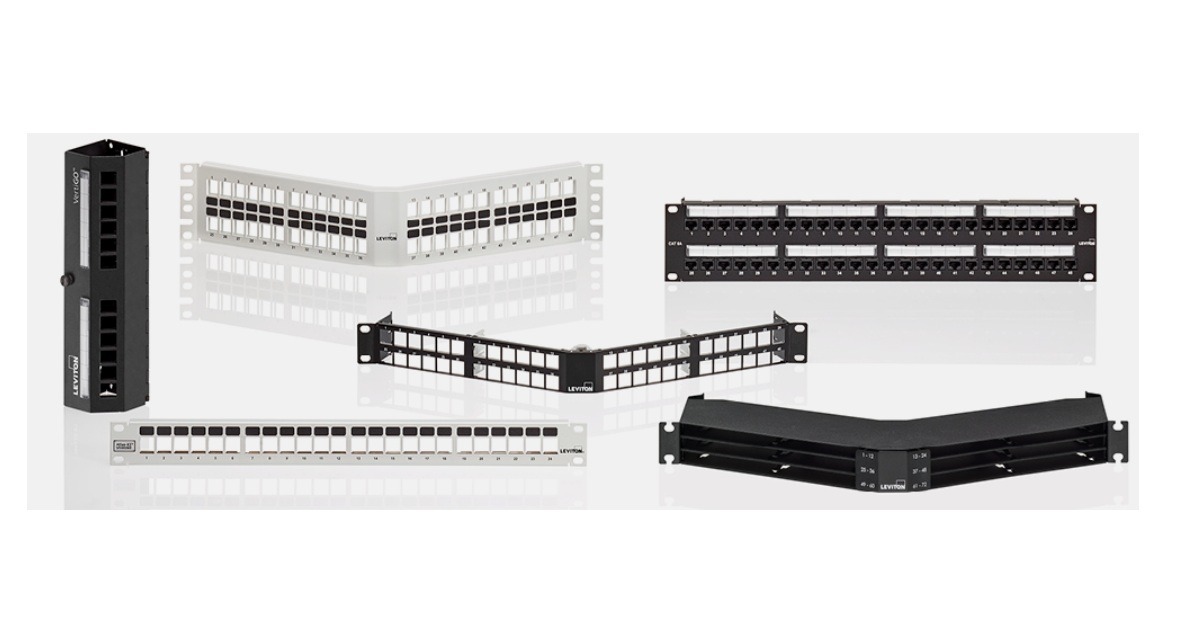
Structured cabling offers a number of benefits in AI data centers. It is faster to install than direct-connect cabling because it uses a predefined, standardized approach with modular components. It is also more flexible and scalable, enabling data center operators to adapt the network to support changing speeds and future growth.

Structured cabling also makes it easier to troubleshoot problems by eliminating the complexity and confusion associated with direct-connect cabling. Faster troubleshooting minimizes downtime — a key requirement in AI data centers that require the highest levels of availability.

These benefits also add up to significant cost savings. Although the initial cost of structured cabling may be higher than direct-connect cabling, it provides long-term economic benefits by reducing the need for rip-and-replace upgrades. When upgrades are needed, they can be completed faster with a standardized cabling approach.


Structured Cabling Is Increasingly Critical

Upgrades are virtually inevitable, given how fast AI technology is changing. While many enterprise organizations commonly operate 40Gbps and 100Gbps data rates, AI and hyperscale data centers are moving from 400Gbps to 800Gbps. The 650 Group expects an explosion in 800Gbps switch shipments by 2028, and 1.6TB switches are on the near horizon.

Future-proofing the network should be a top priority for AI data centers. Structured cabling is a critical part of that effort, providing a standardized framework that will make it easier to upgrade to 800G and beyond.


July 24, 2025 - Wesco Why AI Data Centers Need a Structured Cabling Strategy 1

Source

Related Articles


Changing Scene

  • Laurentide Controls Chooses Bécancour for Its 6th Centre

    Laurentide Controls Chooses Bécancour for Its 6th Centre

    With more than 50 years of industrial optimization experience in Eastern Canada, Laurentide Controls is officially opening its 6th centre, located in Bécancour. The objective is clear: bring expertise closer to industrial plants, speed up interventions, and generate measurable gains in reliability, productivity and energy performance – all directly benefiting businesses in the region and,… Read More…


Sponsored Content
The Easy Way to the Industrial IoT

The way to the Industrial IoT does not have to be complicated. Whether access to valuable data is required or new, data-driven services are to be generated, Weidmuller enables its customers to go from data to value the easy way. Weidmuller’s comprehensive and cutting-edge IIoT portfolio applies to greenfield and brownfield applications. Weidmuller offers components and solutions from data acquisition, data pre-processing, data communication and data analysis.

Visit Weidmuller’s Industrial IoT Portfolio.


ADVANCED Motion Controls Takes Servo Drives to New Heights (and Depths) with FlexPro Extended Environment Product Line

Advanced Motion Controls is proud to announce the addition of six new CANopen servo drives with Extended Environment capabilities to their FlexPro line. These new drives join AMC’s existing EtherCAT Extended Environment FlexPro drives, making the FlexPro line the go-to solution for motion control applications in harsh environments.

Many motion control applications take place in conditions that are less than ideal, such as extreme temperatures, high and low pressures, shocks and vibrations, and contamination. Electronics, including servo drives, can malfunction or sustain permanent damage in these conditions.

Read More


Service Wire Co. Announces New Titles for Key Executives

Bruce Kesler and Mark Gatewood have been given new titles and responsibilities for Service Wire Co.

Bruce Kesler has assumed the role of Senior Director – Business Development. Bruce will be responsible for Service Wire’s largest strategic accounts and our growing Strategic Accounts Team.

Mark Gatewood has been promoted to the role of Vice President – Sales & Marketing. In this role, Gatewood will lead the efforts of Service Wire Company’s entire sales and marketing organization in all market verticals.

Read More


Tri-Mach Announces the Purchase of an Additional 45,000 sq ft. Facility

Tri-Mach Elmira Facility

Recently, Tri-Mach Inc. was thrilled to announce the addition of a new 45,000 sq ft. facility. Located at 285 Union St., Elmira, ON, this facility expands Tri-Mach’s capabilities, allowing them to better serve the growing needs of their customers.

Positioning for growth, this additional facility will allow Tri-Mach to continue taking on large-scale projects, enhance product performance testing, and provide equipment storage for their customers. The building will also be the new home to their Skilled Trades Centre of Excellence.

Read More


JMP Parent Company, CONVERGIX Acquires AGR Automation, Expanding Global Reach

Convergix Automation Solutions has completed the acquisition of AGR Automation (“AGR”), a UK-based provider of custom, high-performance automation design and systems integration primarily to the life sciences industry.

Following Convergix’s acquisitions of JMP Solutions in August 2021 and Classic Design in February 2022, AGR marks the third investment in Crestview’s strategy to build Convergix into a diversified automation solutions provider targeting the global $500+ billion market, with a particular focus on the $70 billion global systems integration and connectivity segments. Financial terms of the transaction were not disclosed.

Read More


Latest Articles

  • Convergix: 4 Ways Factory Automation Improves Supply Chain Management

    Convergix: 4 Ways Factory Automation Improves Supply Chain Management

    Although the disruptions caused by the Covid-19 pandemic revealed the fragility of global supply chains, factory automation has stepped up to mitigate many of those shortcomings. Since the onset of the Covid-19 pandemic, manufacturers worldwide have become acutely aware of the interconnectivity of supply chains. More recent issues such as international trade disputes and labor… Read More…

  • Panduit: A Brief Evolution of Field-Terminated Fiber Connectors

    Panduit: A Brief Evolution of Field-Terminated Fiber Connectors

    Field termination of fiber optic cable connectors is nothing new, and while there have been various products to address field termination needs over the decades, the products discussed here are: field polish, mechanical splice, and fusion splice. Each of these has had time in the spotlight, and there are commonalities that hold true across all three. Chief… Read More…