It Will Take More than AI for Canadian Manufacturers to Succeed in Today’s Global Trade Landscape: Insights from NGen CEO Jayson Myers
September 3, 2025
NGen CEO Jayson Myers to Share How His Organization Is Helping Companies Pivot to New Methods at Upcoming Canadian Manufacturing Technology Show
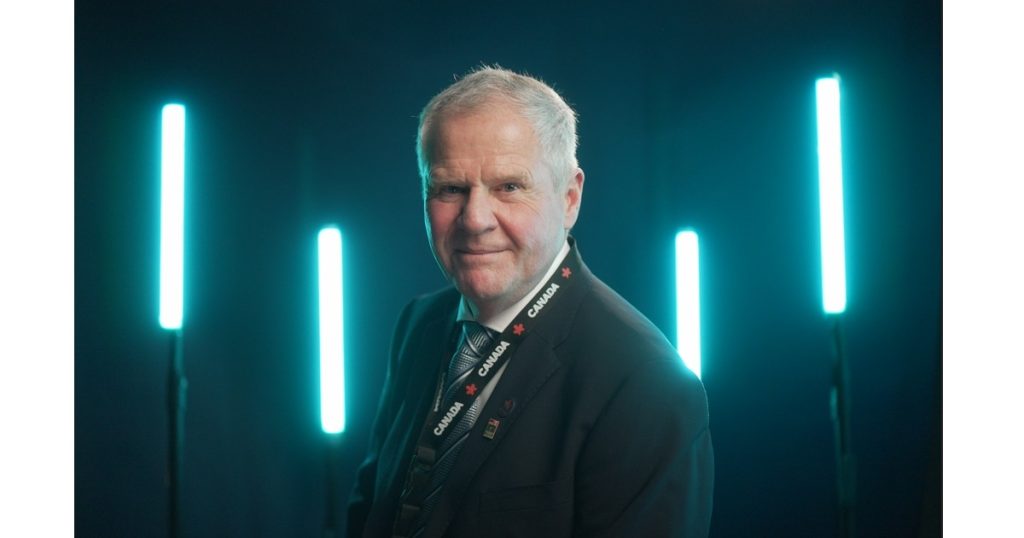
AI alone won’t solve the challenges facing Canadian manufacturers in the face of evolving global tariffs. It will take a willingness to turn convention on its head by investing in a mix of emerging technologies and advanced materials, says industry innovation leader Jayson Myers, CEO of Hamilton, Ontario-based NGen.
“The biggest mistake manufacturers make is thinking they can continue to do the same old thing, the same old way,” Myers said. “Now, more than ever, Canadian manufacturers need to improve flexibility, reduce costs and improve processes, and AI will never achieve all of that on its own,” he said, pointing to a report from consulting firm McKinsey indicating that roughly 70% of digital transformation projects fail in Canada.
What’s needed, said Myers, is for manufacturers to think about what other technologies are required and “it’s never as easy as saying I’m going to invest in AI alone.” He suggested taking a more holistic approach to successful technology adoption by looking for opportunities to collect high-quality, reliable data that will boost AI systems or creating higher-performing materials and then applying that to do things differently.
In fact, if Canada continues to put in the right effort and focus on investing in innovation, he believes the Canadian manufacturing sector has the potential to leapfrog any country.
“It’s about rethinking your businesses and processes, and those companies that grasp the full potential of technology are going to be ahead of the game,” he said.
NGen will showcase its strategy for accelerating innovation in Canada’s manufacturing sector at the Canadian Manufacturing Technology Show (CMTS) 2025 – Canada’s national industry event produced by non-profit SME – which takes place at the Toronto Congress Centre from September 29 to October 2. The NGen Emerging Innovator’s Space will highlight 15 advanced manufacturing projects supported by a recent $32.3-million investment through the NGen Global Innovation Cluster fund. To date, NGen has completed 165 projects leading to $7 billion in new sales, 55 company launches and the creation of nearly 3,500 jobs.
Companies Going Beyond AI
One of those companies is Richmond Hill, Ontario-based Maple Advanced Robotics Inc. (MARI), whose integrated AI-driven robotics platform is solving one of the biggest challenges facing manufacturers when it comes to introducing automated systems: the need for constant reprogramming and setup which requires the intervention of highly skilled and costly human operators.
Initially developed in partnership with Magna International to precisely and consistently finish car door panels, the company’s technology also incorporates computer vision and force sensing technologies to perform tasks like sanding autonomously. By integrating advanced AI algorithms with adaptive technologies, the intuitive robot scans its workspace, finds the panels requiring finishing and then generates a sanding path within seconds, adjusting when necessary, with no need for offline programming. The entire sanding process is reduced to two minutes or less per panel and the result is flawless every time because unlike humans, the robot never loses focus or cuts corners.
Though the initial pain point came from a Fortune Global 500 company, MARI is now gaining traction among small and medium-size enterprises (SMEs) in the manufacturing sector who want to automate processes but can’t afford to purchase and operate robotic systems outright. A recent use case is a $3-million-dollar cabinet maker in Ontario that is currently leasing MARI’s platform for a monthly fee to improve the efficiency and quality of wood panel construction.
“We’re accelerating adoption of robotics,” said Yi Li, MARI co-founder and executive vice-president. “We took an idea, partnered with a large company to perfect the solution and now smaller companies are benefitting as well.”
Another area where Canadian manufacturing is excelling, said Myers, is in the development of advanced materials, from thermal paint that helps to conserve energy to smart textiles and bioplastics, to cutting-edge metal alloys in the steel industry.
Earlier this year, NGen awarded $10 million in funding to support a first-of-its-kind carbon capture project led by Carbon Upcycling Technologies and leading North American cement manufacturer Ash Grove, which will lead to the development of a new low-carbon cement product. Once operational in 2026, the facility – Carbon 1 Mississauga – will have the capacity to produce up to 30,000 tonnes of the innovative product annually, directly contributing to Canada’s climate and clean manufacturing goals.
“Investments in advanced materials are changing the business of manufacturing,” said Myers. “It’s no longer about trying to find the material for the job; it’s about developing a new material first and then thinking of the application afterwards – turning traditional thinking about manufacturing on its head.”
Myers positions Canada as a world leader in the development of advanced materials. Now the focus needs to shift to creating use cases for those materials within the country’s own borders, he said.
“There are a lot of things that Canadian companies are being forced to do because it’s not going to be as easy to sell into or buy from the U.S.,” he said. “If we want to lessen the impact of tariffs, we need to make sure that we are improving productivity and reducing costs, and that’s all about embracing innovation.”

For more information on CMTS HERE
Jayson Myers Jayson Myers Jayson Myers Jayson Myers Jayson Myers Jayson Myers Jayson Myers