SICK: FTMg Thermal Flow Sensor
September 17, 2025
FTMg: Flow Sensor with Energy Measurement
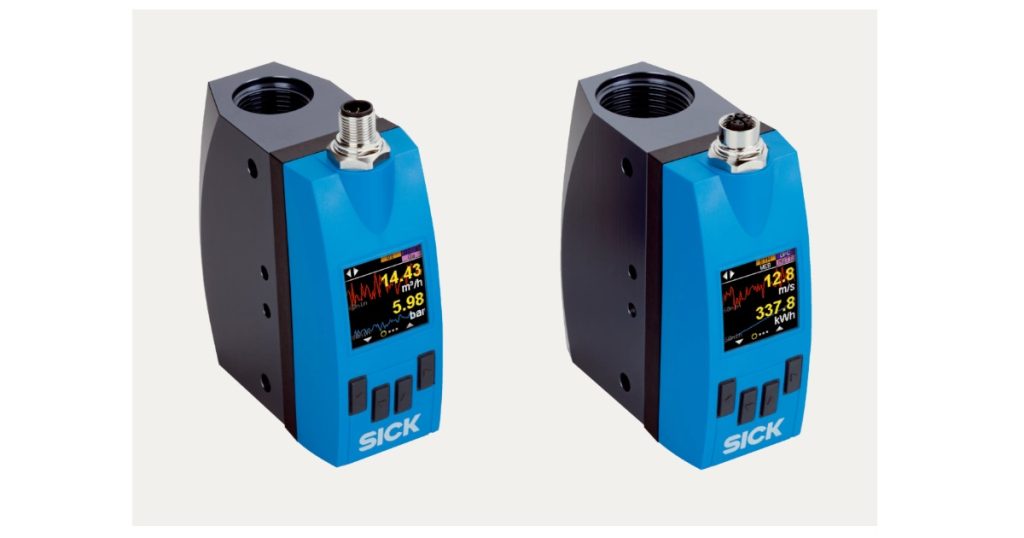
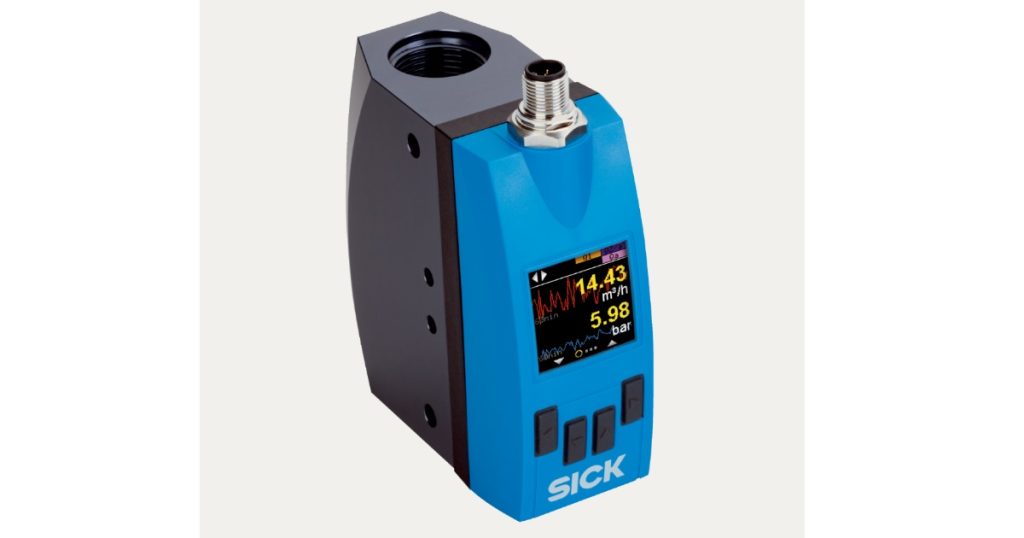
The FTMg Thermal Flow Sensor measures gas flow and temperature as well as the process pressure, making it a cost-saving multi-talent. With high measurement dynamics and low-pressure loss, it measures non-corrosive gases with extreme efficiency. The contrast-rich color display enables easy operation of the FTMg and allows for representation of several measured values as a process diagram.
Internal data logging over seven days and integrated static evaluation helps detect even the smallest leaks in a pneumatic system. PoE also enables simple web-based connection to a PC or a cloud to make energy consumption more transparent. All measurement data can be transferred via IO-Link, or with switching and analog signals, or with the communication protocols REST-API, MQTT, OPC-UA.
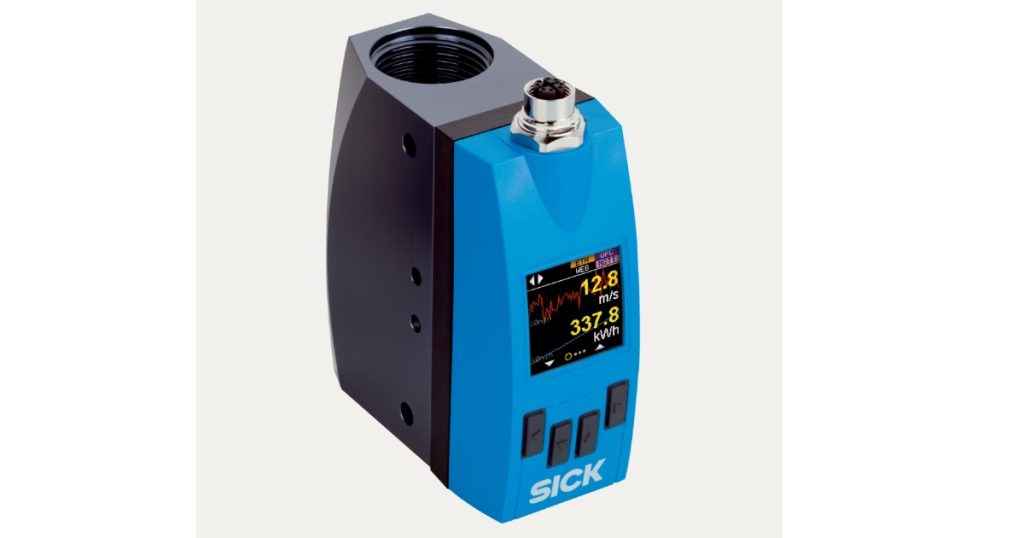
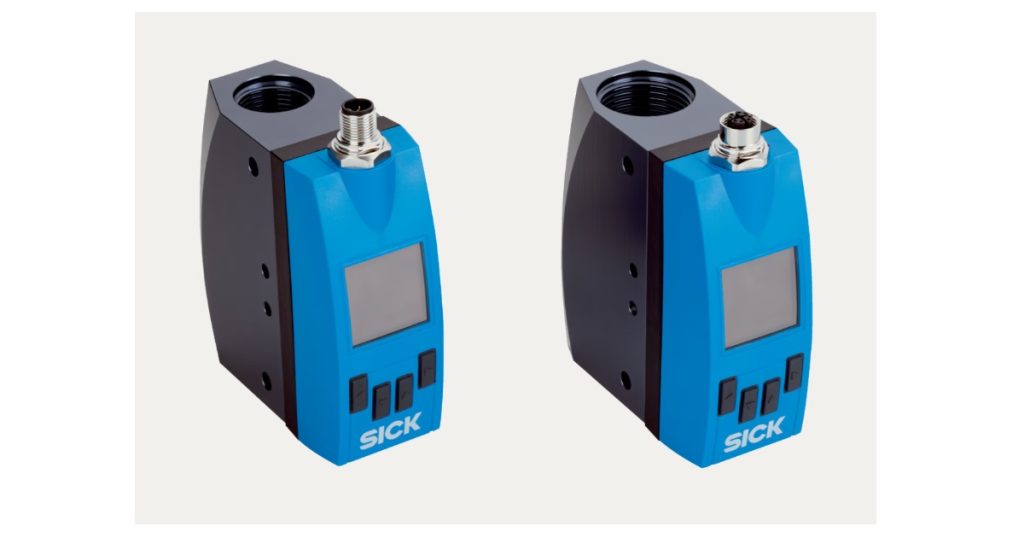
FTMg at a Glance
Benefits
- Transparent compressed air consumption measurement according to DIN EN 50001
- Complete overview of the flow, pressure and temperature of gases increases system reliability
- IO-Link or Ethernet interfaces (REST-API, MQTT, OPC-UA) for simple system integration and data availability
- Cos savings thanks to reduced energy consumption and increase in production efficiency
- Intuitive parameterization using a large, contrast-rich OLED display saves time and money during commissioning
- Only one installation and commissioning process for the collection of flow, pressure and temperature data
Features
- Measures compressed air and non-corrosive gases such as argon, carbon dioxide and nitrogen
- Visualization of compressed air consumption
- High measurement dynamics for cylinder and leakage monitoring
- Low pressure loss
- Measurement of gas flow and temperature as well as process pressure and energy consumption with only one sensor
Advantages
Saving Costs Effectively with Data Transparency
Compressed air is one of the most expensive types of energy, which is why energy efficiency and energy transparency are playing an increasingly important role in factory automation. The investment costs, for example for procuring powerful compressors, are enormous. To save on follow-up costs, you must ensure loss-free operation of compressed air systems. The FTMg (Flow Thermal Meter for gases) thermal flow sensor stands for efficient energy management in accordance with DIN EN ISO 50001. It helps system operators to detect leaks in the compressed air system early on and plan maintenance work.
The FTMg offers an integrated data monitoring function and automatically saves the measurement data of the last seven days. This allows changes and fluctuations in energy consumption to be reliably detected. With its data transparency, the sensor provides efficient assistance in finding leaks in compressed air systems and helps minimize energy loss as well as save money.
For intelligent, automated monitoring and analysis of compressed air consumption, SICK has a complete digital solution with the combination of the FTMg sensor and the Telematic Data Collector (TDC) gateway.
Reliable Flow Monitoring in Compressed Air Systems & Pneumatic Applications
- Measurement of 8 parameters in one sensor, including energy in kWh
- Easy operation thanks to integrated web server
- Ready for Industry 4.0 – MQTT and OPC UA ensure optimal cloud connectivity
- Optimize energy efficiency and increase cost efficiency by detecting and preventing unnecessary input of energy and leaks
Countless Mounting Options & Simple Handling
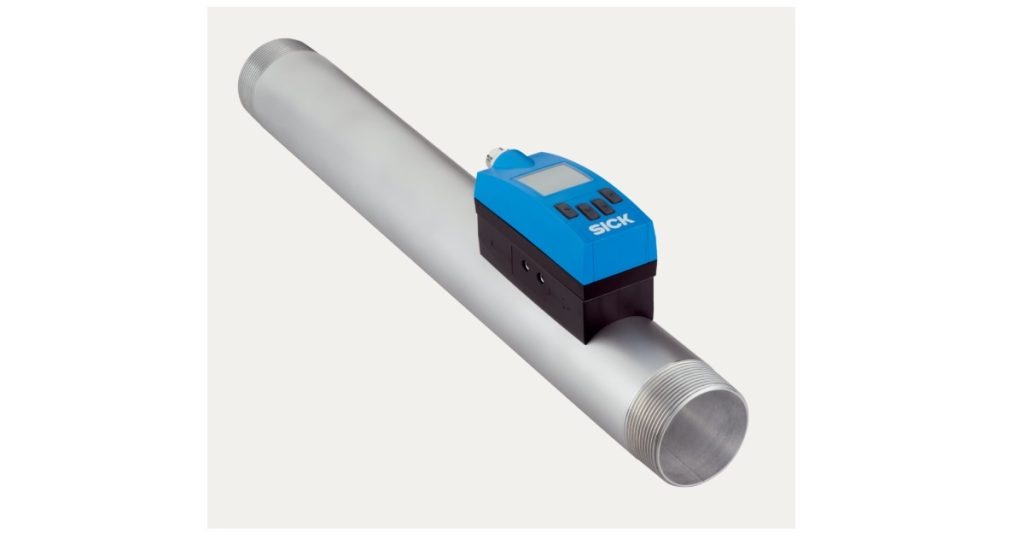
The FTMg is characterized by its light and compact construction. This makes installation easy, even with limited space. The display, which can be rotated in 90° increments, means that reading measured values is always convenient, regardless of the installation position of the sensor in the pipeline. Various reference standards according to DIN or ISO can be easily selected via the FTMg menu. Even individually defined reference values are easy to set using the device. Configurable outputs also allow for simple adaptation to the desired application.
- Flexible configuration – setting of different reference standards according to DIN or ISO possible
- Flexible installation thanks to light and compact construction
- Intuitive operation via large, contrast-rich OLED display with plain text
- Support operational efficiency with quick, easy installation and intuitive operation
Continuously Monitor & Efficiently Control Compressed Air Systems
Compressed air systems consume large quantities of energy. It is therefore crucial for companies to monitor and analyze these systems in order to sustainably optimize their compressed air usage – whether it be by regulating the switch-on/switch-off operations, controlling the compressor, or regulating the peak load. To assist companies with containing their costs, SICK offers a digital solution. Comprising the FTMg flow sensor and the TDC gateway. This solution indicates deviations from normal operation, thereby making it easier to quickly identify leaks or excessive consumption.
- Cut Costs: Identify overconsumption and inefficiencies in compressed air systems and boost overall profitability. Data-driven profitability calculations make it possible to measure and indicate potential cost savings.
- Green Production: By monitoring compressed air, companies reduce their carbon emissions and energy consumption, resulting in a positive impact on the environment and contributing to production sustainability.
- Raise Production Efficiency: Decentralized, continuous monitoring of compressed air enables companies to identify deviations and cost drivers. This allows them to reduce unnecessary energy costs and increase production efficiency. Data-driven decision-making supports companies in sustainably improving efficiency.
- Reduce Service Effort: Need-based maintenance saves companies time, effort and money. Alerts and dashboards tailored to the application provide transparency and the opportunity to exclude unplanned maintenance.
Sustainably reduce energy consumption through intelligent, automated monitoring and analysis of compressed air consumption.
For more information on the topic of “compressed air monitoring” can be found HERE