ITC 101: Understanding IK Ratings for Electrical Enclosures

November 19, 2025
IK Ratings: Understanding How to Measure an Electrical Enclosure’s Resistance to Mechanical Impact
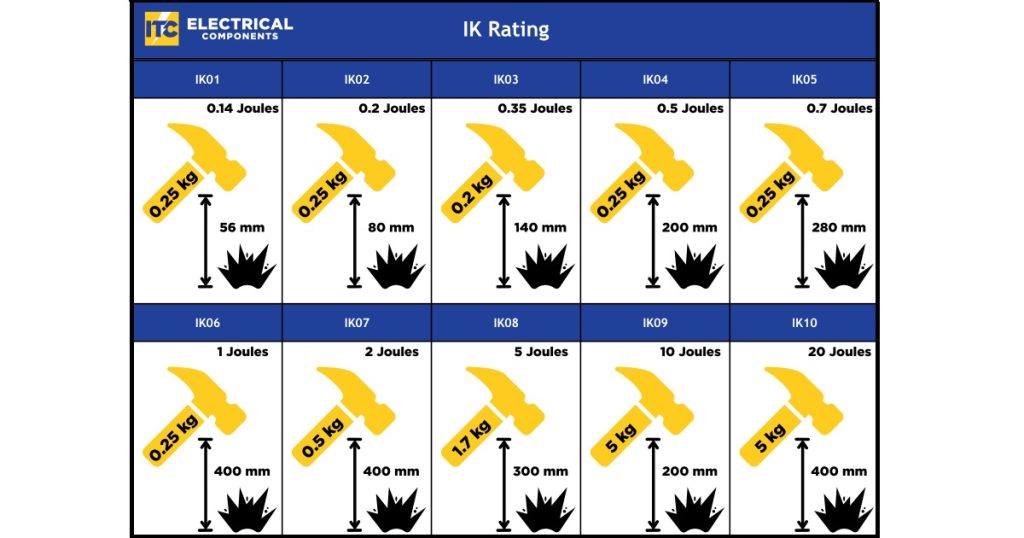
In industrial environments, enclosures face not only dust and water ingress but also physical impacts that can compromise equipment. The IK rating system, defined by IEC 62262, provides a standardized way to measure an enclosure’s resistance to mechanical impact.
What Is the IK Rating?
The IK rating classifies the level of protection an enclosure offers against external mechanical impacts, expressed in joules (J). Each rating (from IK00 to IK10) represents a specific energy level the enclosure can withstand. For instance, IK06 indicates protection against 1 J of impact energy, while IK10 withstands up to 20 J.
Why IK Ratings Matter
- Ensure enclosures protect sensitive components from external shocks and collisions.
- Help specify durability requirements for industrial machinery, control panels, and public installations.
- Provide a complementary measure to IP ratings, ensuring both ingress and impact resistance.
How Testing Works
Under IEC 62262, impact resistance is tested using standardized tools (hammers or pendulums) that strike the enclosure under controlled conditions. The enclosure must remain functional, without cracks or deformation affecting its protection performance.
Choosing the Right IK Rating
- IK04–IK06: Suitable for indoor and low-impact environments.
- IK07–IK08: For light industrial or mechanical areas.
- IK09–IK10: For harsh industrial or public installations exposed to potential vandalism or strong impact.
Understanding IK ratings helps ensure your enclosures meet the mechanical protection needs of modern automation systems—protecting reliability, safety, and long-term performance.

Related Topics in the ITC 101 Series
Understanding IK ratings is the first step in selecting the right protection for your equipment. Check out other articles of ITC 101 Series:
- What is IP Rating? — Click here to know more