Seven Automation Tips for Greener Plastics in Consumer Package Goods in Manufacturing
September 28, 2022
Hygiene or environmental protection? Preferably both. Companies in the consumer goods industry are increasingly asking themselves what alternatives they have to plastic packaging and how they can act greener, more efficiently, and yet still safely. Innovative packaging lines, robotics and artificial intelligence offer support.
No one doubts that the amount of plastic packaging produced and used internationally needs to be urgently curbed in order to relieve the burden on flora and fauna and to avoid further damaging the ecological balance. The advantages of plastics, however, must not be completely disregarded. A more efficient and resource-saving use is therefore essential. In this context, the Pew Charitable Trust states that plastic pollution could be reduced by almost 80 per cent by 2040. For this to succeed, however, global efforts are needed to transform both the use of plastic and its processing and recycling.
There is a lot to be said for plastic packaging
When it comes to protecting packaged goods in F&B and other sectors, it is still difficult to name alternatives as versatile as polymers. They are flexible and easy to shape. They offer low weight, hygiene advantages as well as convenience for transportation and an appealing shelf presence. Customers on the other hand are looking for convenience, product integrity and value but they are also paying more and more attention to sustainability – the major shortcoming of plastic packaging. At the same time, they often score points compared to alternatives such as metals or glass because they require less energy to produce, transport and recycle. It is true that unpackaged food is the trend. Nevertheless, in many places there is no viable alternative to plastic packaging for cost, hygiene or safety reasons.
Focus on “reduce, recycle, reuse and redesign”
Reducing plastic, rethinking packaging: that is the motto. Food and beverage, as well as consumer goods companies are increasingly focusing on the four “Rs” reduce, recycle, reuse and redesign. The focus in the food and consumer goods industry is on minimizing weight in order to contain the amount of plastic used (reduce). New plastic compositions enable easier recycling. In addition, there are innovative designs such as recyclable bags, lids or resealable bags (redesign and reuse) – less plastic and less waste in the final production stages. Furthermore, new packaging and container concepts are being developed. The four “R’s” reduce, recycle, reuse and redesign help to become more sustainable and to better meet legal requirements and customer demands.
International initiatives to reduce plastic
There are increasingly stringent requirements to be met, including the UN Sustainable Development Goals (SDGs) with their provisions for more climate protection, responsible consumption and greener production. In addition, there are numerous regulations aimed at reducing plastic consumption. Some examples are the bans on single-use plastic or strategies to reduce plastic bags in the EU, which are linked to Directive 2019/904 and will officially come into force by July 2021. Additionally, manufacturers have made their own commitments. Some are working to increase the amount of recycled PET in products. Others are striving to make packaging more recyclable or to revise the design of packaging and containers to use less plastic.
Seven practical examples and tips for more sustainable packaging
So where can you start and take action? Automated and rationalised processes are the basis of all plans to operate more efficiently and sustainably. The following seven recommendations show what to focus on:
1. Sealing: Real-time monitoring
When material compositions change, it is imperative that companies analyse whether machines such as vertical form fill seal machines (VFFS) can still maintain throughput and tension control without affecting the performance or quality of the final product. Only when you closely monitor and control the film, you’ll have a product that meets specification, bypasses wrinkles and stretching, and thus does not negatively impact downstream processes.
2. Collecting data at the machine level and in real time
Manufacturers need to ensure at all times that the packaging fulfills its purpose. Vertical form-fill-seal (VFFS) machines for example require many variables such as speed, pressure, synchronization, temperature and more to be precisely controlled and tested in real time. To monitor multiple variables such as material thickness, contact time or temperatures, the manufacturer needs an automation solution that can collect all applicable data “at the edge” (at machine level) via common communication methods. In addition, a facility for sharing and visualization is required. In the future, more and more AI will be embedded in a controller, so the development will increasingly move towards self-optimising machines.
3. Forming: Innovative vision systems are the key
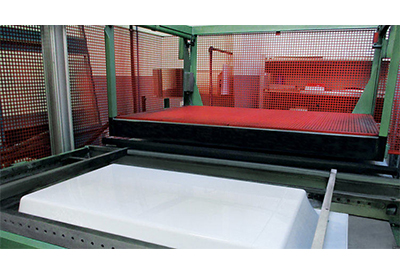
Producers of trays, bottles or packaging should always question what impact material changes might have on the integrity, color or shape of the item. Automation solutions help them to check properties. When manufacturing a container, tight temperature controls in conjunction with physical effects such as pressure are required. To avoid defective items, powerful vision systems are advisable that have the necessary tools to detect problems such as micro-holes in plastics.
4. Wrapping: Controlling temperature and movement
Material changes can also affect performance: Are integrity and stability still guaranteed when wrapping, for example? An application is needed that guarantees tight control of temperature and movement, maintains tension and ensures that a secondary or tertiary package is wrapped correctly.
5. Handling: Ensuring seamless communication between systems
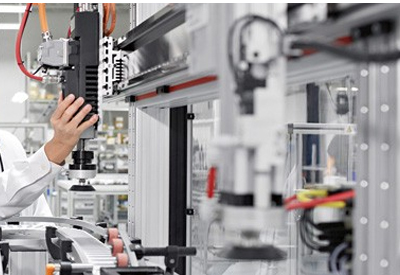
As packages get smaller, manufacturers need to find out if handling operations supported by sorting or pick-and-place solutions are accurate and easy to repeat. One example is the placement of trays into retail-ready tertiary containers. A key aspect of handling is being able to ”see“ the products entering the packaging area, as well as fast communication between the image processing system, the conveyor belt and the robot – all while respecting the required throughput. In addition, the configuration of the robot may need to be changed due to new film materials.
6. Closing: High-resolution servos are a must
Weight reductions can change both the size and shape of containers, which can also affect the sealing process and other related workflows. Additionally, forces and torques can lead to more waste or production downtime, which can cause further problems. Many sealing techniques such as capping rely on servo control. High-resolution servos connected via a machine network such as EtherCAT are therefore important.
7. Rely on an experienced partner
Instead of tackling the battle for more sustainability alone, it is advisable to bring strong partners on board. With its integrative technology platform i-automation as well as globally available services, OMRON supports food and beverage companies in all the challenges mentioned. International presence, a large network of integration and cooperation partners and the focus on the WHO’s sustainability goals make OMRON an experienced and competent companion on this important journey.