How Factory Automation Supports the Medical Device Industry
January 3, 2025

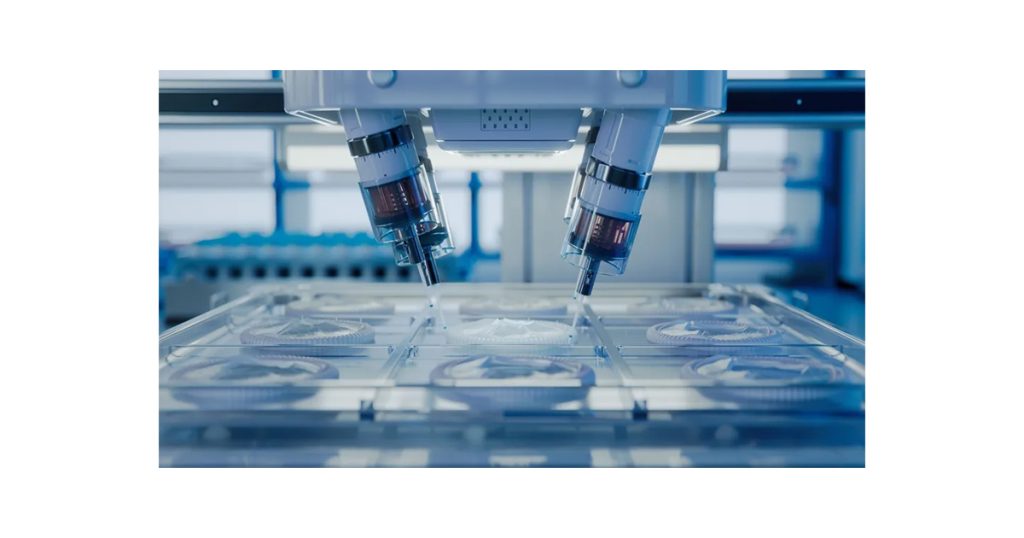
Medical devices are subject to strict regulations and high-quality control standards. Automation can help.

The healthcare industry is among the most highly advanced manufacturing fields in the world, with tight controls and restrictions governing the development and production of medical devices at every stage. At the same time, researchers and developers in the healthcare industry benefit from manufacturing solutions that are flexible, reliable, and innovative.

The tension in the healthcare industry between innovation and regulation has historically been difficult to balance. However, factory automation offers a resolution to some of these competing priorities by helping medical device manufacturers produce cutting-edge products that meet even the most stringent industry requirements. Here’s how:

1. Automation offers advanced quality control measures

Quality control is important in every industry, but in healthcare, the consequences of a flawed device can be dire. As such, advanced quality control measures are even more important. 

Automation already directly benefits production quality by enhancing standardization and removing opportunities for human error. A human worker on an assembly line can only be so consistent. Some inconsistencies may not be significant enough to matter, but others might be flaws in themselves or lead to flaws further down the production line. Automation is not only more consistent than manual production but can be optimized to a more precise tolerance level than what human workers can achieve. 

Given the quality benefits of automation in the manufacturing process, it’s only natural to apply these same processes to testing and inspection. Traditional quality control measures have used mistake-proofing techniques to prevent defects as they occur. Modern methods, such as vision technology and advanced sensors, expand the range of quality testing a company can incorporate directly into the production lines. 

2. Advanced robotics help manufacturers keep their operations flexible

Stationary automated assembly lines have long been the standard for many high-volume manufacturers, but the downside of these assemblies is that the specialized equipment cannot easily be switched over to new uses if a production technique changes, or if market demand suddenly shifts. Given the myriad supply chain disruptions industries around the world have faced since the onset of the Covid-19 pandemic, manufacturing flexibility is a growing priority in some sectors. 

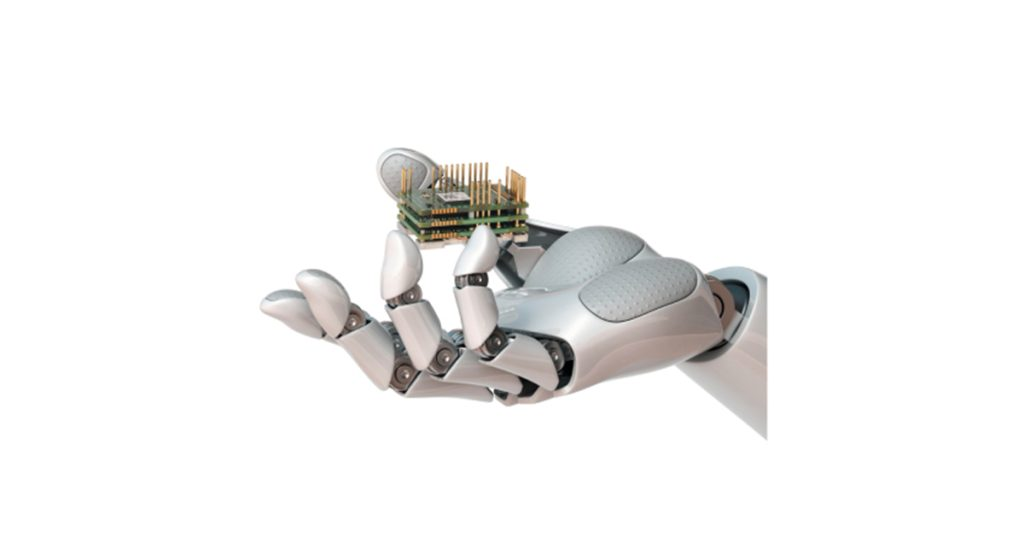
Modern robots offer a compelling solution. With a range of effectors that can be rapidly switched during an assembly, a single robot can perform numerous operations repeatedly and consistently. Programming robots has also become more user-friendly, with some interfaces allowing an operator to easily reprogram a robot with the push of a few buttons. 

This means that robots are now able to work alongside human operators, assisting in routine tasks both on the factory floor, and in other work settings. 

3. Manufacturing consistency helps devices meet FDA approval

While flexibility around production can help manufacturers change gears in a pinch, consistency also has its benefits. Medical devices must meet various levels of FDA approval, with entirely novel devices requiring a higher standard and longer approval process than those that are similar to devices already being produced. 

If a proven production process is used to produce components of a new device, this similarity works in the manufacturer’s favor. In this way, a consistent production process not only means more reliable quality control but also a faster approval process. 

4. High-mix, low-volume (HMLV) production allows for customization

While some medical devices are suited for production by the millions, others are complex enough that a manufacturer may only receive orders in the hundreds or thousands. For these devices, which have a high variety of components, manufacturers benefit from sophisticated automated solutions, such as those that can be provided by the latest high-end robots. 

Similarly, some medical devices need to be customized for the patient. These are the kinds of extremely low-volume products that have typically eluded automation. 

5. Production tracking helps businesses meet compliance standards

Some medical devices require manufacturers to be able to trace the production process of individual components through each stage of the automated assembly line. This is especially true for a device that might be implanted within a human body, like a pacemaker. If there ends up being a fault with the device, then it is essential that this flaw can be traced back to its point of origin, so that any other faulty devices can be identified. 

Factory automation will fuel advances in the medical device technology of the future. 

Automation has already revolutionized the medical device industry, but Industry 4.0 promises to bring even more change. Advanced simulations will give device manufacturers innovative ways to model their assemblies; IIoT and Big Data will provide new tracking tools and deeper insights into production methods; and augmented reality will transform how operators interact with equipment. 
Source

Related Articles


Changing Scene

  • EB Horsman & Son Announces Jason Organ as New Cranbrook Branch Manager, BC

    EB Horsman & Son Announces Jason Organ as New Cranbrook Branch Manager, BC

    EB Horsman & Son is pleased to announce the appointment of Jason Organ as Branch Manager of their Cranbrook location. With more than two decades of experience at EB Horsman & Son, Jason has built a strong foundation in customer service, branch operations and the Cranbrook market. He joined the company 24 years ago as… Read More…

  • Walker Panels & Inclined Elevation: Partnership Highlight

    Walker Panels & Inclined Elevation: Partnership Highlight

    Walker Panels would love to shine some light on one of their most frequent partners, Inclined Elevation! Their lifts help users get the most out of their gorgeous property, and elevate the possibilities of rural living (pun intended). This year, they have worked hard to redesign the lift panels, to minimize the possibility of signal… Read More…


Sponsored Content
The Easy Way to the Industrial IoT

The way to the Industrial IoT does not have to be complicated. Whether access to valuable data is required or new, data-driven services are to be generated, Weidmuller enables its customers to go from data to value the easy way. Weidmuller’s comprehensive and cutting-edge IIoT portfolio applies to greenfield and brownfield applications. Weidmuller offers components and solutions from data acquisition, data pre-processing, data communication and data analysis.

Visit Weidmuller’s Industrial IoT Portfolio.


ADVANCED Motion Controls Takes Servo Drives to New Heights (and Depths) with FlexPro Extended Environment Product Line

Advanced Motion Controls is proud to announce the addition of six new CANopen servo drives with Extended Environment capabilities to their FlexPro line. These new drives join AMC’s existing EtherCAT Extended Environment FlexPro drives, making the FlexPro line the go-to solution for motion control applications in harsh environments.

Many motion control applications take place in conditions that are less than ideal, such as extreme temperatures, high and low pressures, shocks and vibrations, and contamination. Electronics, including servo drives, can malfunction or sustain permanent damage in these conditions.

Read More


Service Wire Co. Announces New Titles for Key Executives

Bruce Kesler and Mark Gatewood have been given new titles and responsibilities for Service Wire Co.

Bruce Kesler has assumed the role of Senior Director – Business Development. Bruce will be responsible for Service Wire’s largest strategic accounts and our growing Strategic Accounts Team.

Mark Gatewood has been promoted to the role of Vice President – Sales & Marketing. In this role, Gatewood will lead the efforts of Service Wire Company’s entire sales and marketing organization in all market verticals.

Read More


Tri-Mach Announces the Purchase of an Additional 45,000 sq ft. Facility

Tri-Mach Elmira Facility

Recently, Tri-Mach Inc. was thrilled to announce the addition of a new 45,000 sq ft. facility. Located at 285 Union St., Elmira, ON, this facility expands Tri-Mach’s capabilities, allowing them to better serve the growing needs of their customers.

Positioning for growth, this additional facility will allow Tri-Mach to continue taking on large-scale projects, enhance product performance testing, and provide equipment storage for their customers. The building will also be the new home to their Skilled Trades Centre of Excellence.

Read More


JMP Parent Company, CONVERGIX Acquires AGR Automation, Expanding Global Reach

Convergix Automation Solutions has completed the acquisition of AGR Automation (“AGR”), a UK-based provider of custom, high-performance automation design and systems integration primarily to the life sciences industry.

Following Convergix’s acquisitions of JMP Solutions in August 2021 and Classic Design in February 2022, AGR marks the third investment in Crestview’s strategy to build Convergix into a diversified automation solutions provider targeting the global $500+ billion market, with a particular focus on the $70 billion global systems integration and connectivity segments. Financial terms of the transaction were not disclosed.

Read More


Latest Articles

  • Electromate: Spring Applied & Power-Off Permanent Magnet Brakes – Engineering Failsafe Motion Control

    Electromate: Spring Applied & Power-Off Permanent Magnet Brakes – Engineering Failsafe Motion Control

    Most electromagnetic brakes work on a simple logic: apply current, apply braking. Remove current, release braking. For many industrial applications, conveyors, packaging lines, printing machines, this is exactly the right behavior. The brake engages on demand and releases when not needed. But for a significant class of machines, this logic is exactly backwards. Robots, vertical… Read More…

  • ITC 101 Series: Why Certifications (UL, CSA) Matter in Industrial Components

    ITC 101 Series: Why Certifications (UL, CSA) Matter in Industrial Components

    When selecting industrial electrical components, certification is more than a logo on a datasheet. A certification mark indicates that a product or component has been independently evaluated against specified requirements for its intended market. In North America, selecting products with the appropriate certification can affect regulatory acceptance, equipment certification, inspections and project completion. The key… Read More…