Mouser: Understanding the Fundamentals of HMIs
January 30, 2026
HMI Fundamentals: Enhancing Industrial Automation with Human-Centric Design
By: Abhishek Jadhav
Human-machine interfaces (HMIs) act as gateways between human operators and complex machinery in industrial environments. As automation becomes more present across industry settings, these devices facilitate the use of machine and sensor data to help operators use industrial control systems efficiently.
This article explores different types of information displayed on HMIs and describes the functionality of passive displays and active control hubs. Additionally, it discusses the importance of human factors in designing HMIs.
Types of Information Displayed on HMIs
HMIs help provide operators with a complete view of their industrial processes, allowing them to maintain operational continuity. These devices achieve this by using sensor data that is transformed into insights for quick decision-making. HMIs display two critical types of information: real-time operational data and historical data with trends.
Real-time operational data is the most fundamental information that HMIs display. These data include sensor parameters such as temperature, pressure, and flow rate, which are crucial for preventing equipment overheating and failures. Such data provides insight into the system’s current state, enabling a prompt response to changing conditions.
HMIs can also record historical data from sensors to provide a better understanding of performance. By tracking these data, operators can monitor process efficiency over time. For example, if a robotic arm consistently logs underperforming data, operators can review this information to identify patterns and use the data to schedule future maintenance that can help reduce downtime.
Actions Performed via HMIs
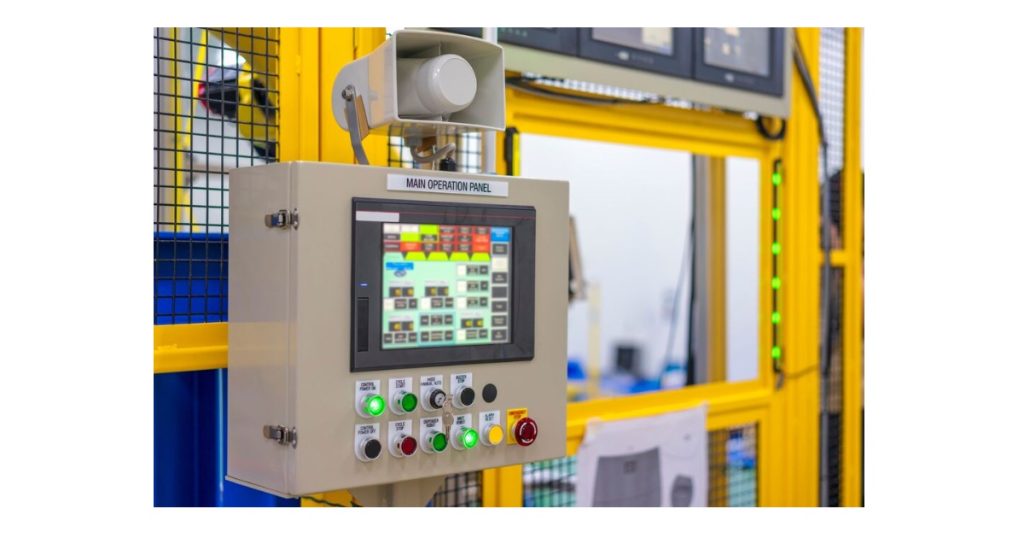
HMIs are not just passive displays. They are interactive control hubs that allow human controllers to perform a wide range of actions for controlling and managing industrial systems. From simple actions like starting equipment to complex actions that affect the entire production line, HMI controls help optimize processes and respond to dynamic operational demands.
Most HMIs include intuitive graphical user interfaces (GUIs), which make it easier for operators to monitor production processes and adjust parameters. Operators can fine-tune process variables, such as motor speeds or sensor recalibrations, to modify the target values displayed in elements such as icons and buttons.
Another key action is automation management and execution, which are crucial functionalities for modern industrial systems. Automation management allows operators to create new procedures that define the order of equipment execution, including predefined values for variables and schematics of the systems used to manufacture a product. For instance, managing multiple automations in a production line can optimize variables that lead to enhanced manufacturing efficiency. Using HMIs, operators can quickly switch between automations for manufacturing variants by configuring the entire production line with predefined settings.
Human Factors to Consider
HMIs’ effectiveness in an industrial setting depends on how well they are designed and implemented. Any design that overlooks human factors can lead to significant errors, inefficient processes, or far more severe consequences.
One key human factor is minimizing cognitive load, which directly reduces the mental effort required for operators to understand the interface and information displayed. Without careful design, HMIs can overwhelm users with excessive information provided all at once, hindering decision-making and leading to operational failures and safety hazards.
HMI manufacturers can mitigate this issue by designing with visual hierarchies and color-coded status indicators. A good design presents only necessary information at any given time, making it easy for operators to find the information they need.
Other factors are ergonomics and physical interaction, including screen size, touch sensitivity, button placement, and display resolution. Proper resolution and screen sizes help reduce eye strain during long shifts, while responsive touch sensitivity prevents errors caused by accidental presses. HMIs with properly designed physical and logical aspects allow operators to use the devices for extended periods without fatigue.
Conclusion
HMIs are critical components in the digital transformation of industries. As the adoption of automation and robotics increases, HMI panels will become more necessary, with these complex systems being controlled and managed through such interfaces.
The fundamentals of HMIs and their associated human-centric design considerations ensure a safe and user-friendly experience for operators in the complex world of industrial automation.
For more information on Mouser solutions HERE


HMI Fundamentals HMI Fundamentals HMI Fundamentals HMI Fundamentals HMI Fundamentals HMI Fundamentals