WAGO: CAGE CLAMP – The Connection Technology That Changed Industrial Wiring
November 11, 2026
CAGE CLAMP Demonstrates How an Engineering Innovation Can Remain Relevant Across Generations of Industrial Technology
Nearly 50 years after its introduction, WAGO’s universal spring-pressure technology continues to influence electrical connection reliability, installation efficiency, and equipment design.
A single loose electrical connection can stop a production machine, disable a control system, or send a technician searching through hundreds of terminations for the source of a fault. In equipment containing hundreds or thousands of connections, every termination must remain secure despite vibration, temperature changes, and years of operation.
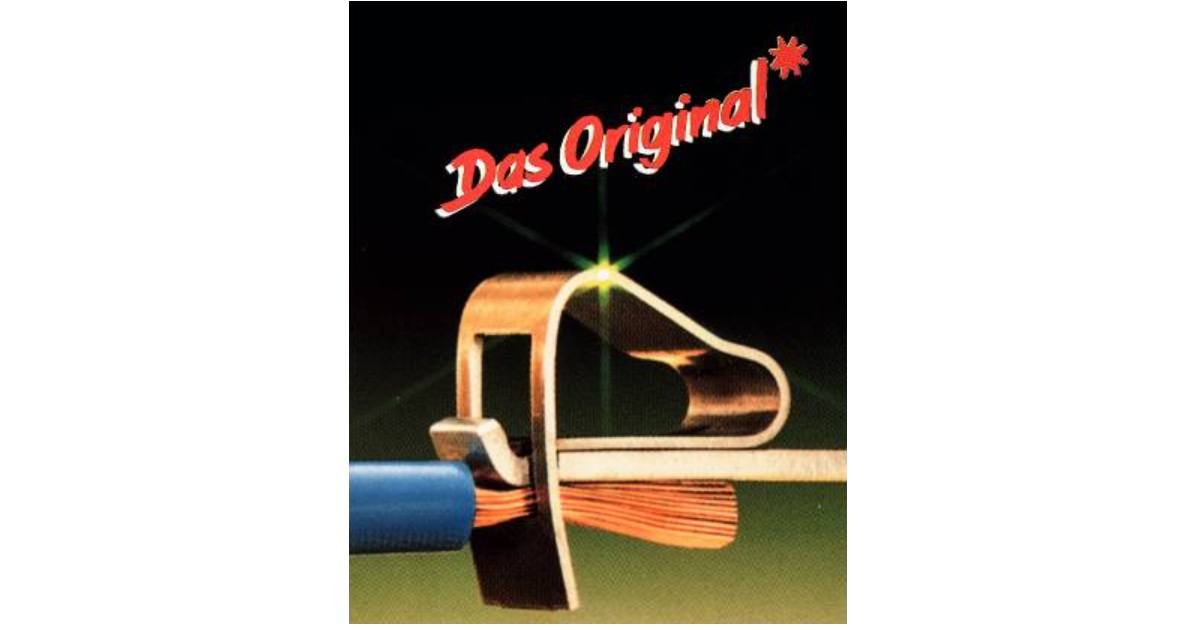
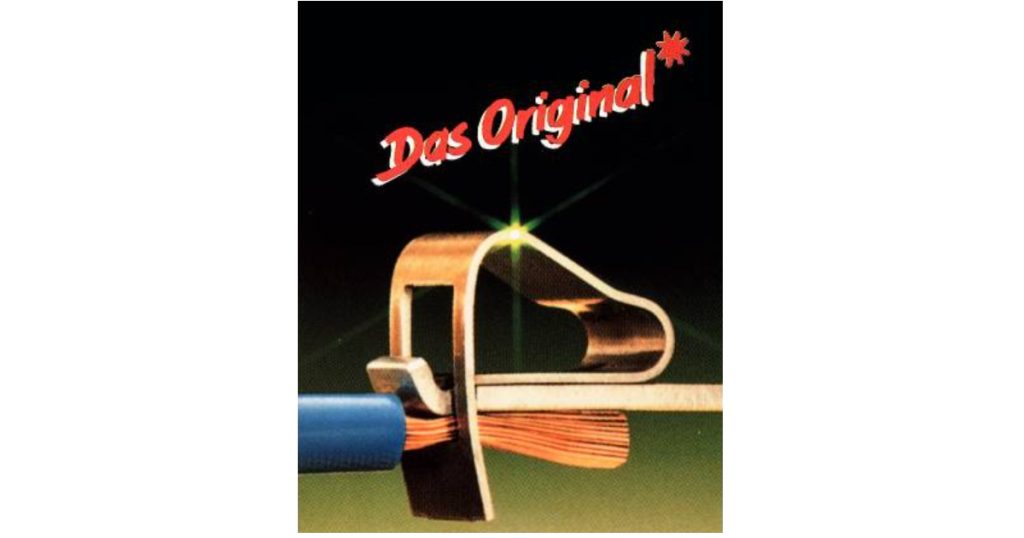
In 1977, WAGO introduced CAGE CLAMP, a universal spring-pressure connection technology that secured solid, stranded, and fine-stranded conductors without relying on screw-tightening to a specified torque. The spring maintained contact pressure, reducing the risk of connections loosening under vibration and other operating stresses. CAGE CLAMP expanded the practical applications of screwless connections and established a foundation for subsequent developments in electrical connection technology.
As WAGO celebrates its 75th anniversary in 2026, the company reflects on a legacy of innovation that began in Minden, Germany, in 1951. Founded on the principle of spring-pressure connection technology as an alternative to conventional screw terminals, WAGO has continued to advance electrical connection technology throughout its history. The introduction of CAGE CLAMP in 1977 marked a defining milestone in that journey, establishing a technological foundation that continues to influence industrial electrical connections nearly five decades later.
The CAGE CLAMP Breakthrough
Solid copper conductors are suited to fixed wiring, while stranded and fine-stranded conductors offer flexibility for routing through machinery and for applications involving movement. Industrial equipment increasingly combined fixed electrical installations with motors, sensors, and controls requiring different wiring arrangements. CAGE CLAMP gave manufacturers a single spring-pressure connection method capable of accommodating these different conductor constructions. This reduced the number of different components needed for each type of wire and simplified supply chain and inventory requirements.
With conventional CAGE CLAMP technology, an installer uses an operating tool, such as a screwdriver, to open the spring. After inserting the conductor, the installer removes the tool, allowing the spring to press the conductor against the current-carrying contact surface. The spring provides the required contact force rather than relying on how tightly an installer tightens a screw.
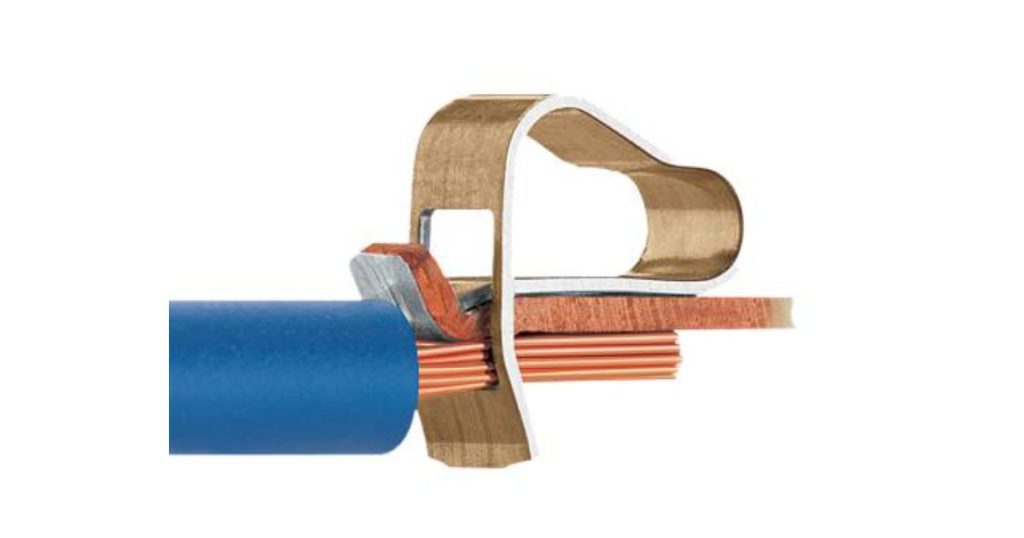
An early application demonstrated the technology’s practical value. According to WAGO’s corporate history, Schindler, the Swiss elevator and escalator manufacturer, was seeking a solution to problems with unreliable screw-type terminal blocks in elevators aboard ships. After reviewing a CAGE CLAMP sample in early 1977, the company ordered 30,000 terminal blocks before the product’s official market introduction. Those CAGE CLAMP terminals were delivered, installed, and operated reliably.
By replacing installer-dependent screw-tightening with a spring-pressure connection that maintains contact force, CAGE CLAMP helped establish a new approach to electrical connection reliability, one that continues to influence industrial wiring practices today. The early Schindler application helped establish a market for a technology that challenged the industry’s familiarity with screw terminals.
CAGE CLAMP represents the innovative thinking that has defined WAGO for 75 years. It changed how electrical connections are made, improving reliability and installation efficiency. Nearly five decades later, the technology continues to evolve as we develop new solutions to the challenges facing industry.
Juliano Matias, General Manager of WAGO Canada
Expanding the Technology’s Applications
As electronic controls spread throughout manufacturing equipment, control cabinets had to accommodate more connections within limited space. The growth of computer-controlled machinery and increasingly sophisticated automation systems also created demand for connections suited to smaller electronic assemblies, different conductor sizes, and higher electrical loads.
In 1980, WAGO introduced rail-mount terminal blocks with front-entry wiring, allowing conductors to be connected from the front rather than requiring difficult access from the side. This simplified access during wiring and provided greater flexibility in cabinet design.
The same year, WAGO introduced printed circuit board terminal blocks with CAGE CLAMP technology, extending the spring-clamping principle into electronic equipment where compact dimensions were important.
High-current applications presented another challenge. In 1998, WAGO introduced POWER CAGE CLAMP, extending spring-pressure termination to conductors with cross-sections up to 95 mm².
During a modernization project at Ford’s manufacturing plant in Cologne, Germany, the automaker standardized on WAGO rail-mount terminal blocks for a press line used to produce automotive body components. The control cabinets incorporated TOPJOB S terminal blocks for sensor and actuator signals, while POWER CAGE CLAMP technology was used for larger power conductors.
This standardized approach helped simplify purchasing, inventory management, and spare parts availability.
Eliminating an Installation Step
As electrical cabinets become more complex and the number of connections increases, equipment manufacturers face growing pressure to reduce wiring and assembly time. In 2003, WAGO addressed this challenge with the introduction of TOPJOB S rail-mount terminal blocks featuring Push-in CAGE CLAMP technology. Unlike conventional CAGE CLAMP technology, which requires an operating tool to open the spring before inserting a conductor, Push-in CAGE CLAMP allows suitable conductors, such as solid conductors and fine-stranded conductors fitted with ferrules, to be inserted directly without this additional step.
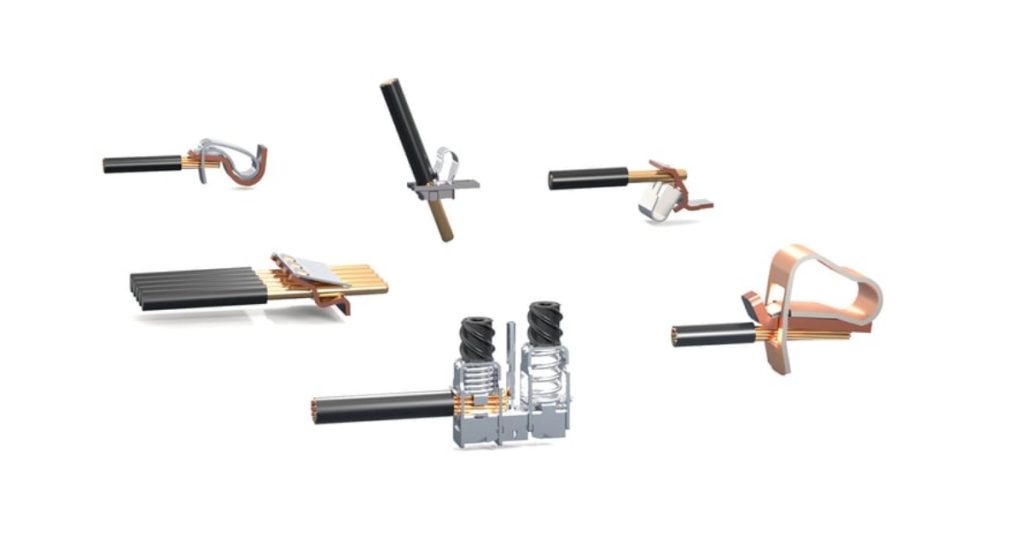
For control panel builders making hundreds of connections, eliminating a repetitive installation step can offer productivity benefits. In addition to the purchasing and inventory benefits, Ford’s electrical department reported a nearly 25% reduction in wiring time using TOPJOB S terminal blocks.
Push-in CAGE CLAMP retained compatibility with different conductor types, although some still required an operating tool for insertion. Subsequent TOPJOB S developments introduced pushbuttons and levers to further simplify installation.
For Canadian equipment manufacturers and control panel builders facing skilled labour shortages and pressure to control assembly costs, reducing repetitive wiring operations can help improve productivity without compromising connection reliability.
Connection Reliability Beyond the Factory
The importance of an electrical connection does not end when a machine or control cabinet leaves the assembly floor. Consider electrical panels manufactured at one location and shipped to another for installation. Transportation exposes equipment to vibration, while commissioning requires technicians to verify that electrical connections are secure.
Connections dependent on specified screw-tightening torque create additional inspection requirements. For CAGE CLAMP spring-pressure terminations, technicians do not need to retighten terminal screws, although applicable commissioning inspections and checks remain necessary.
Powell Industries, a Houston-based manufacturer of large modular electrical power distribution and control systems, faced a significant installation challenge. Some of its power control room solutions are so large that they must be separated into sections for shipment and reassembled at the customer’s site. Previously, electrical connections in the shipping sections could loosen because of vibration and installation errors. Technicians at the customer site had to inspect the connections and retighten screws using calibrated torque tools, adding time and cost to installation.
Powell adopted WAGO’s MCS MAXI 6 pluggable connectors, featuring Push-in CAGE CLAMP technology, for conductors up to AWG 8. By eliminating the need for cable lugs, crimping, and screw tightening in the affected circuits, these connectors helped simplify the installation process. Their pluggable design also made it easier to connect and disconnect equipment sections during manufacturing and on-site installation. Building on this solution, Powell subsequently evaluated WAGO’s higher-capacity MCS MAXI 16 system for conductors up to AWG 4.
A Lasting Legacy of Innovation
As WAGO celebrates its 75th anniversary in 2026, the company reflects on a history shaped by continuous innovation in electrical connection technology. From its beginnings in 1951 to the introduction of CAGE CLAMP in 1977 and the subsequent development of Push-in CAGE CLAMP, WAGO has continued to advance the way electrical connections are made.
Nearly five decades after its introduction, CAGE CLAMP remains a cornerstone of WAGO’s connection technology, supporting a wide range of industrial applications and helping manufacturers achieve greater reliability, efficiency and flexibility.
As industries evolve and electrical systems become increasingly complex, the principles behind CAGE CLAMP remain as relevant as ever. As WAGO marks 75 years, the continued evolution of CAGE CLAMP illustrates how an engineering innovation can remain relevant across generations of industrial technology.
More Information
Learn more about the 10 advantages of CAGE CLAMP technology: 10 Cage Clamp Advantages | WAGO
For more information on WAGO solutions HERE